 DAILY TAI CHI
How to Practice Tai Chi Without Going to a Class: 5 Moves
You can practice tai chi without going to a class by learning a few slow standing moves at home, following a simple five-step routine and checking your own form along the way.
Published
Quick answer
You can practice tai chi without going to a class by learning a few slow standing moves from a video, in 5 to 10 minutes a day, using open floor space and a stable chair or wall for support.
Key takeaways
- A clear patch of floor and a stable chair or wall are the only equipment you need.
- Five to ten minutes a day of a few repeated moves builds the habit faster than one long session.
- Start with simple moves like wave hands, gentle weight shifts and the heel-to-toe stand.
- A guided video can stand in for an instructor's eyes on your form.
- Move slowly, stay near support, and check with a doctor first if you have joint or balance concerns.
You can practice tai chi without going to a class: all you need is a clear patch of floor, a few minutes a day, and a handful of slow moves you repeat until they feel familiar.
No studio, no leotard, no class schedule to match — just a self-paced tai chi routine you build at your own speed, often called meditation in motion.
Can you learn tai chi without attending a class?
Yes. Tai chi is a small set of slow, repeating moves you can learn one at a time from a guided video, then practice on your own floor. A class helps some people, but many beginners build a steady home habit without ever sitting in on one.
If you've never tried any kind of slow-movement practice before, a short orientation helps. Our step-by-step guide for beginners walks through the basic stance and first few moves before you try stringing a sequence together on your own.
What you need to begin at home
You don't need a studio floor, a special outfit, or any equipment to start. A corner of a living room, a few quiet minutes, and something stable to hold onto if you need it are enough.
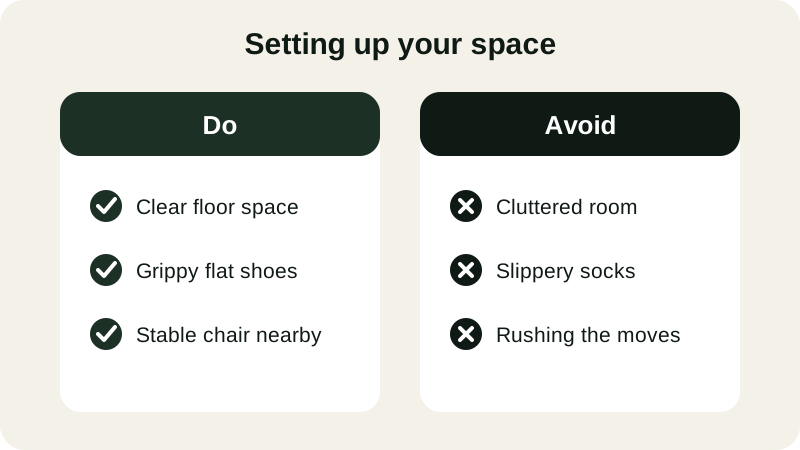
- Do: Clear floor space
- Do: Grippy flat shoes
- Do: Stable chair nearby
- Avoid: Cluttered room
- Avoid: Slippery socks
- Avoid: Rushing the moves
For more on footwear and comfortable layers, see our guide to what to wear for tai chi practice. Put those few pieces together and you have a solo tai chi practice at home that costs nothing beyond a little time each day.
A simple five-step way to start
You don't need to learn a long form on day one. Most home practices grow from a short loop of moves that you repeat until they feel automatic, then slowly build on.
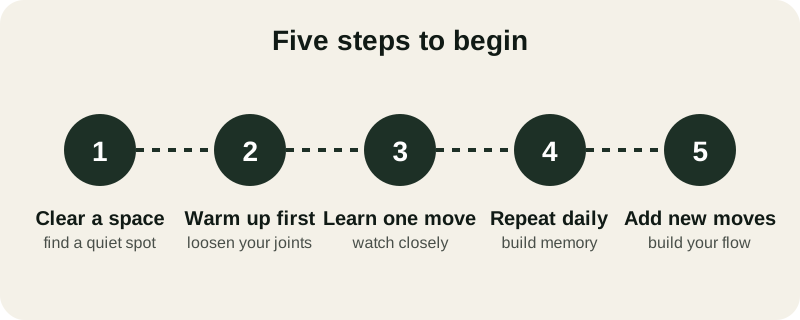
- Clear a space. Find a quiet spot with enough room to shift your weight from one foot to the other.
- Warm up first. Loosen your ankles, knees, and shoulders with a few ankle circles and shoulder rolls before you move further.
- Learn one move. Watch it closely and copy it a few times, slower than it looks on screen.
- Repeat daily. A few minutes most days builds memory faster than one long weekly session.
- Add new moves. Once one move feels familiar, string on a second, then a third, until you have a short flow.
For a ready-made starting loop, our guide to tai chi at home with no equipment walks through five moves to begin with, and our list of common move names helps when a video calls out a term you don't recognize yet, like wave hands or the heel-to-toe stand.
Is there an app that can guide you through the moves?
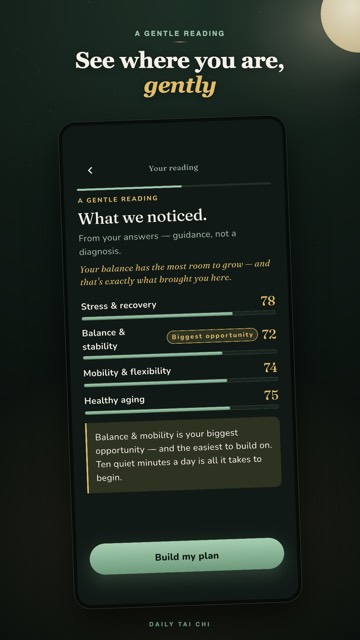
Yes. Daily Tai Chi offers a 28-day path of short guided sessions, each with a warm-up, main flow, and cool-down, built from 10 to 30 moves shown one at a time with spoken cues and a short video clip, done standing with a chair or wall within reach.
If you'd rather not download anything, plenty of people build real confidence just from learning tai chi from a video, one move at a time. Our piece on learning tai chi without a teacher looks at both routes in more detail, including what to look for in a good video.
How to keep good form without a teacher watching
Without an instructor correcting your stance, the easiest fix is to slow down more than feels natural and check yourself against three things: are your knees soft, is your weight clearly on one foot at a time, and are your shoulders dropped away from your ears.
Pairing each move with slow, even breathing also helps — if you notice you're holding your breath, that's usually a sign you're moving a touch too fast. Our tai chi breathing exercises guide can help you build that habit alongside the moves.
If standing for a full session feels like too much some days, you can still practice seated. Our chair tai chi guide adapts many of the same slow moves to a chair, on your own schedule.
However you begin, the goal isn't a perfect form — it's to move slowly, breathe easily, and return to your self-paced tai chi routine tomorrow. For more on keeping that going, see our tips for staying consistent.
Sources
How long should a solo tai chi session be when you're starting out?
Five to ten minutes is plenty while you're learning a new move. Short, repeated sessions build familiarity faster than one long practice, and they're easier to fit into a daily routine than an occasional class schedule would be.
Can you practice tai chi in a small apartment or rented space?
Yes. Most moves only need enough room to shift your weight from one foot to the other, so a cleared patch beside a bed or sofa is usually enough. Keep a wall or sturdy piece of furniture close by for balance.
What if you have joint pain or trouble with balance?
Slow down further than feels necessary and loop in your doctor if you're managing a joint or balance condition — the safety note above covers the specifics. Many people with stiff joints find practicing the same slow moves from a chair more comfortable, at least at first.
Do you need to practice at the same time every day for it to work?
No — consistency matters more than timing. Most days, for a few minutes, works better than a rigid schedule you can't keep. Some people practice each morning, others wind down with it at night; either builds the same familiarity over time.