 DAILY TAI CHI
Tai Chi Moves Names List for Beginners
This guide explains the most common traditional and beginner-friendly Tai Chi move names, what each one feels like, and which to practice first.
Quick answer
A tai chi moves names list usually pairs classic titles like Wave Hands Like Clouds with simple beginner names like gentle weight shifts — both describe the same slow, low-impact motion anyone can learn at home.
Key takeaways
- Classic names and beginner names describe the same gentle movements
- Start with gentle weight shifts, ankle circles, and heel-to-toe stands
- Golden Rooster Stands Alone is simply a single-leg balance move
- The 24-form strings many of these names into one flowing sequence
- Keep a stable chair, wall, or counter nearby when practicing balance moves
A tai chi moves names list usually mixes two kinds of names: classic titles like Wave Hands Like Clouds and Grasp the Sparrow's Tail, and simpler, modern names like gentle weight shifts and heel-to-toe stand that describe exactly what the body does. Both point to the same thing — slow, low-impact motion anyone can learn, no matter where they're starting from.
Whether you've seen these names on a class schedule, a video, or in an app, this guide breaks down what the common ones mean, which to learn first, and how they fit together into a fuller practice. By the end, a list that once looked like a foreign vocabulary test should feel more like a set of familiar, friendly labels.
What are the most common Tai Chi move names?

Traditional Tai Chi names come from older forms passed down over generations, and they tend to be poetic — describing an image rather than just an action. Here are some you'll see often, along with what they actually feel like in the body.
| Traditional name | What it feels like |
|---|---|
| Wave Hands Like Clouds | Hands float side to side, like smoothing the surface of calm water |
| Grasp the Sparrow's Tail | A soft push-and-pull, as if gently rolling a ball between your hands |
| White Crane Spreads Wings | Arms open slowly, one rising and one lowering |
| Brush Knee and Push | One hand brushes past the knee while the other presses forward |
| Golden Rooster Stands Alone | A gentle single-leg stand, held for a few slow breaths |
| Repulse Monkey | Stepping backward while the hands trade places, like a slow retreat |
None of these require speed, strength, or flexibility. Every one can be practiced standing with a chair nearby, or seated, as described in our seated Tai Chi guide. If a name sounds unfamiliar in a class or video, it almost always turns out to be one of these same gentle, everyday motions wearing a more poetic label.
Which beginner move names should you start with?
If the traditional names feel like a lot to take in, start with the plain-language versions instead. These describe the motion directly, with nothing to translate or decode.
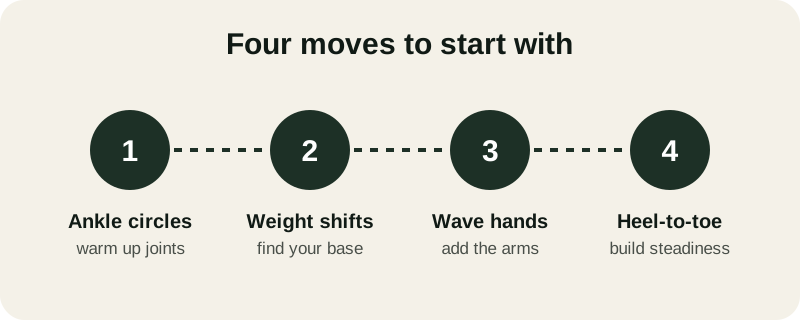
A short list of good beginner moves to know by name includes gentle weight shifts, ankle circles, wave hands, heel-to-toe stand, single-leg stand, and slow sit-to-stand. Each one is low-impact and adapts to standing or seated practice. Our warm-up guide walks through several of these in more detail before a full session, so you can see how a handful of simple names turns into a complete short routine.
What do the traditional Tai Chi move names mean?
Traditional names were chosen to describe the shape or feeling of a movement, not to make it harder to learn. Once you see the image behind the name, the movement often makes more sense.
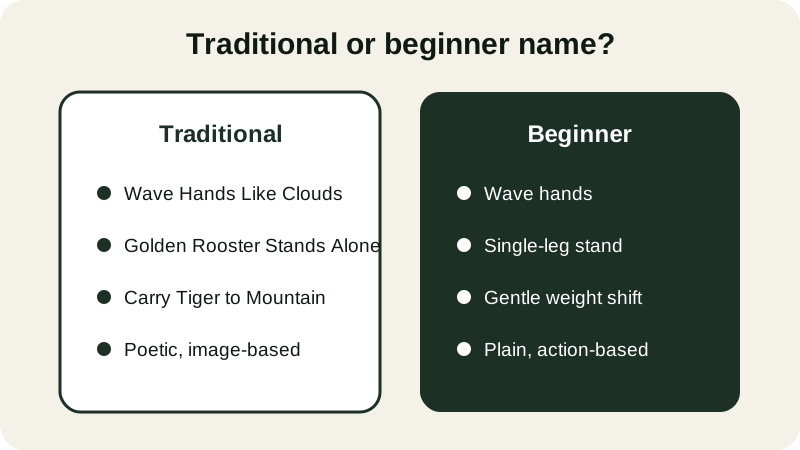
Golden Rooster Stands Alone, for example, is simply a single-leg stand — the name just paints a picture of balance and stillness. Carry Tiger to Mountain is a wide, grounded stance with a slow push of the arms. You don't need to picture a tiger to do it correctly; the image is just a memory aid some teachers find helpful, and plenty of people skip the imagery entirely and just focus on the motion itself.
How do you remember so many names?
You don't have to remember them all at once, and there's no rush to do so. A few simple habits make the names stick without any memorizing or flash cards.
- Group by feeling, not by word. Notice which names describe arm motion, which describe stepping, and which describe standing still — this is easier to recall than the words themselves.
- Say the name out loud as you move. Pairing the word with the motion builds a quick, natural association.
- Repeat the same short list. A handful of names practiced daily sink in far faster than a long list seen once.
Most people find that after a couple of weeks of short daily sessions, the common names simply become part of the vocabulary of the practice — not something memorized, just something recognized.
What's in the Tai Chi 24-form, and why is it named that?
The 24-form is a well-known sequence that strings many of the names above into one continuous flow — Wave Hands Like Clouds leads into Single Whip, which leads into Brush Knee, and so on. It's called the 24-form simply because it contains twenty-four named sections performed in order.
Learning the 24-form can feel like a long list at first, but it's really a handful of basic moves repeated and linked together. Our 24-form guide for beginners walks through the sequence one section at a time, so you're never trying to learn it all at once. Pair it with slow, easy breathing, covered in our breathing techniques guide, and the names start to feel less like vocabulary and more like familiar motion.
How do you practice these moves safely?
Move names are just labels — safety comes from how you practice, not what you call a movement. Start by standing tall, feet hip-width apart, with a stable chair, wall, or counter within reach for anything involving balance, like a single-leg stand or heel-to-toe stand.
A common mistake is trying to rush through a whole list of named moves in one sitting. There's no need. Five to ten slow, unhurried minutes most days will teach you these movements — and their names — far better than trying to cram them in all at once.
If you'd like a structured way to work through these moves without guessing which order to learn them in, the app offers a 28-day path of short, guided sessions — the first four days are free, with no card and no account needed, on iPhone and Android. It's built specifically for complete beginners and adults 55+, so there's no assumed experience and no rush.
For a broader look at where these moves fit into a full beginner routine, see our Tai Chi for seniors guide, or start with a short, ready-made session in our 5-minute morning routine. Either way, the names themselves matter far less than simply moving a little, slowly and gently, most days of the week.
Do I need to memorize the traditional Chinese-style names?
No. The names are helpful for recognizing moves in a class or video, but they aren't required for practice. Many beginners learn the plain-language versions first — like gentle weight shifts or wave hands — and pick up the classic titles naturally over time.
How many Tai Chi move names are there in total?
It varies by style and form length. Shorter beginner sequences might use six to ten named moves, while longer traditional forms string together twenty or more. There's no need to learn them all at once — a handful of basics covers most beginner practice.
Can these moves be done sitting down?
Yes. Nearly every move on a typical tai chi moves names list has a seated adaptation, including wave hands and gentle weight shifts. Seated versions keep the same slow arm and breath pattern while removing the standing balance component.
Which move should a complete beginner learn first?
Gentle weight shifts are a good starting point. They teach the basic idea behind almost every Tai Chi move — slow, controlled weight transfer — before you add arm movements or balance challenges like a single-leg stand.
Is it safe to practice balance-focused moves like the single-leg stand alone?
Move gently and keep a stable chair, wall, or counter nearby for support. Stop if you feel dizzy or unsteady, and check with a doctor first if you're new to exercise or have any health concerns.