 DAILY TAI CHI
Tai Chi Breathing Techniques for Calm, Easy Practice
This article explains simple tai chi breathing techniques — slow, natural belly breathing paired with gentle movement — that beginners and older adults can practice standing or seated to feel calmer and steadier.
Tai chi breathing techniques are simple: you breathe slowly and naturally through the nose, letting your belly soften and rise on the inhale and settle on the exhale, while your movements stay just as slow and unhurried. There's no special trick to learn first — just a gentle rhythm you build over time.
If you've ever felt your shoulders creep up toward your ears when you're stressed, or noticed your breath getting short and shallow, you already know how closely breath and body are connected. Tai chi uses that connection on purpose. The breathing techniques below are gentle enough for complete beginners, and every one of them works whether you're standing or sitting in a chair.
Why does breathing matter so much in tai chi?
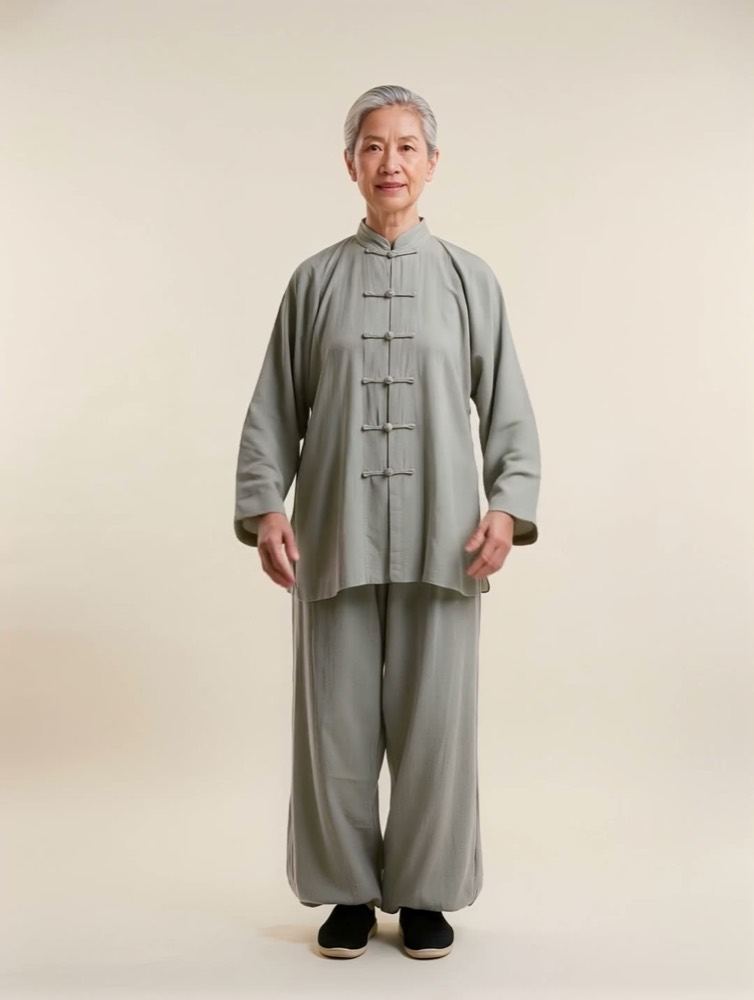
Tai chi is often called meditation in motion, and breath is what ties the motion to the meditation. Instead of thinking your way to calm, you let your breath slow down first, and your mind tends to follow. That's the whole idea behind the practice: slow breath, slow movement, quiet mind, all moving together.
This is different from breathing exercises you might do on their own, sitting still with eyes closed. In tai chi, you're breathing while gently shifting your weight, turning your waist, or floating your arms like in the classic wave hands movement. The breath becomes something you do with your body, not apart from it.
How do you breathe during a basic tai chi movement?
Start Tai Chi the gentle way
Daily Tai Chi guides you through a 28-day path — slow, follow-along sessions made for beginners and ages 55+.
Start free on Google Play Start free on the App StoreStart simple. Stand tall, feet hip-width apart, with a stable chair, wall, or counter nearby if you'd like the support. Let your arms hang loose at your sides and take a few normal breaths just to settle in.
Now try this basic pattern:
- Breathe in slowly through the nose as you raise your arms gently in front of you, only as high as feels comfortable.
- Breathe out slowly as you lower your arms back down, letting your shoulders soften.
- Pause for a moment at the bottom before you begin again.
Notice that the breath leads the movement, not the other way around. You're not trying to fill your lungs completely or empty them all the way — just breathe at a pace that feels easy and a little slower than your normal day-to-day breathing.
This same pattern pairs beautifully with gentle weight shifts from side to side, or with a slow sit-to-stand if you're practicing near a chair. Breathe in as you rise, breathe out as you settle back down.
What does belly breathing feel like, and how do you practice it?
Many tai chi teachers describe the breath as coming from low in the belly rather than high in the chest. You can feel this for yourself: place one hand on your belly and one on your chest, then breathe in slowly. If the hand on your belly rises more than the one on your chest, you're already doing it.
This kind of breathing is sometimes called diaphragmatic breathing, and it tends to feel more relaxed and less effortful than shallow chest breathing. You don't need to force your belly to move — just breathe slowly enough that it happens naturally, and let your exhale be a little longer than your inhale if that feels comfortable.
If sitting is more comfortable for you right now, this same belly breathing works just as well in a chair. Our seated tai chi guide walks through gentle chair-based movements you can pair with this breath.
How do you keep your breath steady during balance movements?
Balance movements like a heel-to-toe stand or a single-leg stand can make people hold their breath without realizing it, especially when concentrating hard on staying steady. Try to notice this and let your breath keep flowing instead.
A helpful habit: breathe out slowly as you shift your weight onto one foot, and breathe in as you return to a stable, two-footed stance. Keeping the breath moving, even during a moment of concentration, helps you stay relaxed rather than tense.
Simple ankle circles are a gentle way to practice this pairing before moving to more challenging balance work — breathe out as you circle one direction, breathe in as you reverse it.
How often should you practice tai chi breathing?
You don't need long sessions. Just 5 to 10 minutes most days is enough to notice your breath settling into an easier rhythm, both during practice and afterward. Consistency matters far more than duration.
Some people like practicing breath-led movement first thing in the morning to start the day calmly; others prefer it in the evening to unwind. If mornings suit you, our 5-minute morning routine is a gentle place to begin. If you're winding down instead, the app's evening sessions follow the same slow, breath-led approach.
What if slow breathing feels difficult at first?
It's common for slow breathing to feel awkward in the beginning, especially if you're used to quick, shallow breaths. Don't strain to breathe deeply or hold any breath for a count — just let each breath be a little slower and smoother than the last, and let it grow naturally over many sessions rather than all at once.
If you feel lightheaded at any point, pause, breathe normally, and rest. Move gently and never push into pain or discomfort. Keep a stable chair, wall, or counter nearby, and stop if you feel dizzy or unsteady. If you're new to exercise, recovering from an injury, or have any health concerns, check with a doctor first.
Where can you practice guided breathing techniques?
Daily Tai Chi offers a 28-day path of short, guided sessions built around this same slow, breath-led approach, with movements suited to complete beginners and adults 55+. The first 4 days are free, with no card and no account needed, and the app works on iPhone and Android.
For a deeper look at breath-focused sessions specifically, see our guide to tai chi breathing exercises, or explore qigong for seniors and beginners, a closely related practice built almost entirely around slow, mindful breath.
Start Tai Chi the gentle way
Daily Tai Chi guides you through a 28-day path — slow, follow-along sessions made for beginners and ages 55+.
Start free on Google Play Start free on the App StoreWhat is the basic tai chi breathing technique?
The basic technique is slow, natural breathing through the nose, letting your belly rise gently as you breathe in and fall as you breathe out. You match this easy rhythm to slow movement, without forcing or holding your breath at any point.
Should you breathe through your nose or mouth in tai chi?
Most practice favors breathing in and out through the nose, since this naturally slows and smooths the breath. If your nose feels blocked or breathing that way feels uncomfortable, breathing softly through your mouth is perfectly fine too.
How long should each breath be during practice?
There's no strict count to aim for. Let each inhale and exhale last as long as feels comfortable and unhurried, often several seconds each. The goal is ease, not a specific number of seconds.
Can breathing techniques help with tension or racing thoughts?
Many people find that slow, steady breathing paired with gentle movement helps them feel calmer and more settled. It works best as a regular, gentle habit rather than a one-time fix, and pairs naturally with movements like wave hands.