 DAILY TAI CHI
Tai Chi 24 Form for Beginners: A Gentle Guide
This article explains what the Tai Chi 24 form is, why it suits beginners, and how to start learning it gradually and safely at home.
Quick answer
The Tai Chi 24 form is a simplified Yang-style sequence of 24 postures built for beginners who want a complete routine without years of training. Learn it slowly, a few postures at a time, never all at once.
Key takeaways
- The 24 form is a simplified Yang-style sequence, shorter than traditional long forms.
- Beginners learn it one small section at a time, not all at once.
- 5 to 10 minutes of daily practice helps the movements feel familiar.
- Keep a stable chair, wall, or counter nearby during weight shifts and turns.
- A 28-day path can break gentle movements into small, manageable daily steps.
The Tai Chi 24 form for beginners is a shortened, standardized sequence of 24 postures built from traditional Yang-style Tai Chi, designed to be easier to learn than the longer classical forms. It still moves slowly, with the same gentle weight shifts and soft turns that make Tai Chi feel like meditation in motion.
If you've heard of the 24 form and wondered whether it's something you could actually learn, this guide breaks down what it is, how approachable it really is for a beginner, and how to start without feeling overwhelmed.
What is the Tai Chi 24 form?

The 24 form takes a handful of classic Tai Chi postures and arranges them into one continuous, flowing sequence. It was created as a more compact alternative to the much longer traditional forms, which can include well over a hundred movements. The idea was simple: keep the spirit of the practice, but make it something a newer student could realistically learn.
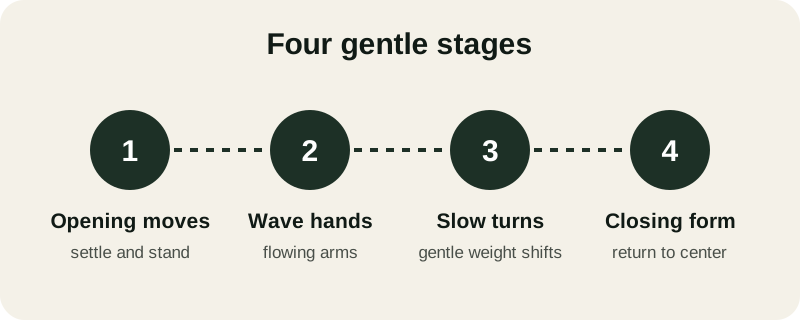
You'll recognize many of the individual movements from other gentle Tai Chi practice — wave hands, soft turning steps, and slow weight shifts from one foot to the other. The 24 form simply strings a selection of these together into one longer, continuous sequence.
Is the 24 form hard to learn as a beginner?
It's more involved than a single short routine, but it isn't out of reach. The honest answer is that most beginners don't learn it all at once — they learn it in small pieces, the same way you'd learn a short routine first, then slowly add on.
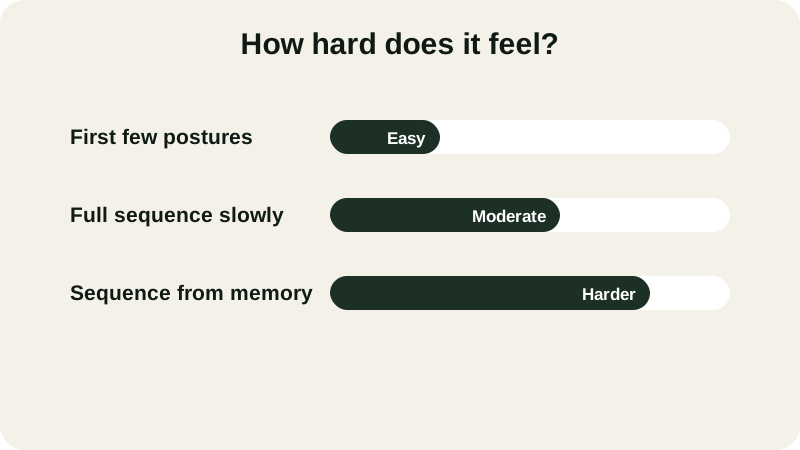
What makes it feel manageable is pace. There's no rule that says you must perform the whole form in one sitting from day one. Many beginners spend their early weeks with a handful of opening postures, letting their body get comfortable with the rhythm before adding the next section.
How do you start learning the 24 form at home?
The gentlest way in is to treat the full sequence as a long-term project rather than something to master right away. Here's a simple way to approach it:
- Start by standing tall, feet hip-width apart, and spend a few minutes just breathing slowly and settling your weight evenly.
- Practice a few gentle weight shifts from foot to foot before you learn any named postures, so your balance feels steady.
- Learn the opening two or three postures only. Repeat them slowly for several days until they feel familiar in your body, not just your memory.
- Add one small section at a time — perhaps a wave hands sequence or a soft turning step — once the previous piece feels comfortable.
- Link sections together only when each one feels relaxed on its own, rather than rushing to perform the whole form end to end.
This slow, layered approach is the same philosophy behind our beginner's guide to Tai Chi, which walks through the very first steps before you ever attempt a longer sequence.
What should you expect in your first few weeks?
Expect slow progress, and expect that to be exactly right. In your first week or two, you might only work on balance basics — gentle weight shifts, ankle circles, and a heel-to-toe stand — before learning a single named posture from the 24 form itself.
As the weeks go on, you'll likely notice the individual postures start to connect more naturally, and that your single-leg stand or slow sit-to-stand feels steadier along the way. None of this needs to happen quickly. Five to ten minutes of practice on most days is plenty, and it's far more useful than one long, tiring session.
If starting with a full standalone form feels like too much right now, it's perfectly reasonable to begin with shorter, simpler routines first and work up to longer sequences later. Our guide to the best Tai Chi for beginners at home covers gentle starting routines that build the same skills the 24 form relies on — slow turns, soft weight shifts, and relaxed breathing.
Do you need a class to learn it, or can you start on your own?
Many people do learn a long form like this in a class, working alongside a teacher who can watch their posture. But you can absolutely begin on your own at home, especially while you're still in the early, foundational stage of learning gentle weight shifts, wave hands, and a stable stance.
A guided, follow-along approach can help here, since it breaks practice into small daily sessions rather than one long form to memorize cold. The app's 28-day path is built around exactly that idea — short, slow sessions you can do standing or seated, with the first 4 days free and no card or account needed to try it, on iPhone and Android.
Think of the early weeks less as "learning the 24 form" and more as building the handful of gentle skills — qigong-style breathing, steady turns, calm weight shifts — that the whole sequence is made from. Once those feel natural, stringing postures together becomes much less daunting.
Is it worth learning if you're not aiming for a performance or class?
Absolutely. You don't need a goal of performing the form perfectly, or even finishing all 24 postures, to get something out of the practice. Many beginners simply enjoy learning a few sections slowly, treating each practice session as a few calm, unhurried minutes rather than a task to complete.
If you'd rather keep things simple for now, there's no requirement to take on a long form at all. Shorter daily routines offer the same slow, flowing quality, and you can always return to the 24 form later if you want a longer sequence to work toward.
Sources
What exactly is the Tai Chi 24 form?
It's a shortened, standardized Yang-style sequence made up of 24 postures, created to make traditional Tai Chi easier to learn than the much longer classical forms. It still includes the slow weight shifts, wave hands, and gentle turns that define the practice, just in a more compact routine.
Can a complete beginner learn the 24 form?
Yes, as long as you take it slowly and in small sections. Most beginners learn a handful of postures at a time rather than the whole sequence at once, building familiarity over several weeks before linking the movements together.
Do you need to be flexible or fit to start?
No. Every movement in the 24 form is low-impact and can be adapted to standing or seated practice. You move at your own pace, and there's no requirement to be flexible, strong, or previously active before you begin.
How long does it take to learn the full form?
This varies from person to person. Some beginners spend several weeks on just the opening postures before adding more. There's no deadline — a few gentle minutes most days, learned one small piece at a time, is the steadiest way to progress.
Is the 24 form safe for older adults?
Many older adults practice gentle Tai Chi comfortably. Move gently, keep a stable chair, wall, or counter nearby, and stop if you feel dizzy or unsteady. If you're new to exercise or have health concerns, check with a doctor first.