 DAILY TAI CHI
Tai Chi for Calming Anxiety at Home: 5 Moves to Try
A short guide to five slow, standing tai chi moves and a simple home setup that can help settle an anxious mind in a few minutes a day.
Published
Quick answer
Calming anxiety at home with tai chi works best as a short, slow, standing practice paired with steady breathing. Moves like wave hands and gentle weight shifts give a busy mind somewhere quiet to rest, and a clear patch of floor with a chair nearby is all you need to begin.
Key takeaways
- Slow, standing moves paired with steady breathing give a racing mind something simple to follow.
- A clear patch of floor and a stable chair or wall nearby are all you need to begin.
- Five moves — wave hands, weight shifts, heel-to-toe, ankle circles, sit-to-stand — make a simple routine.
- Move gently, keep support nearby, and check with a doctor first if managing a health condition.
- A few minutes most days tends to help more than one long session now and then.
Calming anxiety at home is one of the simplest reasons people pick up tai chi: a few minutes of slow, standing movement and steady breathing can settle a racing mind without any special equipment. You don't need a class, a mat, or any prior experience — just a clear patch of floor and a willingness to move slowly.
This guide walks through why slow movement helps an anxious mind settle, five moves you can try today, and how to set up a quiet corner of your home for practice.
How does tai chi calm anxiety at home?
Tai chi calms anxiety by pairing slow, repetitive movement with steady breathing, which gives a racing mind something simple to follow instead of spinning thoughts. Each weight shift or sweep of the arms asks for just enough attention to pull you out of worry and into the present moment.
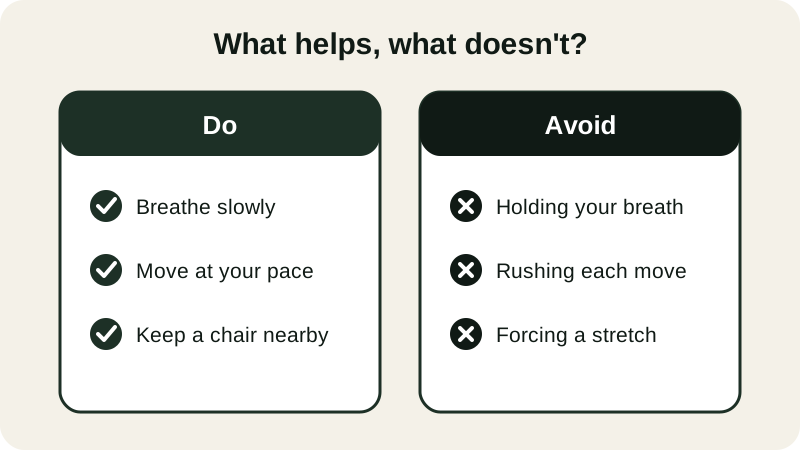
- Do: breathe slowly, move at your own pace, keep a chair nearby.
- Avoid: holding your breath, rushing each move, forcing a stretch.
Tai chi is often described as meditation in motion — you stay physically active, but your mind has one simple job: follow the movement and the breath. That combination can feel gentler on an anxious body than sitting very still, which sometimes makes racing thoughts feel louder rather than quieter. Many people also notice that anxiety shows up physically first — a tight chest, shallow breathing, restless hands — and slow movement gives those sensations somewhere to go.
If breath is where you'd like to start, our Tai Chi breathing exercises guide walks through a few patterns on their own, and our piece on calming the nervous system goes deeper into why slow movement has this effect.
Five slow moves to try when anxious
Each move below takes about thirty seconds to a minute and asks nothing jarring of your body — just slow, deliberate motion you can repeat as many times as feels good.
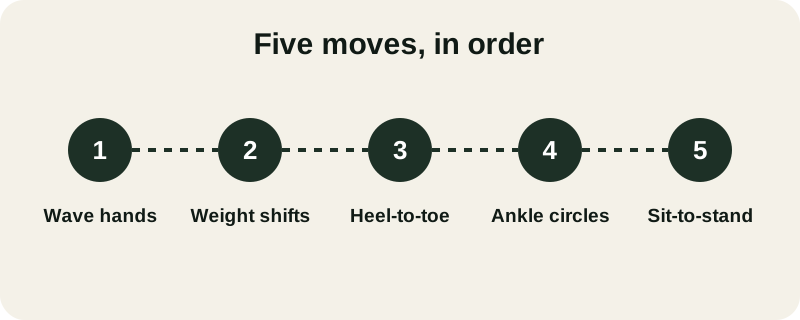
- Wave hands. Stand tall, feet hip-width apart, and let your arms float side to side as if you're smoothing the surface of still water. Let your eyes follow your hands.
- Weight shifts. Rock slowly from one foot to the other — a gentle weight shift — resting a hand on a chair if that feels steadier, and notice your feet rooting into the floor.
- Heel-to-toe. Place one foot directly in front of the other, heel touching toe, and hold for a few slow breaths — the heel-to-toe stand — keeping a chair within reach.
- Ankle circles. Lift one foot slightly and trace slow circles with your ankle, then switch sides. This is easy to do seated if standing feels like too much today.
- Sit-to-stand. From a sturdy chair, rise to standing slowly, then lower back down just as slowly — a slow sit-to-stand — using your legs rather than momentum.
You don't need to string these together into a long sequence. On a harder day, one or two moves, repeated slowly for a few minutes, is enough to feel the difference. On a calmer day, work through all five in order and notice how your breathing settles by the end.
Setting up a calm space at home
You don't need a dedicated room for this practice. A corner with a few feet of clear floor, away from furniture corners, is enough. Soft, even light and a few quiet minutes — maybe before the day gets busy, or after it winds down — help the practice feel like a pause rather than another task on your list.
If you'd like a structure to follow rather than figuring it out alone, Daily Tai Chi builds a personalized 28-day path of short sessions — a warm-up, a main flow, and a cool-down, done standing with a chair or wall nearby — so you choose 5, 10, 15, or 20+ minutes a day and set a daily reminder at a time that works for you. The first 4 days are free, with no card and no account required to try it.
How much practice is enough to feel calmer?
A few minutes most days is usually enough to notice a calmer feeling, especially right after practice. Five to ten minutes of slow movement and breathing, done consistently, tends to help more than one long session now and then.
If remembering to practice is the hardest part, our guide on setting a daily reminder covers a few simple ways to build the habit, and if standing for a full session feels like too much on some days, our chair Tai Chi guide offers a seated way to keep the practice going.
However you begin, the goal isn't a perfect form — it's a few slow minutes that give your mind somewhere quiet to land, over and over, until that quiet becomes a little easier to find.
Sources
Can tai chi help with panic attacks or anxiety attacks?
Tai chi is not a treatment for panic attacks, but slow breathing and movement can help you feel steadier in an anxious moment. If anxiety is frequent, intense, or affecting daily life, check with a doctor first — they can help you find the right combination of support alongside gentle movement.
Do you need any equipment to practice at home?
No special equipment is required. All you need is a clear few feet of floor, comfortable clothing you can move in, and a stable chair, wall, or counter nearby for balance support. Bare feet or flat, flexible shoes both work well for slow, standing practice.
Can you practice these calming moves sitting down?
Yes. Weight shifts, wave hands, and ankle circles all adapt well to a seated version if standing feels unsteady or tiring. Rest your feet flat on the floor, keep your spine tall, and move through the same slow motions from a sturdy chair at your own pace.
How soon might you feel calmer?
Many people notice a calmer feeling within the first few slow breaths and movements. For a steadier, longer-lasting effect, aim for a few minutes of practice most days over several weeks — consistency matters more than the length of any single session.