 DAILY TAI CHI
Tai Chi for Calming the Nervous System: 5 Slow Moves
This article explains how slow Tai Chi movement and breathing can help calm the nervous system, with five simple moves, a safety note, and a realistic practice schedule.
Published
Quick answer
Tai Chi for calming the nervous system works through slow, repetitive movement and even breathing, which shift the body out of alert mode. Moves like wave hands and weight shifts, done for 5 to 10 minutes, are a simple place to start.
Key takeaways
- Slow, repetitive movement and even breathing help shift the body out of an alert state.
- Wave hands and weight shifts are an easy place to begin.
- Five to ten minutes a day is usually enough to notice a calmer feeling build.
- Keep a stable chair, wall, or counter nearby if balance feels unsteady.
- Check with a doctor first if you have a health condition affecting balance or movement.
Slow Tai Chi movement is one of the simplest ways to calm an overactive nervous system, even without any prior exercise experience. You don't need to be fit or flexible — just a few quiet minutes and a willingness to move slowly.
This kind of practice is often called meditation in motion, because the moving body becomes the anchor for the mind rather than deep concentration or sitting still. Many people come to it after noticing racing thoughts at night, a tight chest during the day, or a general sense of being "wired" without knowing how to switch that off.
If you're reading this because your mind won't settle, or because stress has started to show up in your shoulders, neck, or sleep, you're not alone. Tai Chi doesn't need special equipment or a studio — a chair, a bit of floor space, and a few unhurried minutes are enough to begin.
How does Tai Chi calm the nervous system?
Tai Chi calms the nervous system mainly through slow, repetitive movement and even breathing. As you shift your weight slowly from foot to foot and lengthen each out-breath, your muscles loosen and your attention settles, helping move the body out of an alert, keyed-up state.
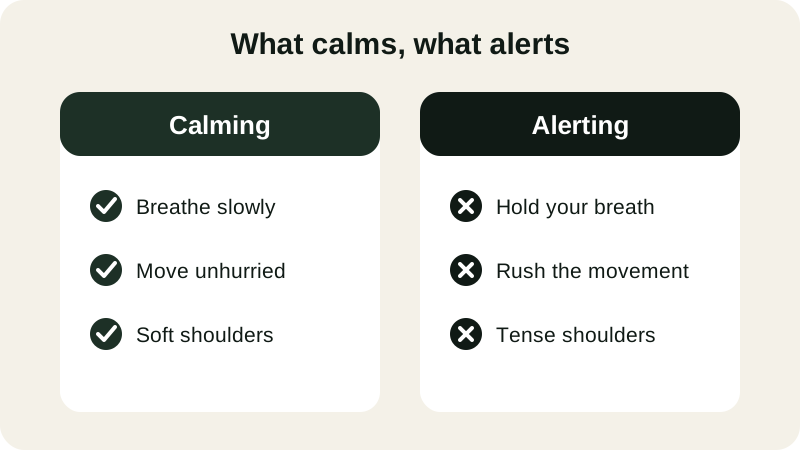
- Calming: breathe slowly, move unhurried, and keep soft shoulders.
- Alerting: hold your breath, rush the movement, or tense your shoulders.
Think of the nervous system as having two settings: one for alert, fight-or-flight moments, and one for rest and recovery. Fast, shallow breathing and tense muscles tend to keep the alert setting switched on, even when there's no real danger nearby. Slow, repetitive movement works like a dimmer switch, nudging the body toward the rest setting instead.
Harvard Health Publishing and the NCCIH both describe Tai Chi as a slow, mind-body practice that combines movement, breathing, and focused attention. That combination is part of why it feels so different from a brisk walk — the slowness itself is the point, not a warm-up for something faster.
Five calming moves that soothe the nervous system
These five moves are simple enough for a complete beginner, and each one can be adapted to a seated version if standing feels unsteady.
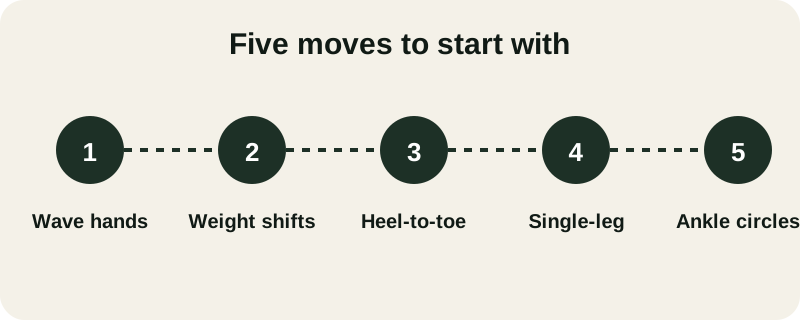
- Wave hands — stand tall, feet hip-width apart, and let your hands float and turn softly in front of you, like smoothing calm water.
- Weight shifts — slowly rock your weight from one foot to the other, keeping your knees soft and your breath slow.
- Heel-to-toe stand — place one foot directly in front of the other, heel to toe, using nearby support if needed.
- Single-leg stand — lift one foot a few inches off the floor and hold for a slow breath or two, using support if needed.
- Ankle circles — seated or standing, slowly circle each ankle a few times in both directions to ease tension in the lower legs.
You don't need to do all five every time. On a rushed day, even two or three — say, wave hands and a few ankle circles — can help settle a busy mind. On a calmer day, moving through all five slowly, pausing between each, turns the practice into a short meditation.
If standing moves feel like too much right now, each of these has a seated version — see our chair Tai Chi guide for the sitting versions.
Breathing is the quiet half of the practice
Breathing isn't an afterthought in Tai Chi — it does half the calming work, often without you noticing it happen.
A slow, low breath naturally lengthens the exhale, and a long, slow exhale is linked to the parasympathetic nervous system — the body's rest-and-digest setting. That's part of why Tai Chi breathing feels so settling. You don't need to count or force anything; most people find their breath slows on its own once the movement itself slows down.
A simple starting pattern is to breathe in for a slow count of three and out for a slow count of four, letting the exhale run just a little longer than the inhale. There's no need to hold the breath or strain for a particular count — the goal is ease, not precision. For a closer look at specific breathing patterns to pair with movement, see our guide to Tai Chi breathing exercises.
If worry or a racing mind is what brought you here, our piece on Tai Chi for anxiety in seniors walks through five calming moves in more depth. Some people also pair this kind of practice with qigong for seniors and beginners, which uses similarly slow, breath-led movement and can deepen the same calming effect.
How much practice helps you feel calmer?
Most people notice a calmer feeling with just 5 to 10 minutes of practice, done most days rather than one long session now and then. Consistency matters more than duration — a short daily habit trains the body to downshift more easily over time, even on days when you only have a few quiet minutes.
Daily Tai Chi builds that consistency into a 28-day path of short, guided sessions — each with a warm-up, a main flow, and a cool-down — so you're never left guessing what to practice next. The first 4 days are free, with no card and no account needed, and the app runs on iPhone and Android. Over the course of the path, nervous system regulation tends to feel less like a single event and more like a habit you're slowly building, one short session at a time.
If you're looking for a ready-made place to begin, the 5-minute morning Tai Chi routine pairs well with an evening wind-down, so your body gets a steady cue to settle at both ends of the day. And if you'd like to understand the thinking behind how we put these guides together, our page on how we write our articles explains our approach.
Sources
Can Tai Chi help if you already feel anxious most of the time?
Tai Chi can be a calming addition to how you manage ongoing anxious feelings, since the slow movement and breathing give your mind something steady to focus on. It isn't a stand-alone treatment — if anxiety is affecting daily life, check with a doctor first about a fuller plan of care.
Is Tai Chi better than deep breathing alone for calming down?
Neither replaces the other. Deep breathing alone works well in a pinch, while Tai Chi adds slow movement on top of the breath, which many people find easier to stay focused on. Try pairing a few slow breaths with simple weight shifts for a combined effect.
What does Tai Chi do for the vagus nerve?
Tai Chi's slow breathing and relaxed movement follow a pattern long linked with a calmer body — long exhales and loose muscles — though it's best understood as a general calming practice rather than a treatment aimed at any single nerve pathway.
Can you practice calming Tai Chi while seated?
Yes. Every standing move, including weight shifts and ankle circles, has a seated version that works the same slow breathing and attention. A chair, firm sofa, or stable stool all work fine as your seated base.