 DAILY TAI CHI
4 Tai Chi Moves for Neck Tension Relief
Four slow Tai Chi moves — neck turns, shoulder rolls, an ear-to-shoulder tilt, and wave hands — can gently loosen a tight neck in five to ten minutes a day.
Published
Quick answer
Tai chi for neck tension relief works through slow head turns, shoulder rolls, and weight shifts that loosen tight muscles without force. A few minutes a day, standing or seated, can leave the neck and shoulders feeling noticeably looser.
Key takeaways
- Slow neck turns, shoulder rolls, and wave hands target the muscles behind neck tension.
- Five to ten minutes most days works better than one long session.
- Every move adapts to a chair if standing feels unsteady.
- Jerking the head or holding your breath tends to make tension worse, not better.
- Pair neck moves with slow breathing for a deeper sense of release.
A short, slow Tai Chi practice can bring real relief from neck tension without any forceful stretching. Slow head turns, shoulder rolls, and gentle weight shifts loosen the muscles that pull your neck tight after a day at a screen or under stress.
Can tai chi relieve neck tension?

Yes. The slow turns, rolls, and weight shifts in Tai Chi loosen the same muscles that tighten when you hunch over a screen or carry stress in your shoulders. Because every movement is gentle and unhurried, it suits people who find ordinary neck stretches too jarring, or who are new to exercise altogether.
Neck tension usually builds from a mix of sitting still for long stretches, carrying stress in the shoulders, and posture that slowly creeps forward during the day. Tai Chi works on all three at once: it gets the neck and shoulders moving in slow motion, it slows the breath, and the repeated weight shifts gradually retrain the shoulders to sit lower and more relaxed. For more on how this plays out over time, see our guide to tai chi for posture improvement.
None of this requires any prior flexibility. You can do every move in this article from a chair, and none of them ask you to push a stretch further than feels comfortable.
Four gentle moves to loosen a tight neck
These four moves target the neck, shoulders, and upper back, and every one of them can be done seated or standing.
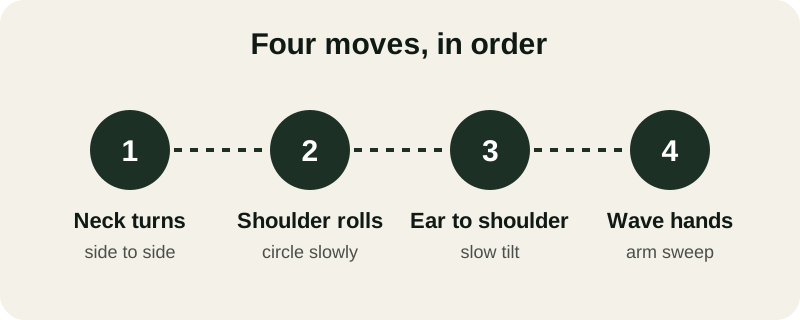
- Neck turns. Stand tall, feet hip-width apart, or sit with your feet flat on the floor. Turn your head slowly to look over one shoulder, pause, then turn to look over the other. Keep the motion smooth and stop well before any strain.
- Shoulder rolls. Lift both shoulders up toward your ears, then roll them back and down in a slow, wide circle. After a few rolls, reverse the direction. This works the muscles that run from the shoulders up into the base of the neck.
- Ear to shoulder. Let your right ear drift gently toward your right shoulder, pause for a breath, then return to center and repeat on the left. Keep your shoulders relaxed and down rather than lifting them to meet your ear.
- Wave hands. Shift your weight slowly from one foot to the other while your arms float and turn softly in front of you, as if smoothing the surface of calm water. This links the neck release to a relaxed upper body and easy breath.
Move through the four slowly, pausing between each one. Five to ten minutes is plenty — this isn't a workout, it's a short reset for a tight neck, and it works just as well from a chair as it does standing.
What tends to make neck tension worse
A few habits turn ordinary stiffness into real neck tension, and Tai Chi's slow pace naturally steers you away from most of them.
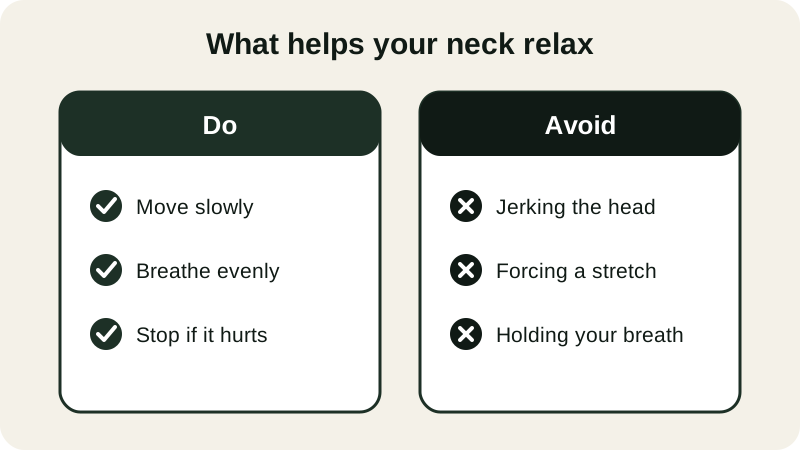
- Do: move slowly, breathe evenly, stop if it hurts.
- Avoid: jerking the head, forcing a stretch, holding your breath.
Holding your breath is an easy habit to fall into when a movement feels unfamiliar, and it tends to make the shoulders creep up toward the ears — the opposite of what you want. Slow breathing exercises, like the ones in our tai chi breathing techniques guide, pair naturally with these neck moves and help the shoulders stay low throughout the day, not just during practice.
A heavy bag on one shoulder, a pillow that doesn't support the neck overnight, and long hours looking down at a phone all add to the same tightness. You can't always change those habits overnight, but a few minutes of slow movement each day gives those muscles a regular chance to let go of what they've been holding.
How often should you practice for neck relief?
Five to ten minutes, most days, is enough to notice looser shoulders and an easier turn of the head. Longer sessions aren't necessary — what matters is returning to the same few quiet minutes regularly rather than doing one long session occasionally.
If your shoulders carry most of the tightness, pairing these neck moves with our tai chi for shoulder mobility routine rounds out the upper body nicely. And on days when sitting feels more comfortable than standing, the chair tai chi for seniors guide covers the same kind of slow, flowing moves from a chair, including gentle weight shifts and wave hands adapted for sitting.
Daily Tai Chi builds a 28-day path of short, guided sessions, including a slow warm-up that moves through the neck and shoulders before the main flow begins. The first 4 days are free, with no card and no account needed, so you can try a few neck-easing minutes on your own screen before deciding if the fuller path suits you. It works on both iPhone and Android.
A tight neck rarely loosens all at once. The slow turns, rolls, and wave hands movement work best as a small daily habit — a few quiet minutes that remind your shoulders what relaxed actually feels like, done again tomorrow, and the day after that.
Is tai chi better than stretching for a tight neck?
Neither replaces the other. Stretching lengthens a muscle in one spot, while Tai Chi moves the whole neck and shoulder area through slow, flowing motion. Many people do both: a short stretch first, then a few minutes of Tai Chi to keep the area moving gently through the day.
Can tai chi help with tension headaches linked to a stiff neck?
Tai chi isn't a treatment for headaches, but the same slow neck turns and shoulder rolls that ease neck tension may also loosen the tightness that often sits behind a tension headache. If headaches are frequent or severe, check with a doctor first to rule out other causes.
Should neck exercises be done standing or sitting?
Either works well. Seated practice takes balance out of the equation so you can focus on the neck and shoulders alone. Standing tall with feet hip-width apart, with a stable chair or counter nearby, adds a gentle balance element once you feel steady enough for it.
How soon might a tight neck start to feel looser?
Many people notice their neck and shoulders feel looser by the end of a single short session, simply from moving slowly and breathing more easily. Lasting change tends to come from repeating a few quiet minutes most days rather than one longer session now and then.