 DAILY TAI CHI
5 Tai Chi Moves for Flexibility in Seniors
A guide to five slow tai chi moves that help seniors loosen stiff shoulders, hips, and ankles through repeated motion instead of forced stretching.
Published
Quick answer
Tai chi for flexibility seniors works through slow, repeated movements — like wave hands and weight shifts — that loosen the shoulders, hips, and ankles without forcing a stretch. Most people practice 5 to 10 minutes most days to feel looser over time.
Key takeaways
- Tai chi loosens joints through slow, repeated motion instead of a static stretch.
- Wave hands, weight shifts, and ankle circles target shoulders, hips, and ankles.
- 5 to 10 minutes most days is enough to notice looser movement over time.
- Keep a stable chair, wall, or counter nearby and stop if dizzy or unsteady.
- Small, repeated circles work better than forcing a deep stretch.
Tai chi for flexibility helps seniors ease stiff shoulders, hips, and ankles by moving slowly through a full range of motion, instead of forcing a stretch and holding it still.
Many people notice stiffness creeping in around the shoulders first, then the hips and ankles, especially after months of sitting more than moving. Tai chi offers a slow, structured way back into motion, built around small circles and shifts rather than any sudden stretch.
How does tai chi improve flexibility?

Tai chi improves flexibility by carrying each joint through its full comfortable range again and again, warming the muscles a little more with every slow pass, rather than holding one static stretch.
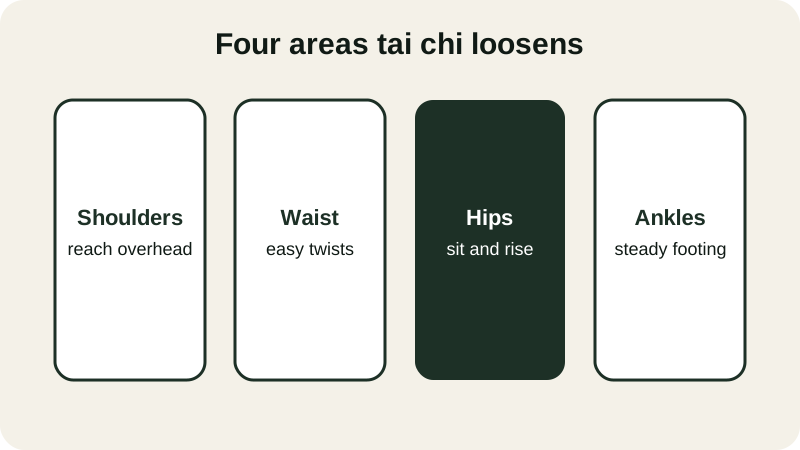
- Shoulders — reach overhead
- Waist — easy twists
- Hips — sit and rise
- Ankles — steady footing
This repeated motion is different from classic stretching, where you reach a position and stay still for a count of time. In tai chi, you circle the ankles, turn the waist, and lift the arms overhead many times within a single flow, so each joint opens gradually instead of all at once. For many people coming back to movement after months of inactivity, this slower pace feels far more comfortable than an aggressive stretch routine ever did. It's one reason tai chi for stiff joints and flexibility is often suggested as a first step back into regular movement.
You don't need to already be flexible to start. The movements meet you where you are on a given day — a smaller turn of the waist still counts, and a shorter reach overhead still counts. Some days you'll notice more ease than others, and that's simply how joints respond to slow, repeated practice, not a sign anything is wrong. Over time, the range tends to open up on its own, without you having to chase it.
Slow moves that build flexibility
Five tai chi movements work especially well if you want to improve flexibility with tai chi: wave hands like clouds for the shoulders and waist, weight shifts and the heel-to-toe stand for the hips and ankles, a slow sit-to-stand for the knees and hips, and ankle circles as a warm-up on their own.
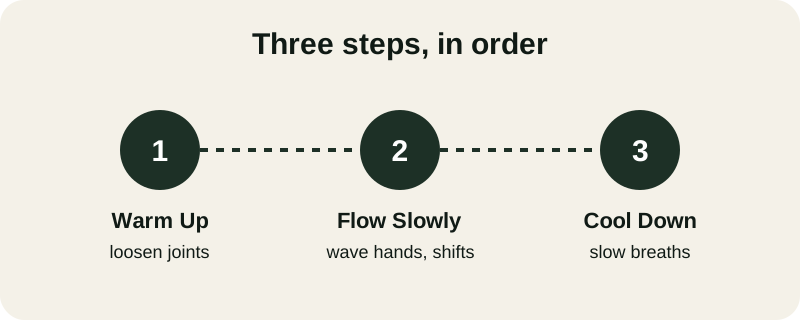
- Warm Up — loosen joints
- Flow Slowly — wave hands, shifts
- Cool Down — slow breaths
Each of these movements targets a specific area. Wave hands like clouds turns the waist and opens the shoulders as the arms float from side to side. Weight shifts and the heel-to-toe stand ease the hips and ankles by rocking your weight slowly from one foot to the other. A slow sit-to-stand works the hips, knees, and lower back every time you lower and rise from a chair. Ankle circles alone wake up tight ankles before you do anything else.
Start with ankle circles and weight shifts to wake up the lower body, then move into wave hands like clouds, letting your waist turn softly as your arms float at a comfortable height. Finish with one or two rounds of a slow sit-to-stand, using a short warm-up routine first if your joints feel especially tight that day. None of these moves ask you to kneel, lunge, or reach past what feels easy.
If shoulder stiffness is your main concern, our guide to tai chi for shoulder mobility walks through slower variations just for that area. If it's your hips that feel tight, tai chi for hip pain covers a few more options you can fold into the same short session.
How often should you practice for flexibility?
Five to ten minutes on most days is enough to notice looser, easier movement over the following weeks, since short, frequent sessions help more than one long stretch squeezed into a single day.
Some days you may only manage a few slow circles before your attention wanders, and that's fine — showing up matters more than the length of any single session. This is part of why Daily Tai Chi builds its 28-day path around short, guided sessions rather than long workouts — each day opens with a short warm-up before moving into the main flow and a calm cool-down. The first 4 days are free to try, with no card and no account needed, on iPhone and Android, so you can get a feel for the pace before deciding whether it suits you.
Consistency matters more than duration here. A few calm minutes most mornings, or a short wind-down in the evening, tends to do more for flexibility over the weeks than an occasional long session squeezed in once a week.
What to avoid when stretching with tai chi
Avoid forcing a joint past where it feels comfortable, bouncing into a stretch, or rushing from one posture to the next. Tai chi works through small, repeated circles and shifts, not through pushing for a deeper range on the very first try.
If a position pulls or pinches rather than stretching comfortably, ease back slightly rather than pushing through it. Tai chi should always feel like effort you can sustain, not effort you have to grit your teeth through.
If standing feels unsteady on a given day, most of these movements adapt to sitting. Our chair tai chi guide shows seated versions of these flexibility exercises for older adults, so you don't have to skip practice just because standing feels harder that day.
Flexibility built this way tends to stay, not because you pushed hard, but because you showed up for a few calm minutes, most days, and let the slow, repeated movement do the work for you.
Can tai chi flexibility exercises help with arthritic joints?
Tai chi doesn't treat arthritis, but its slow, low-impact movements suit many people with stiff joints. Our guide to tai chi for arthritis and stiff joints covers an even slower pace, which is worth a look if joint stiffness is a bigger factor for you than general tightness.
Is tai chi better than static stretching for seniors?
Neither is strictly better — they work differently. Static stretching holds one position, while tai chi moves a joint through repeated circles and shifts. Many seniors find this constant motion easier on sore joints than holding a deep stretch, especially first thing in the morning.
Do you need any equipment for these flexibility moves?
No special equipment is needed. A stable chair, wall, or counter helps with balance during standing moves, and loose clothing that lets your arms and legs move freely is enough. Many of the movements also work fully seated if standing isn't comfortable that day.
How soon will you notice more flexibility?
Most people notice looser, easier movement within a few weeks of practicing 5 to 10 minutes on most days. Flexibility builds gradually through repetition, so early sessions may feel stiff at first — that's normal, not a sign you're doing something wrong.
Can seated tai chi still improve flexibility?
Yes. Seated versions of wave hands, weight shifts, and ankle circles still carry the joints through their range of motion, just with less standing balance required. A chair-based routine is a solid starting point if standing stretches feel like too much right now.