 DAILY TAI CHI
Tai Chi for Anxiety in Seniors: 5 Calming Moves
This guide explains why tai chi calms anxiety in seniors and walks through five calming moves, breathing cues, and a short daily routine to try first.
Published
Quick answer
Tai chi for anxiety in seniors works best as a short daily practice — slow weight shifts, wave hands, and slow breathing calm the nervous system without strenuous effort. Five to ten minutes most days, standing or seated, is enough to start feeling calmer.
Key takeaways
- Slow weight shifts and wave hands can ease anxious energy in just 5 to 10 minutes a day.
- Pairing movement with slow breathing helps quiet a racing mind without strenuous effort.
- A heel-to-toe stand or single-leg stand builds calm focus along with steadier balance.
- Keeping a stable chair, wall, or counter nearby makes practice safer if you feel unsteady.
- Consistency beats intensity — a few minutes most days works better than one long session.
Tai chi for anxiety in seniors works well as a short, unhurried practice — five to ten minutes of slow weight shifts and easy breathing can help settle a racing mind.
Why does tai chi help with anxiety in seniors?

Tai chi helps with anxiety by pairing slow, repetitive movement with steady breathing, which gives a worried mind something calm to focus on instead of circling thoughts. The slow pace also relaxes tension that often collects in the shoulders, jaw, and chest — the places where worry tends to settle first.
This style of practice is sometimes called meditation in motion, because you keep moving softly instead of sitting still and trying to empty your mind. For many older adults, pairing slow movement with slow breath feels easier to stick with than silent meditation alone. If anxious feelings tend to show up alongside shakier balance or sore joints, our guide on whether seniors can do tai chi is a good place to start.
Groups such as the National Institute on Aging and NCCIH list slow-moving practices like tai chi and qigong among the gentle activities older adults often turn to for calmer days, alongside walking, stretching, and other low-impact movement. MedlinePlus and Harvard Health Publishing offer further reading if you'd like more background before you start.
Five calming moves to try first
These five moves are simple enough to learn in one sitting and soft enough to repeat daily, standing or seated.
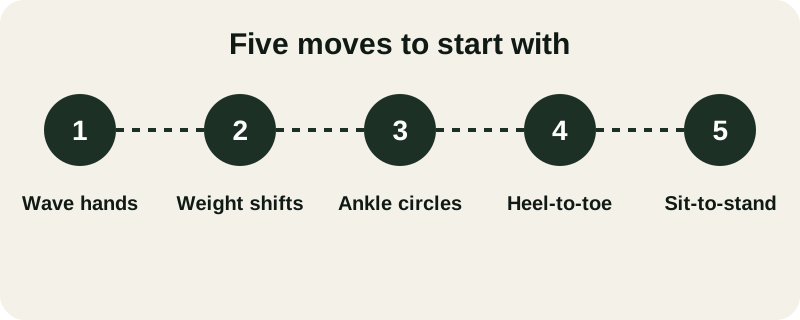
- Wave hands — shift your weight slowly side to side while your hands float in front of you, like smoothing calm water.
- Weight shifts — rock slowly from one foot to the other, feeling your balance settle with each breath.
- Ankle circles — seated or standing, roll each ankle in slow circles to release tension before you begin.
- Heel-to-toe — stand tall, feet hip-width apart, then place one foot directly in front of the other near a stable chair, wall, or counter.
- Sit-to-stand — rise slowly from a chair and lower back down with control, using your breath to pace the movement.
None of these need speed or strength. The point is to move slowly enough that your attention stays on the motion itself, not on your to-do list.
If today feels like a day for sitting rather than standing, every one of these five moves works from a chair — rest your feet flat on the floor and let your upper body do the moving. Our guide to seated tai chi for seniors builds a full short routine around exactly this idea.
Breathing techniques that deepen the calm
Movement alone helps, but slow breathing is what turns a tai chi session into something calming rather than just gentle exercise. Breathing low into the belly, rather than high in the chest, signals the body to relax even before the mind catches up.
A simple pattern to try: breathe in slowly through your nose for a count of four, pause briefly, then breathe out even more slowly for a count of six. Let your shoulders drop a little more with every exhale. Our full guide to tai chi breathing techniques walks through a few more patterns if you'd like to go deeper, and the tai chi breathing exercises page pairs breath with specific arm movements.
If slow breathing on its own feels hard to focus on, pairing it with the arm movements in wave hands often makes it easier — the hands give your eyes something to follow while your breath finds its rhythm.
You don't need to count perfectly or breathe in any special rhythm forever. Even noticing your breath for a minute or two, then letting it return to normal, teaches your body that it's allowed to slow down.
Mistakes that make anxious practice harder
A few habits can turn a calming session into one more thing to get right. Easing off these will help the practice feel restful instead of effortful.
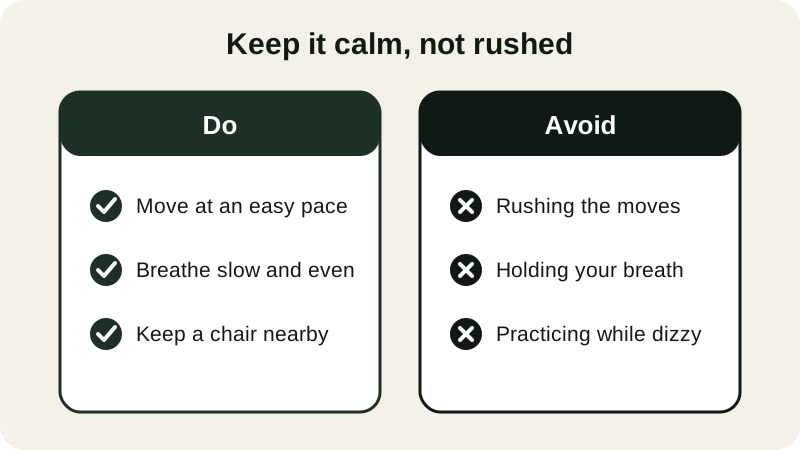
| Do | Avoid |
|---|---|
| Move at an easy pace | Rushing the moves |
| Breathe slow and even | Holding your breath |
| Keep a chair nearby | Practicing while dizzy |
Rushing is the most common one — anxious minds often want to finish quickly, but the slower you move, the more the practice can actually calm you. Holding your breath without noticing is another common habit; if you catch yourself doing it, just exhale and let your shoulders soften.
How long should a calming session last?
Five to ten minutes, most days, is enough for tai chi to feel calming — length matters far less than consistency. A short practice you actually repeat daily will do more for anxious feelings than one long session you only manage once in a while.
Daily Tai Chi builds this kind of short, repeatable practice into a 28-day path of guided sessions, each one taking just a few quiet minutes on your phone or tablet. You can try the first four days free, with no card and no account needed, to see whether a short daily session helps you feel calmer.
If sitting feels more comfortable than standing some days, the moves above all adapt to a chair — see our chair tai chi guide for seated versions. And if anxiety often shows up as a tight, stressed feeling rather than racing thoughts, our piece on tai chi for stress relief covers a few more calming moves to add to your routine. Whichever version you choose, the goal is the same: a few unhurried minutes that give your mind one gentle place to rest.
Sources
Can tai chi actually calm anxious thoughts, or is it just gentle exercise?
Tai chi pairs slow movement with steady breathing, which gives an anxious mind something calm to follow instead of circling thoughts. It isn't a cure for anxiety, but many people find the combination of movement and breath genuinely calming, especially when practiced most days rather than occasionally.
Is tai chi safe for seniors with severe anxiety or panic attacks?
Yes, tai chi suits most seniors, including those managing anxiety, because every move can be slowed down, done seated, or practiced near a wall for support. If you experience panic attacks or severe anxiety, mention a new practice to your doctor first, the same way you would any new routine.
What if anxious energy makes it hard to sit still for breathing alone?
That's common, and it's one reason movement-based practice can feel more doable than sitting meditation when you're restless. Moving slowly while you breathe gives anxious energy somewhere to go, instead of asking you to sit still against it from the very start. Start with wave hands if you need a simple, flowing move to follow.
How soon might you feel calmer after starting?
There's no single timeline — it depends on the person — but many people notice their breathing slow and shoulders drop within the first few sessions once movement and breath start to sync. Aim for five to ten minutes most days and pay attention to how you feel afterward rather than watching a clock.