 DAILY TAI CHI
5 Tai Chi Moves for Wrist and Hand Mobility
Five slow tai chi moves — wrist circles, finger spreads, wave hands, wrist flex, and palm presses — can loosen stiff wrists and hands in a short daily routine.
Published
Quick answer
Tai chi for wrist and hand mobility uses slow circles, gentle flexes, and open-palm presses to loosen stiff joints without strain. Five simple moves, done for 5 to 10 minutes a day, can help your hands and wrists feel looser over time.
Key takeaways
- Five slow moves — wrist circles, finger spreads, wave hands, wrist flex, palm presses — ease stiff hands
- A few minutes most days works better than one long session
- Keep every movement slow and pain-free; stop if anything feels sharp
- Pair hand moves with a short warm-up before a seated or standing session
- Check with a doctor first if you have an existing hand or wrist condition
Tai chi can bring gentle mobility back to stiff wrists and hands. A few slow, circular movements each day may be all it takes to feel looser and move more freely.
This guide walks through five simple hand and wrist moves you can do seated or standing, plus a short, repeatable way to turn them into a daily habit.
Why do your wrists and hands feel stiff?

Hands and wrists often stiffen with age and long stretches of inactivity, and small joints lose some of their easy range of motion when they aren't moved through their full circle regularly. Slow wrist circles and finger stretches invite those joints to move again, without any sudden or forceful motion.
Everyday habits play a part too. Hours spent typing, holding a phone, knitting, or gripping garden tools all keep the hand in one narrow position for long stretches, and the small muscles and tendons around the wrist rarely get a chance to move the other way. A short break to circle the wrists and open the fingers can undo some of that tightness before it settles in for the day.
If stiffness shows up alongside sore or achy joints, you're not alone — it's one of the most common reasons people look for slow movement in the first place. Our guide to tai chi for arthritis and stiff joints goes deeper into whole-body joint care, while this page focuses just on the hands and wrists.
Five gentle moves for wrist and hand mobility
These five moves borrow directly from tai chi and qigong practice, and every one of them can be done seated at a table or standing with your arms relaxed at your sides.
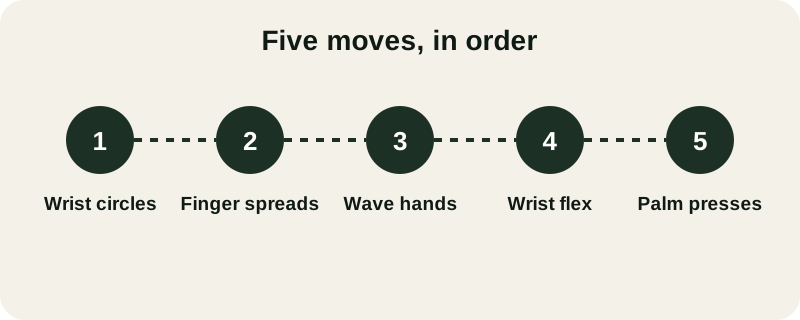
- Wrist circles. Hold your hands loosely in front of you and circle each wrist slowly, a few times in one direction and the same in the other.
- Finger spreads. Spread your fingers as wide as feels comfortable, pause for a breath, then let them curl softly back in.
- Wave hands. Borrowed from the classic tai chi movement of the same name, let your wrists float side to side as if smoothing the surface of calm water.
- Wrist flex. With your palm facing down, bend your wrist up and down in a slow, easy arc, like a small wave.
- Palm presses. Press your palms together at chest height, fingers pointing up, then slowly lower your hands while keeping the palms touching.
None of these need much space or any equipment, and all five together take only a few quiet minutes.
A simple way to pace yourself is to count slow breaths instead of repetitions. Let one full breath carry you through one wrist circle, one finger spread, or one pass of wave hands. Five or six slow breaths per move is usually plenty, and you can always do fewer on a day when your hands feel tighter than usual. If you'd like to see how these hand movements connect to full tai chi postures, our tai chi moves names list shows where wave hands and similar motions fit into a longer practice.
How do you build a short daily practice?
Five to ten minutes most days is plenty for wrist and hand mobility. Pair the five moves above with a brief warm-up, breathe slowly throughout, and let your hands move at whatever pace feels easy rather than rushing to finish.
Slow breathing does more than fill the time between movements — it also helps the hands stay relaxed instead of tensing up as you circle and stretch. If you'd like a simple pattern to follow, our guide to tai chi breathing exercises walks through a few easy counts you can use alongside any seated or standing routine, including this one.
If you'd rather follow along than keep the order in your head, Daily Tai Chi guides you through a 28-day path of short, slow sessions on a large, clear screen, with each hand and wrist movement broken into easy steps you can watch and copy. The first 4 days are free, with no card and no account needed, so you can try a session today and notice how your hands feel afterward.
For a ready-made sequence to warm up before these hand moves, see our tai chi warm-up exercises guide, or try our 5-minute morning routine to pair hand mobility with a wider wake-up practice. Either one works as a short lead-in before the five moves above, so your fingers and wrists are already a little looser by the time you start.
Mistakes that make stiff hands worse
Most hand stiffness gets worse from gripping too tightly, rushing through repetitions, or forcing a stretch past where it feels comfortable — three habits worth dropping before anything else.
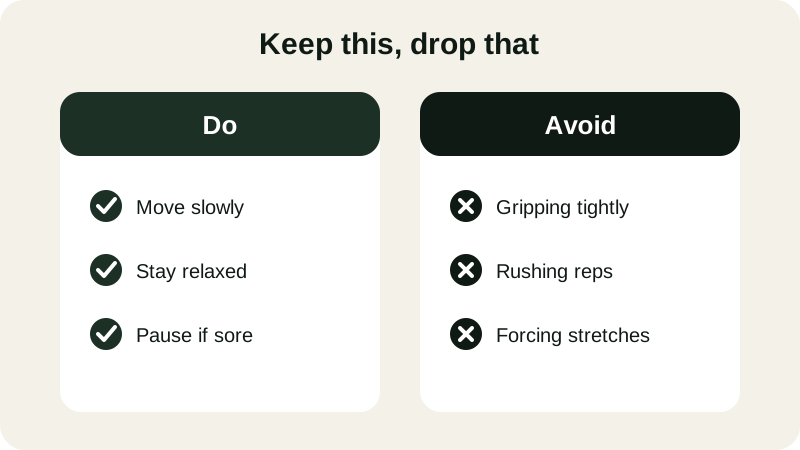
| Do | Avoid |
|---|---|
| Move slowly | Gripping tightly |
| Stay relaxed | Rushing reps |
| Pause if sore | Forcing stretches |
It also helps to keep your shoulders soft while you work through hand moves — tension tends to travel up the arm and makes wrists feel tighter than they really are. Stand tall, feet hip-width apart, or sit with your feet flat, and let your shoulders drop away from your ears before you begin.
Another common slip is only practicing hand mobility on days when the hands already feel stiff, then stopping as soon as they feel a little better. A short, steady habit — even on days when your hands feel fine — tends to keep that looseness around longer than an occasional burst of movement after stiffness has already set in. Think of these five moves less as a fix for a bad day and more as a small, friendly check-in with your hands each morning or evening.
If your shoulders feel just as tight as your hands, our tai chi for shoulder mobility guide uses the same slow approach. For a broader look at loosening up all over, tai chi moves for flexibility rounds out a full routine, and our beginner's guide is a good place to start if this is new to you.
Sources
Can tai chi help with arthritis in the hands?
Many people add slow, gentle hand movement alongside their regular care for sore or arthritic joints, though tai chi is not a treatment on its own. Keep every motion within a comfortable range, and check with a doctor first if your joints are inflamed or painful.
Do these moves work if you sit at a desk all day?
Yes. Wrist circles, finger spreads, and wrist flexes take less than a minute each and fit easily into a seated break at a desk or table. A short round every hour or two can keep hands from stiffening up during long stretches of typing or reading.
What if one hand feels stiffer than the other?
That's common, and it's fine to spend a little more time on the stiffer side. Move both hands through the same sequence, then repeat the circles or stretches on the tighter hand a few extra times, always staying inside a comfortable range.
Can you practice these moves while holding a cane?
It's best to set anything down first so both hands can move freely through each circle and stretch. If you need support for standing, lean on a stable chair, wall, or counter instead, and keep your hands free for the movements themselves.