 DAILY TAI CHI
5 Tai Chi Moves for Better Coordination
Tai chi improves coordination by training the hands, feet, and eyes to move together through a short sequence of slow, repeatable moves you can practice daily.
Published
Quick answer
Tai chi can improve your coordination by training your hands, feet, and eyes to move together in slow, deliberate patterns. Moves like wave hands and heel-to-toe stand link both sides of your body, which is the core skill behind better coordination.
Key takeaways
- Tai chi trains hand-eye-foot coordination through slow, repeated movement, not speed or strength.
- Moves like wave hands and heel-to-toe stand link both sides of your body in one motion.
- A stable chair, wall, or counter nearby makes practice safer while you build coordination.
- Five to ten minutes of practice most days works better than one long weekly session.
- Coordination gains build gradually, the same way any new movement pattern becomes familiar.
Practicing tai chi can build better coordination over time, training your hands, feet, and eyes to move as one instead of working separately.
Think of it less like exercise and more like practice for a skill — the same way slow, repeated drills teach a new habit to your nervous system. That slow pace is exactly what makes tai chi such an effective coordination exercise for people who've never done anything like it before.
Everyday tasks ask for this same kind of coordination more than you might think — reaching for a cup while turning to answer the phone, or stepping off a curb while glancing at traffic. Tai chi gives you a safe, slow space to rehearse that kind of multitasking before you need it in daily life.
What does tai chi do for coordination?

Tai chi improves coordination by training your hands, feet, and eyes to move together in one slow, continuous motion, rather than practicing each part separately. This cross-body training — moving opposite arm and leg together — is built into nearly every tai chi sequence, which is what makes it such a natural coordination exercise for beginners of any age.
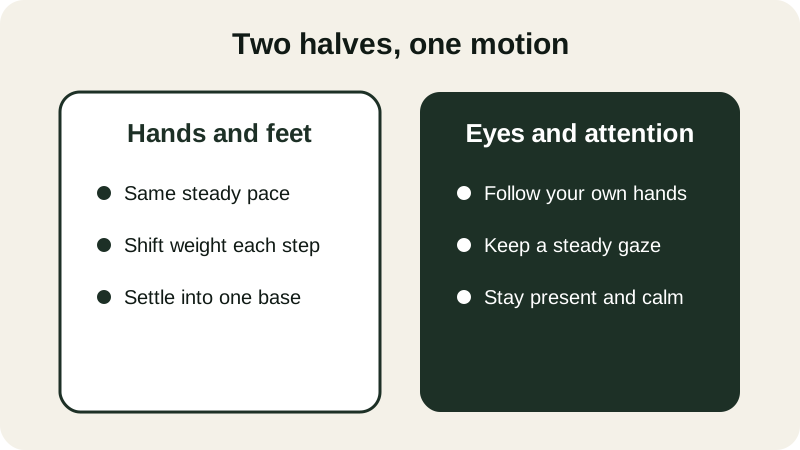
| Hands and feet | Eyes and attention |
|---|---|
| Same steady pace | Follow your own hands |
| Shift weight each step | Keep a steady gaze |
| Settle into one base | Stay present and calm |
Most forms of exercise isolate one skill at a time — strength in the legs, flexibility in the shoulders, speed in the arms. Coordination works differently: it's the skill of making many small movements agree with each other at once. A short hand-eye coordination drill, like tracking your own moving hand with your eyes while your feet shift weight, trains your brain and body to cooperate rather than compete for attention.
Five tai chi moves that train coordination
You don't need a long list of movements to build better coordination through tai chi. A handful of classic moves, repeated slowly and often, do most of the work — and each one adapts easily to standing or seated practice.
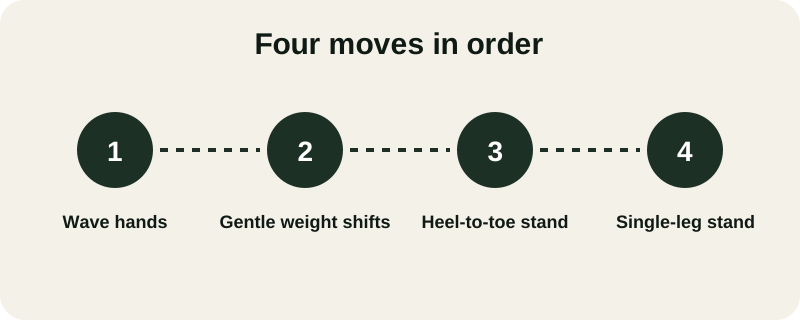
Each of the five moves below pairs movement in your feet with movement in your hands or eyes, which is the exact pattern that makes tai chi so effective for coordination work.
- Wave hands: stand tall, feet hip-width apart, and let your arms float side to side while your weight shifts between feet.
- Gentle weight shifts: rock slowly from one foot to the other, keeping your upper body relaxed and your gaze level and steady.
- Heel-to-toe stand: place one foot directly in front of the other, as if standing on a line, near a stable chair, wall, or counter.
- Single-leg stand: lift one foot a few inches off the floor for a few slow breaths, then switch to the other side.
Two more moves are worth adding once these feel comfortable. A slow sit-to-stand from a regular chair asks your legs and core to work together as one unit, and ankle circles wake up the small muscles that fine-tune your footing with every step. For a longer list of named postures and what each one trains, see our guide to tai chi moves and names.
How often should you practice for better coordination?
Five to ten minutes of practice most days works better than one long session a week, because coordination improves through frequent repetition rather than intensity or duration.
Coordination is a learned pattern, much like handwriting or typing — it improves through repetition, not effort or strength. Practicing the same handful of moves for five to ten minutes most days teaches your nervous system to trust the pattern, while an occasional hour-long session once a week gives it far less to work with. If you're not sure how to pace a new routine around your week, our guide on how often seniors should practice tai chi walks through a simple rhythm you can adjust as you go.
Many people notice the change first in ordinary moments — catching a dropped item a little faster, or feeling steadier carrying a tray through a doorway. These are the real signs that your coordination practice is working, long before you'd think to call it exercise.
Building coordination into your daily routine
If you'd like a guided way to work through these moves in order, Daily Tai Chi builds a personalized 28-day path of short sessions — a warm-up, a main flow, and a cool-down — with each movement broken into slow, step-by-step instructions on a large, clear screen. The first 4 days are free, with no card and no account needed, and the app works on both iPhone and Android.
Whichever way you practice, the underlying idea stays the same: coordination grows through slow, steady repetition, not intensity. These coordination exercises work well as a short daily habit rather than an occasional challenge. Pair these moves with our guide to gentle balance exercises for after 60, or try them seated with our chair tai chi guide on days when standing doesn't feel comfortable.
Can tai chi help if you often feel clumsy or drop things?
Clumsiness often comes from rushed, disconnected movement rather than one single cause. Tai chi slows everything down and links your hands, feet, and eyes together, which can make everyday motions feel steadier over time. If clumsiness is sudden or severe, check with a doctor first to rule out other causes.
Is tai chi better than other coordination exercises?
It depends on what you enjoy and can do comfortably. Tai chi's advantage is that every move is slow, low-impact, and links both sides of the body at once. Dance, simple juggling drills, or tossing a ball back and forth can offer similar cross-body practice if you'd like variety.
Do you need good balance before you start?
No — tai chi is usually how people build balance in the first place, not something required beforehand. Start seated or with a stable chair, wall, or counter nearby, then move to standing versions once you feel ready. A chair tai chi routine is a fine place to begin.
Can seated tai chi still improve coordination?
Yes. Seated tai chi still asks your hands, arms, and eyes to work together through slow shifts in your seated posture, even without footwork involved. It's a solid way to build the same skill on days when standing isn't comfortable.