 DAILY TAI CHI
Tai Chi for Hip Pain: Gentle Moves That Help
This article explains which gentle tai chi movements are kind to the hips, how to start a hip-friendly practice, and when to check with a doctor first.
Published
Quick answer
Tai chi for hip pain focuses on slow weight shifts, gentle rotation, and standing tall to keep the joint moving without strain. Sessions can be practiced standing or seated in just 5 to 10 minutes a day.
Key takeaways
- Slow weight shifts and gentle rotation keep hip joints moving without strain
- Tai chi for hip pain can be practiced standing or seated, whichever feels easier
- Short daily sessions of 5 to 10 minutes are enough to build a habit
- Keep a stable chair, wall, or counter nearby and stop if you feel dizzy or unsteady
- Check with a doctor first if you have a hip condition or recent surgery
Tai chi for hip pain works by moving the joint through a small, comfortable range instead of pushing it past where it wants to go. The slow, steady motion warms the muscles around the hip and encourages gentle rotation, which often leaves the joint feeling looser rather than more tense.
What causes hip pain, and can tai chi help?

Hip pain can come from stiffness after long periods of sitting, from general wear in the joint, or simply from muscles around the hip that have gotten tight over time. Tai chi is not a treatment for any specific hip condition, but its slow, controlled style is often gentle enough to practice even on days when the hip feels achy.
Instead of asking the hip to move quickly or deeply, tai chi asks it to move slowly and within a small, pain-free range. That's a very different demand than running, lunging, or deep stretching, which is why so many people with hip discomfort find it a comfortable place to start. The idea behind the whole practice is often described as meditation in motion — your attention rests on breath and gentle rhythm rather than on pushing the body to do more. That shift in focus alone can make a stiff hip feel less like a problem to solve and more like a part of the body you're simply inviting to move a little.
If you're also dealing with stiffness in other joints, our guide to tai chi for arthritis and stiff joints covers similar gentle principles, and our piece on tai chi for knee pain shares related ideas for the lower body. Many people find that hip and knee discomfort travel together, so the same slow, low-impact approach tends to help both.
Which tai chi movements are gentle on the hips?
A handful of simple movements do most of the work. Each one keeps the hip moving without asking it to bend deeply or twist sharply.
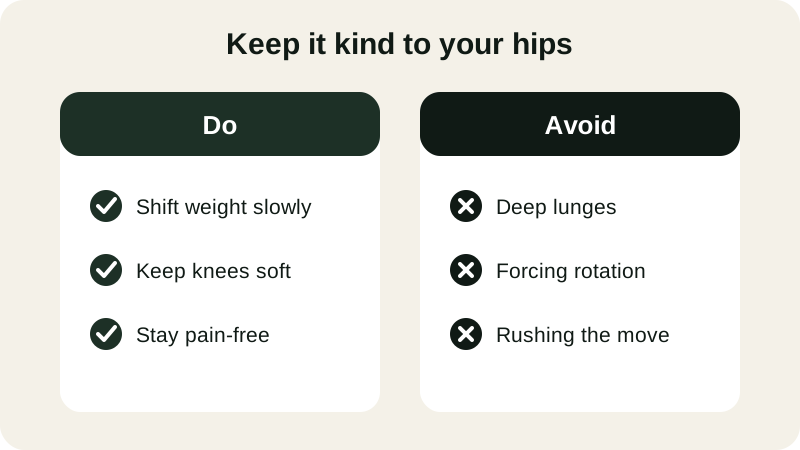
Gentle weight shifts are a good place to begin. Stand tall, feet hip-width apart, and slowly roll your weight from one foot to the other, letting the hips sway softly rather than twist. There's no need to go far — even a small, controlled shift wakes up the muscles around the joint. Wave hands adds a calm, flowing arm motion on top of the same slow footwork, which keeps your attention on breath and rhythm rather than on the hip itself, and that gentle distraction often helps the body relax into the movement.
Ankle circles warm up the lower body without putting any weight through the hip joint at all, which makes them a comfortable way to start a session on a stiffer day. A slow sit-to-stand, done from a sturdy chair, gently strengthens the muscles that support the hip without any sudden load — rise slowly, pause at the top, and lower just as slowly. The heel-to-toe stand and single-leg stand are worth trying once you feel steady, always with a hand resting on a chair or counter, since they build the kind of quiet strength around the hip that supports everyday walking and standing.
How do you start a hip-friendly tai chi practice?
You don't need to learn a long sequence to begin. A short, guided routine that starts slow and stays slow is all that's needed, and it helps to think of the session as four simple stages rather than a performance to get right.
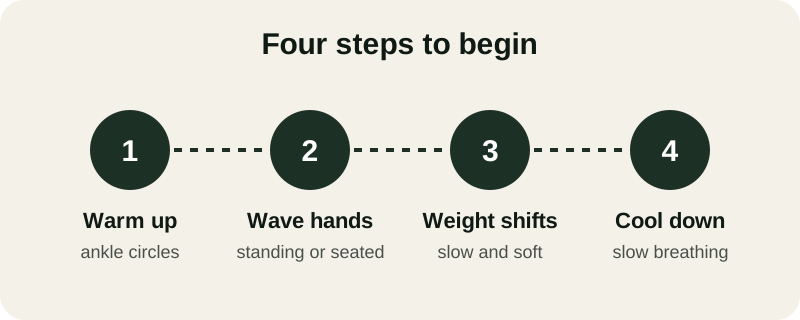
A proper warm-up matters more for the hips than most people expect, since cold muscles and a stiff joint rarely want to move freely right away. Spending a minute or two on ankle circles and gentle marching in place, as covered in our tai chi warm-up guide, gives the hip a chance to loosen before you ask it to do anything more.
The app's 28-day path is built around this idea: short, guided sessions that add one gentle idea at a time, so the hip never has to catch up to a fast pace. The first 4 days are free, with no card and no account needed, and it works on iPhone and Android, so you can try a session from your couch before deciding whether to continue. Many people like that there's no pressure to commit before they know how a session feels in their own body.
Most people find that 5 to 10 minutes a day is plenty. If you'd like a ready-made short session to follow, our 10-minute tai chi routine and chair tai chi for seniors guide both walk through gentle sequences you can adapt for the hips. On days when the hip feels particularly stiff, there's nothing wrong with shortening the session further or repeating just one or two favorite movements instead of a full routine.
When should you check with a doctor about hip pain and tai chi?
Tai chi is gentle, but it's still movement, and hip pain can have many different causes. It's worth a conversation with your doctor before starting if your pain is new, severe, or if you've recently had surgery or an injury near the hip.
A doctor or physical therapist can also tell you whether there's any particular direction of movement you should avoid for now, which is useful information to carry into a tai chi session. Once you know your limits, the slow, adjustable nature of the practice makes it easy to work comfortably inside them rather than around them.
Once you have the go-ahead, there's no rush. Start seated if that feels safer, keep your sessions short, and let your sense of what feels comfortable guide how far you move. Over time, many people notice the hip feels a little easier to move through, simply because it's been moving gently and often rather than sitting still.
If you're curious how this fits into a broader daily habit, our guide on starting a daily tai chi practice walks through how to build consistency without overdoing it, and our balance guide explains how the same slow weight shifts that help the hips also help you feel steadier on your feet. A gentle, patient approach today is often the easiest way to keep moving comfortably for years to come.
Sources
Can tai chi help with hip pain?
Tai chi doesn't treat any specific hip condition, but its slow, gentle movement keeps the joint moving through a comfortable range. Many people find the easy weight shifts and soft rotations feel kinder on the hip than higher-impact exercise, and sessions can be done standing or seated.
Is tai chi safe if I have hip arthritis?
Tai chi is generally low-impact and adaptable, which is why many people with stiff or achy hips find it comfortable. Move gently, keep a stable chair, wall, or counter nearby, stop if you feel dizzy or unsteady, and check with a doctor first before starting.
What tai chi moves are best for hip pain?
Gentle weight shifts, wave hands, and ankle circles are good starting points because they move the hip joint without deep bending or twisting. A slow sit-to-stand also builds hip strength gently, and all of these can be practiced seated if standing feels uncomfortable.
How long should I practice tai chi for hip pain?
Short sessions work well. Five to ten minutes most days is enough to notice the hip feeling looser, and consistency matters more than duration. The app's 28-day path breaks practice into short, guided daily sessions you can follow at your own pace.
Can I do tai chi for hip pain sitting down?
Yes. Many hip-friendly movements, including wave hands and gentle weight shifts, adapt easily to a seated version. This is a good option on days when the hip feels stiffer or standing balance feels uncertain.