 DAILY TAI CHI
Tai Chi for Posture Improvement: 4 Moves to Stand Taller
This article explains how tai chi improves posture through four moves — wave hands, weight shifts, a heel-to-toe stand, and a single-leg stand — that retrain the body to stand tall.
Published
Quick answer
Tai chi can improve posture by repeating one cue in almost every move: stand tall, feet hip-width apart, shoulders relaxed. Slow moves like wave hands and weight shifts retrain the spine and legs to hold that alignment on their own, a little more each day.
Key takeaways
- Tai chi repeats one cue in almost every move: stand tall, feet hip-width apart, shoulders relaxed.
- Gentle weight shifts and wave hands retrain the spine and shoulders to find an open, upright position.
- A heel-to-toe stand and a single-leg stand build the leg and core strength that holds posture steady.
- Short sessions of 5 to 10 minutes most days build postural habits better than occasional long workouts.
- Keep a stable chair, wall, or counter nearby, and stop if you feel dizzy or unsteady.
Tai chi can gently improve posture by teaching your body a tall, relaxed alignment through slow, repeated movement — not by forcing a straight back or holding a strained position.
Instead, every move in the practice asks the same quiet question: can you stand a little taller, a little easier, than you did a moment ago? Over weeks of regular practice, that question slowly becomes a habit.
Can Tai Chi Really Improve Your Posture?

Yes. Tai chi improves posture by repeating one cue in almost every move: stand tall, feet hip-width apart, weight centered and relaxed. Practiced slowly and often, that cue turns into a habit your body carries through the rest of the day.
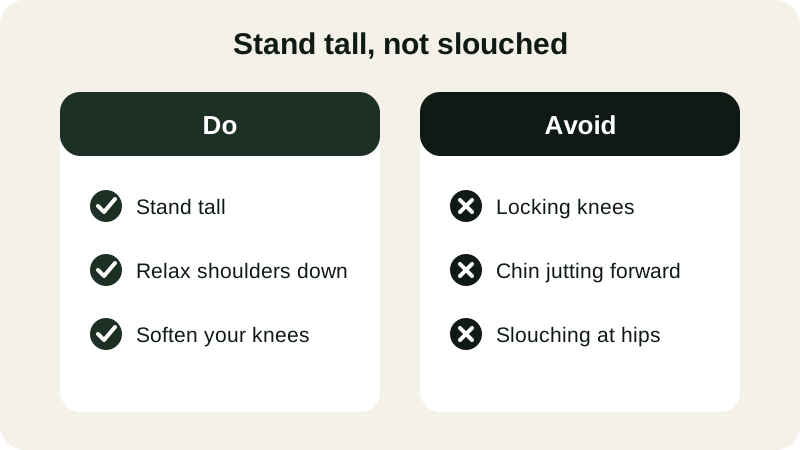
- Do: stand tall
- Do: relax shoulders down
- Do: soften your knees
- Avoid: locking your knees
- Avoid: letting your chin jut forward
- Avoid: slouching into your hips
Most of us slouch without noticing. Screens, driving, and long stretches of sitting all pull the shoulders forward and the head down, and the body quietly adjusts to that shape over months and years. That's not a failing — it's just what repetition does, for better or worse. Tai chi works against that drift by moving your weight from one foot to the other while keeping the spine long, so a tall, even posture stops being something you have to think about and starts to feel like your natural resting state. For more on how this same slow weight-shifting helps you feel steadier on your feet, see our guide on how tai chi improves balance.
The Posture Habits Tai Chi Quietly Retrains
Good posture is less about holding one correct position and more about a handful of small habits: a long neck, an open chest, relaxed shoulders, and knees that aren't locked tight. Tai chi for rounded shoulders works especially well here, because so many of the arm movements ask you to open the chest and let the shoulder blades settle down the back, instead of hunching up toward the ears.
This is where tai chi posture exercises differ from a simple stretch. A stretch lengthens a tight muscle for a moment, then lets it go. A slow, repeated tai chi move — reaching out, drawing back, turning at the waist — trains your nervous system to find that open position again and again, until it starts to feel like home. You'll often notice the difference in the mirror first: shoulders that used to curl forward start to sit back over the collarbone, and the neck looks less jutted toward the screen. If your shoulders feel especially stiff or rounded, our guide to tai chi for shoulder mobility walks through moves aimed directly at that tightness.
What Tai Chi Moves Help You Stand Taller?
Four moves do most of the work: wave hands, gentle weight shifts, a heel-to-toe stand, and a single-leg stand. Together, they train your spine to stay long, your hips to stay level, and your legs to hold you up without strain.
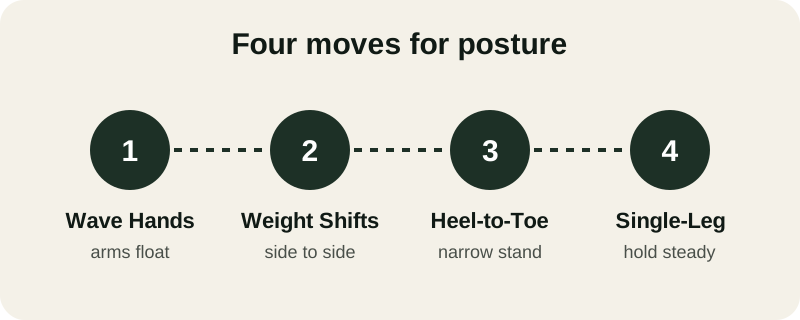
- Wave hands. Your arms float slowly from side to side while your weight shifts underneath you, keeping the chest open and the spine tall the whole time.
- Gentle weight shifts. Rock your weight from one foot to the other, feeling your hips stay level rather than tipping side to side.
- Heel-to-toe stand. Place one foot directly in front of the other to find a narrow, steady base, which naturally encourages a tall, centered spine.
- Single-leg stand. Near a stable chair, lift one foot and hold for a few slow breaths, which strengthens the muscles that quietly hold your posture upright all day.
You don't need to master all four moves on your first try. A slow sit-to-stand and a few ankle circles are enough to begin with, and they warm up the same ankles, knees, and hips these standing moves rely on. Breath plays a quiet role here too — a tall spine gives your lungs more room to expand, and a slower, fuller breath often makes the next movement easier to hold. For more on finding that rhythm, see our piece on tai chi breathing exercises.
Building a Daily Posture Practice
Posture habits are built the same way poor posture habits were built in the first place: slowly, through repetition, without you really noticing it happening. A few minutes of tai chi spine alignment work each day, done consistently, tends to matter far more than one long session now and then. If you're brand new to the practice, our tai chi for seniors guide covers the basic stance and breathing these posture moves build on.
If standing feels like too much on a given day, most of these same movements adapt well to sitting down — our chair tai chi guide shows how to bring wave hands and gentle weight shifts to a chair, so you keep the posture benefit without the balance demand. On steadier days, our guide to tai chi standing meditation offers a quiet five-minute practice built entirely around the feeling of standing tall.
Daily Tai Chi, the app behind this site, builds its sessions around exactly this kind of practice: a 28-day path of short, guided routines, 5 to 10 minutes at a time, with large on-screen cues for standing tall, wave hands, and weight shifts. The first 4 days are free, with no card and no account required, on iPhone and Android.
Posture, like balance, is simply a skill your body relearns with practice. Give it a few quiet minutes a day, and let the slow, steady movement do the patient work for you.
Does tai chi help with a hunched back or forward head posture?
Tai chi can help with a rounded, hunched posture by repeatedly opening the chest and drawing the shoulder blades down and back, especially in moves like wave hands. It works best as a steady habit rather than a one-time fix — a few minutes most days, paired with shoulder-focused moves, tends to help the most.
How long does it take to notice better posture with tai chi?
There's no single timeline, since it depends on how often you practice and how long poor habits have been in place. Many people notice they're standing a little taller within a few weeks of practicing 5 to 10 minutes most days, as part of a steady, 28-day routine.
Can you improve posture with tai chi while seated?
Yes. Many of the same cues — stand tall, relax the shoulders, keep the spine long — work just as well in a chair. Shifting your weight slightly from hip to hip and reaching gently with wave hands are easy to do seated and still train the same alignment.
Is tai chi better for posture than stretching alone?
Stretching loosens a tight muscle for a moment, while tai chi trains the body to return to a tall, open position on its own. The two pair well together: a few minutes of stretching before you begin can make the standing postures in tai chi feel easier.