 DAILY TAI CHI
Tai Chi Standing Meditation: A 5-Minute Practice
Tai chi standing meditation is a short, still practice of standing tall, breathing slowly, and letting your weight settle evenly into both feet.
Published
Quick answer
Tai chi standing meditation means standing tall and still for a few minutes, breathing slowly while your weight settles evenly into both feet. It's often called wu chi, and it's typically the calm opening or closing posture of a tai chi session.
Key takeaways
- Stand tall, feet hip-width apart, with knees soft and arms relaxed at your sides.
- Breathe slowly through your nose and let your belly rise and fall naturally.
- Five to ten minutes of stillness can leave you feeling calmer and steadier.
- Keep a stable chair, wall, or counter nearby if you ever feel unsteady.
- It's often the quiet opening and closing posture of a full tai chi session.
Tai chi standing meditation means standing tall and still for a few quiet minutes, breathing slowly while your weight settles evenly into both feet. It's often the opening and closing posture of a tai chi session, and you can practice it almost anywhere you're able to stand safely.
You may have seen this moment at the start of a class: everyone simply standing, arms loose, eyes soft, before any movement begins. That stillness is the whole point of the practice — a quieter cousin of meditation in motion, sometimes called meditation in stillness.
What is tai chi standing meditation?

Standing meditation, sometimes called wu chi or "standing like a tree," is a stillness practice drawn from tai chi and qigong traditions. You stand tall, feet hip-width apart, knees soft, and simply breathe — no stepping, no sequence of moves, just a quiet, upright body.
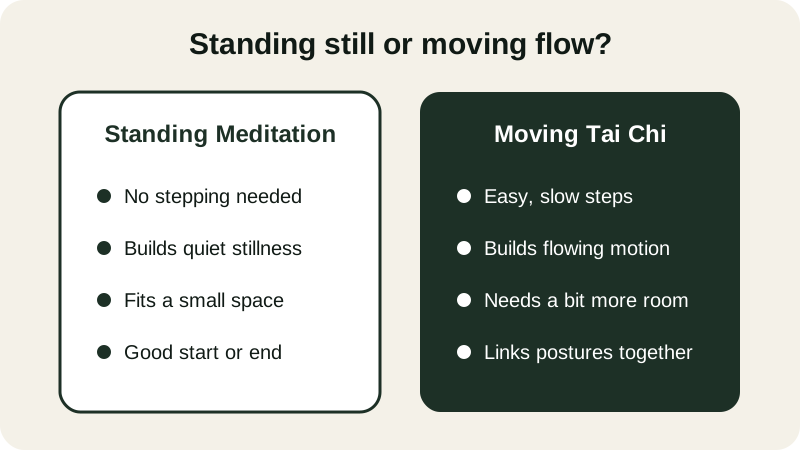
- Standing Meditation: no stepping needed, builds quiet stillness, fits a small space, good start or end.
- Moving Tai Chi: easy, slow steps, builds flowing motion, needs a bit more room, links postures together.
Some teachers call this qigong standing meditation, since it borrows directly from that older tradition of simple postures paired with slow breathing. Think of standing meditation as the hinge between the two — still enough to calm the mind like qigong, yet clearly part of a tai chi session's rhythm.
If you'd like to see how the two traditions relate more closely, our guide to qigong for seniors and beginners walks through the connection in plain terms, and is a natural next read if standing meditation appeals to you.
How to practice standing meditation, step by step
Here's a simple way to begin, whether you're standing in your kitchen, by a window, or next to a sturdy chair you can lean on if needed.
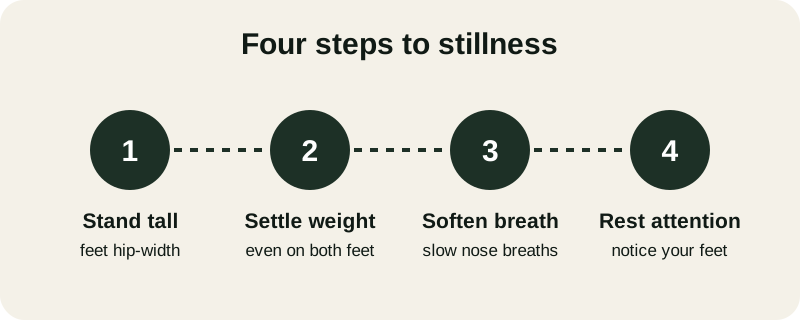
- Stand tall: feet hip-width apart, knees soft and unlocked.
- Settle weight: let it rest evenly on both feet.
- Soften breath: slow nose breaths, belly rising and falling.
- Rest attention: notice your feet on the floor, and stay for 5 to 10 minutes.
What does standing meditation actually feel like?
At first it may feel strange to simply stand and do nothing. Give it a minute or two, though, and most people notice their shoulders drop a little, their jaw unclench, and their breath slow on its own.
A quiet heaviness often settles into the feet — less like standing and more like being planted. Thoughts may still drift in, and that's normal; you simply notice them and let your attention return to your feet or your breath, without judging yourself for wandering.
Your hands may tingle lightly or feel warm as you settle into the posture — a common, harmless sensation some describe as a soft fullness in the palms.
This same grounded feeling supports a steadier gait and a calmer mind once you move into a full tai chi flow. Our article on how tai chi helps you feel steadier on your feet goes further into that connection, and if you'd like a few structured breathing patterns to pair with your standing practice, our tai chi breathing techniques guide is a good companion.
Mistakes to avoid when you're new to standing meditation
Locking your knees straight is the most common early habit — it tires the legs and blocks the tiny, natural sway that tai chi relies on for balance. Keep a soft bend in both knees instead.
Holding your breath while you concentrate is another common slip. Let your breathing stay slow and easy rather than forcing a pattern. Staring hard at one spot can also tighten the eyes and the whole face; let your gaze rest softly, half-lowered, rather than fixed.
Some beginners also try to stand perfectly motionless, like a statue. A little sway is normal, even useful — it's your body's small, constant adjustments that help build balance over time. If standing still for several minutes feels like too much at first, the moves in our step-by-step beginner guide ease you in gradually, and chair tai chi offers the same stillness from a seated position.
Choose a spot away from drafts or a hard, uneven floor if you can, and try to practice at the same time each day so standing meditation becomes an easy habit rather than one more thing to remember.
Fitting standing meditation into your day
Five to ten minutes is plenty, especially when you're just starting. A short, daily habit of standing stillness tends to do more for most people than one long, occasional session.
Many people pair a few minutes of standing meditation with a short warm-up or a longer flowing routine. The app builds this kind of short, guided practice into a 28-day path of sessions for complete beginners and adults 55+, available on iPhone and Android. The first 4 days are free, with no card and no account needed, so you can try a standing session for yourself before deciding whether it fits your routine.
For a sense of how often to return to the practice, our guide on how often seniors should do tai chi is a useful next stop, and our piece on building a daily tai chi practice covers how a few minutes can grow into a lasting habit. In the evening, pairing a few still minutes with our tai chi for sleep routine can help you wind down before bed.
Sources
Can you do standing meditation if you have trouble balancing?
Yes, standing meditation adapts well — stand near a stable chair, wall, or counter for light support, and keep your feet a little wider than hip-width if that feels steadier. If standing still is tiring, try the seated version in our chair tai chi guide instead. Always check with a doctor first if balance is a new or serious concern.
Is standing meditation the same as qigong?
They overlap a great deal — many qigong practices begin with a standing posture, and tai chi borrows the same stillness. The difference is subtle: qigong tends to pair stillness with breath and simple repeated movements, while tai chi standing meditation is most often the quiet opening or closing of a flowing form.
Do you need any special equipment for standing meditation?
No special gear is needed — loose, comfortable clothing and flat, supportive shoes or bare feet on a non-slip floor work fine. A stable chair or wall nearby is a helpful option if you want light support, but even that isn't required to begin.
Can standing meditation replace a full tai chi practice?
It can stand alone on a day when you want something brief and calming, but it isn't a full substitute for a flowing practice. Think of it as one piece: a steady foundation you can build a longer routine around, or a short practice on its own on a busier day.
Does standing meditation help with stress?
Many people find the slow breathing and stillness calming, since it gives the mind one simple thing to rest on instead of racing thoughts. Pairing it with a structured breathing pattern, like those in a dedicated breathing practice, can help extend that sense of calm through the rest of your day.