 DAILY TAI CHI
Tai Chi for Beginners: Step by Step Guide
A step-by-step beginner's path through the first stance, breath, and movements of tai chi, with pacing and safety notes for those new to the practice.
Published
Quick answer
Tai chi for beginners step by step means standing tall with feet hip-width apart, breathing slowly, then adding gentle weight shifts and wave hands for 5 to 10 minutes a day, standing or seated.
Key takeaways
- Start with a tall stance, feet hip-width apart, and slow, easy breathing.
- Add gentle weight shifts and wave hands once your stance feels steady.
- Keep first sessions to 5 to 10 minutes, most days of the week.
- Keep a stable chair, wall, or counter nearby for extra support.
- Move slowly and stop if you feel dizzy or unsteady.
Tai chi for beginners step by step starts with four simple building blocks: a stable stance, slow breathing, gentle weight shifts, and a few calm minutes of practice each day.
What do you need before your first tai chi session?

You don't need special equipment or a big space to begin. A quiet corner of a room, enough space to stretch your arms out, and comfortable, loose clothing are all you really need.
Flat, supportive shoes or bare feet both work well. Keep a stable chair, wall, or counter nearby in case you want extra support while you find your balance. If you'd rather sit through the whole practice, our chair tai chi guide shows how every movement adapts to a seated version.
Any time of day works, though many beginners enjoy a calm stretch of morning quiet or a wind-down slot in the evening, before the day fills up with other things.
How do you stand and breathe to begin?
Every tai chi session starts the same simple way: you stand tall, feet hip-width apart, with your knees soft and your shoulders relaxed down away from your ears.
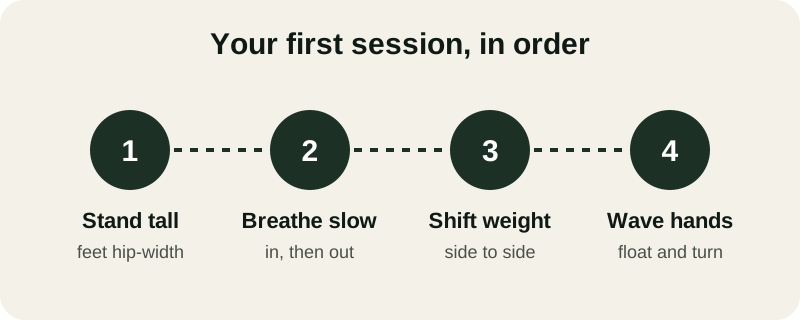
From there, you let your breath settle into a slow, easy rhythm — in through the nose, out through the mouth, with no rush at either end. This calm stance and breath is the foundation everything else builds on, which is why tai chi is often called meditation in motion. Relaxed shoulders and a soft, natural breath matter more than getting any hand position exactly right. If your mind wanders, that's fine — gently bring your attention back to the movement and the breath.
What are the first steps to practice, in order?
Once your stance and breathing feel steady, you can move through a short beginner sequence. Here is a simple order to follow for your very first few sessions.
- Stand tall, feet hip-width apart, knees soft, arms relaxed at your sides.
- Breathe slowly for a few breaths until your shoulders drop and settle.
- Practice gentle weight shifts, rocking your weight slowly from one foot to the other.
- Add wave hands, letting your arms float and turn softly in front of you as you shift.
- Try a heel-to-toe stand near your chair, holding for a few slow breaths.
- Finish with a few ankle circles and a slow sit-to-stand to settle your body.
You don't have to master every piece right away. Many beginners spend their first week simply on the stance, the breath, and the weight shifts — and that alone is a complete practice. For a fuller rundown of names and postures, our tai chi moves names list is a handy reference as you go.
As your balance feels steadier over the days ahead, you might add a gentle single-leg stand near your chair, lifting one foot just an inch off the floor for a slow breath or two.
How long should your first tai chi sessions be?
Short is exactly right. Most beginners do well with sessions of 5 to 10 minutes, practiced on most days rather than one long session now and then.
Daily Tai Chi, for example, is built around a 28-day path of short, guided sessions — and the first 4 days are free, with no card and no account needed, on iPhone and Android. That's enough time to feel how the stance, breath, and first few movements fit together before deciding if you'd like to continue.
Think in terms of a full first week rather than a single session. Some days you might only manage the stance and breathing; other days you'll move through the whole sequence. Both are a win.
If mornings suit you better than evenings, or the other way around, our 5-minute morning routine and gentle evening routine both use these same beginner basics.
What should beginners avoid when starting out?
A few small habits make the first weeks smoother and more comfortable.
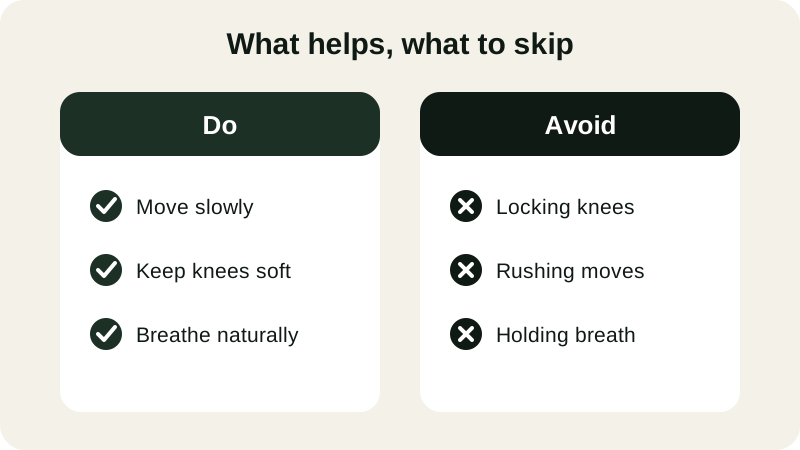
Avoid rushing from one movement to the next, holding your breath during a shift, or pushing into any stretch that feels sharp or painful. Tai chi should always feel gentle, never strained. It also helps to let go of any comparison to how tai chi looks in videos or parks. Beginners move more slowly and more stiffly, and that's exactly right for a first practice.
If you'd like more background on why this pace suits older adults and complete beginners so well, our beginner's guide to tai chi covers the bigger picture, and our warm-up exercises are a gentle way to prepare your joints before any session.
What if you feel stiff or wobbly at first?
Feeling a little stiff or wobbly in your first sessions is completely normal — your body is learning new patterns of movement and balance. Slow weeks are part of the process, not a sign you're doing it wrong.
If stiffness in your knees, hips, or shoulders makes certain moves uncomfortable, let the movement get smaller rather than skipping it. A half-sized weight shift or a fully seated version still counts as practice. Our gentle moves for knee pain and tai chi for stiff joints guides offer some adaptations worth trying.
If wobbliness is more about balance than stiffness, build confidence gradually with support nearby. Our gentle balance exercises guide walks through single-leg stands and other steadying moves you can add once the basics feel comfortable.
How do you keep building from here?
Once the first few sessions feel familiar, you can slowly add length and a few new movements rather than new intensity. A little consistency matters far more than doing a lot at once.
Many beginners find that practicing at a similar time each day — a slow wake-up, or a calm wind-down before bed — turns tai chi into an easy habit rather than one more thing to remember. For the specifics on timing and frequency, see our guide on how often seniors should practice tai chi.
Sources
What is the very first step in learning tai chi?
The very first step is simply learning to stand tall, feet hip-width apart, with soft knees and relaxed shoulders. Once that feels comfortable, you add slow breathing. Everything else in tai chi — the weight shifts, the arm movements — builds on this calm, steady starting position.
How long should a beginner practice each day?
Most beginners do well with 5 to 10 minutes a day rather than one long session now and then. Short, regular practice helps your body learn the stance and movements gradually, without strain, and it's far easier to keep up as a daily habit.
Do I need to stand up to practice tai chi as a beginner?
No. Every movement described here adapts to a seated version, so you can practice entirely from a chair if standing feels unsteady or uncomfortable. The stance, breathing, and weight-shift ideas all translate naturally to sitting down.
What if I feel unsteady during my first tai chi sessions?
Feeling a little wobbly at first is normal while your balance adjusts. Keep a stable chair, wall, or counter nearby, move slowly, and stop if you feel dizzy or unsteady. If you're new to exercise or have health concerns, check with a doctor first.
How soon can I move beyond the basic beginner steps?
There's no fixed timeline — some people add new movements within a week, others stay with the stance and breathing longer, and both are completely fine. Let your own comfort and steadiness guide the pace rather than any schedule.