 DAILY TAI CHI
App to Learn Tai Chi Moves Step by Step: 28 Days
This guide explains how a step-by-step tai chi app teaches named moves one small piece at a time, with a safety note and a look at Daily Tai Chi's 28-day guided path.
Published
Quick answer
An app to learn tai chi moves step by step walks you through named postures like wave hands and weight shifts in short daily sessions, building from a stable stance to a full routine.
Key takeaways
- Learning tai chi moves step by step means one posture at a time, not a full routine at once.
- Named moves like wave hands and weight shifts come before any sequence is combined.
- Sessions of 5 to 10 minutes, standing or seated, are enough for daily practice.
- You can repeat any step as many times as you like before moving on.
- A short warm-up with ankle circles helps the body feel ready before the main flow.
If you're using an app to learn tai chi moves step by step, each session starts with one named posture at a time — a stance, a breath, a slow repeat — before the next move is added. That one-piece-at-a-time pace is what makes tai chi approachable even if you've never moved this way before.
This matters most if you're new to exercise, managing stiff joints, or want a calmer start to the day. A good tai chi app for beginners doesn't expect you to already know what wave hands or a heel-to-toe stand looks like — it shows you, one small piece at a time, on a screen you can see clearly from across the room.
What does a step-by-step tai chi app actually teach?

A step-by-step tai chi app teaches one named posture at a time — wave hands, a weight shift, an ankle circle — breaking it into a starting stance, a slow breath, and a repeatable motion, before linking a few moves into a short flow you follow along with.
Daily Tai Chi builds this into a 28-day tai chi program of short, guided sessions on iPhone and Android, each a slow-motion walkthrough of a single move on a large, clear screen. The first 4 days are free, with no card and no account needed, so you can try several sessions before deciding if this pace suits you.
Many sessions open with a short warm-up — ankle circles, soft shoulder rolls, a few slow breaths — before moving into the main posture, so your body feels ready rather than starting cold.
If you'd rather start with something to read before you open an app, our step-by-step guide to tai chi for beginners covers the same stance and breathing basics in plain language.
Why moves are taught one at a time
Teaching one posture before adding the next keeps early sessions calm instead of overwhelming. You can focus on where your weight sits and how your breath moves, rather than trying to remember a whole sequence on day one. Confidence with a single move, like a weight shift, carries into everything you learn after it.
This approach suits adults 55+ especially well, since there's no pressure to keep up with a room full of other people and no fast cues to miss. You move through each posture at your own pace, pause the screen when you need to, and build confidence one small motion at a time.
How one tai chi move breaks down into four steps
Most step-by-step tai chi moves follow the same simple pattern: watch it once, mirror it slowly, repeat at your own pace, then combine it with the moves you already know.
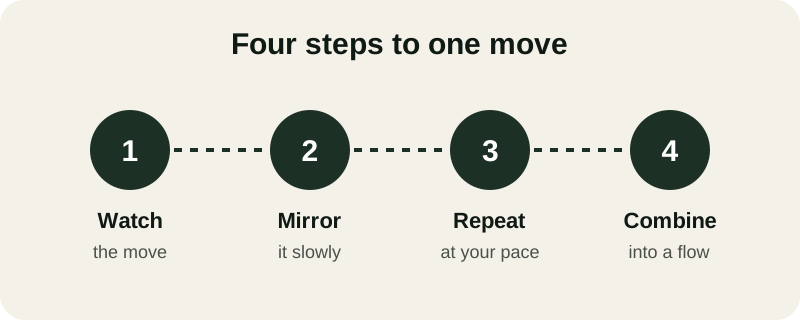
- Watch the move
- Mirror it slowly
- Repeat at your pace
- Combine into a flow
This slow build is what makes a move like wave hands or a heel-to-toe stand feel manageable even if you've never exercised this way before. If you'd like to see the full range of named postures before you start, our list of tai chi moves for beginners names each one in plain language.
What a full session looks like
A typical guided session moves through three short stages: a warm-up to loosen the neck, shoulders, and ankles; a main flow where you practice two or three named moves; and a slow cool-down to settle your breathing before you stop. Knowing this shape in advance makes each day's practice feel familiar, even as the specific moves change.
How long do you need to practice tai chi moves each day?
Most beginners only need 5 to 10 minutes a day to learn tai chi moves step by step. A short daily session, standing or seated, is enough to settle one stance and one named move before the next session builds on it.
If ten minutes feels like a lot on some days, even a couple of minutes standing tall and breathing slowly still counts. The goal is a daily touchpoint, not a workout to brace for.
Consistency matters more than length. A few calm minutes most days will take you further than one long session now and then. If mornings suit you best, our 5-minute morning tai chi routine uses this same slow pace to help you feel steadier as you start the day.
If standing for several minutes isn't comfortable some days, you can follow the exact same named moves in a seated chair tai chi session instead. The steps stay identical — a stance becomes a seated posture, a weight shift becomes a soft lean — so you don't lose your place in the sequence just because you're sitting down.
Mistakes beginners make when learning tai chi from a screen
The most common mistake is rushing ahead to the next move before the current one feels steady. Skipping the warm-up, comparing your pace to someone else's, and practicing while distracted are close behind.
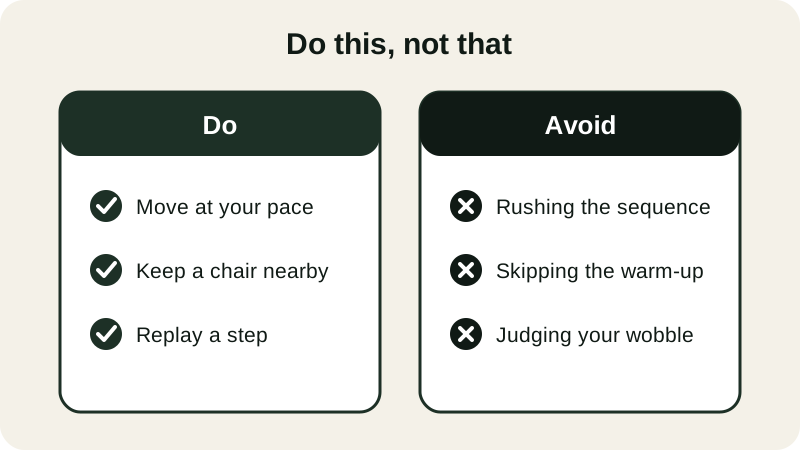
| Do | Avoid |
|---|---|
| Move at your pace | Rushing the sequence |
| Keep a chair nearby | Skipping the warm-up |
| Replay a step | Judging your wobble |
Why slower progress is normal
Feeling a little wobbly or forgetful in the first week is completely normal, especially if you haven't moved this way before. The slow pace of a step-by-step program means there's no penalty for needing extra repeats — you simply play the same section again until the shape of the move settles into your body.
None of this is a race, and nothing about learning tai chi moves step by step rewards speed. The named moves themselves — weight shifts, slow turns, soft arm circles — are built to be kind to stiff knees, hips, and shoulders, which is part of why this style suits complete beginners and anyone managing everyday stiffness.
Give yourself permission to repeat a session as many times as you like before moving on. There's no schedule but your own, and the slow pace is the point, not a hurdle to get past. For more on building a sustainable rhythm, see our guide on how often seniors should practice tai chi.
If you've been wondering whether this kind of practice fits your age or fitness level, the short answer is yes — see our guide on whether seniors can do tai chi for more on getting started safely, one small step at a time.
Do you need any special equipment to follow tai chi moves step by step?
No special equipment is needed, just comfortable clothing and a little floor space. If you plan to practice weight shifts or a single-leg stand, keep a stable chair, wall, or counter nearby for extra support while you follow along.
Can following an app replace an in-person tai chi class?
It depends on what you need. Following along at your own pace builds a steady daily habit, while a local class adds hands-on correction from an instructor. Many people start alone and add a class later if they want more feedback on their form.
How soon can you expect a move to feel familiar?
Most beginners need several short sessions before a single move like wave hands feels automatic. Repeating the same few postures over a week or two, rather than rushing to learn many new ones, is what makes them settle into memory.
What if you forget a move partway through practice?
Pausing and repeating a step is completely normal and doesn't mean you're behind. Go back to the last move that felt steady, repeat it slowly a few times, and only move on once it feels familiar in your body.