 DAILY TAI CHI
App to Build a Tai Chi Habit in 28 Days
This guide explains what makes an app effective for building a lasting tai chi habit, from short daily sessions to a repeatable 28-day path.
Published
Quick answer
The right app to build a tai chi habit offers short 5 to 10 minute sessions arranged in a 28-day path, so you repeat the same simple routine daily until it feels automatic. Keep a stable chair nearby for balance moves.
Key takeaways
- Five to ten minutes a day builds the habit faster than one long weekly session.
- A stable chair, wall, or counter nearby makes balance moves safer while you practice.
- Practicing at the same time each day makes a tai chi habit feel automatic.
- A 28-day path breaks practice into a repeatable warm-up, flow, and cool-down.
- Stop if you feel dizzy or unsteady, and check with a doctor first if unsure.
Building a tai chi habit sticks best when practice is broken into short daily sessions you can actually finish, rather than one long routine you keep postponing. A clear, repeatable structure does the rest — it turns a few quiet minutes into something you return to without having to think about it.
What makes an app good for building a tai chi habit?

A good tai chi app breaks practice into 5 to 10 minute sessions, follows a clear order such as a 28-day path, and works on iPhone and Android so you can start wherever you are.
Look past flashy extras and check for plain, step-by-step guidance: one named move at a time, a steady pace, and an option to sit if standing feels tiring that day. The simplest structure is usually the one you'll actually open tomorrow, not the one with the most features. For a closer look at pacing a practice over time, our guide to tai chi daily practice is a useful next read.
A few signs point to a program built for beginners rather than borrowed from a general fitness app:
- Sessions of 5 to 10 minutes, so a single sitting never feels like a chore.
- A 28-day path that orders movements from easiest to slightly more involved.
- Large, easy-to-read screens with one move explained at a time.
- A seated option for every standing movement, including a chair version of a slow sit-to-stand.
- A trial you can test without commitment — the first 4 days free, no card or account needed.
Five minutes that start the habit
Most complete tai chi sessions take just 5 to 10 minutes — enough time for a few gentle weight shifts, a slow sit-to-stand, and a handful of wave hands moves before you're done for the day.
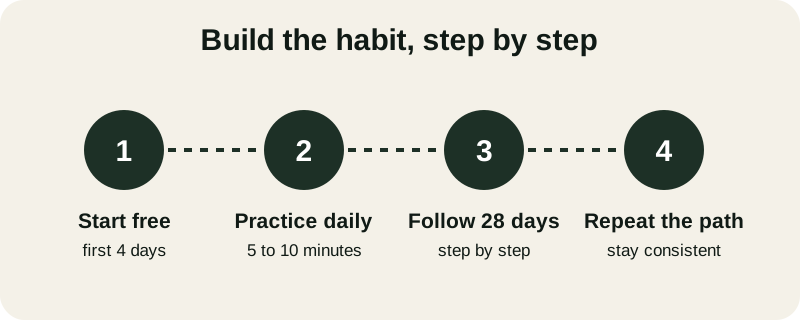
- Start free — first 4 days
- Practice daily — 5 to 10 minutes
- Follow 28 days — step by step
- Repeat the path — stay consistent
Short sessions matter because they lower the bar to begin. On a tired day, five minutes feels possible in a way that forty-five minutes doesn't — and showing up for five minutes keeps a daily tai chi habit alive even when energy is low. Many sessions open with simple ankle circles to wake up the feet before moving into slower, flowing steps, so by the time you reach the main flow your body already feels loosened rather than rushed.
As your weight shifts settle in, some sessions add a heel-to-toe stand or a single-leg stand to build steadiness near a support.
Why short daily sessions beat occasional long ones
A single long class once a week asks a lot of your calendar and your joints, while a short daily practice fits almost any day and keeps gentle movement part of your routine.
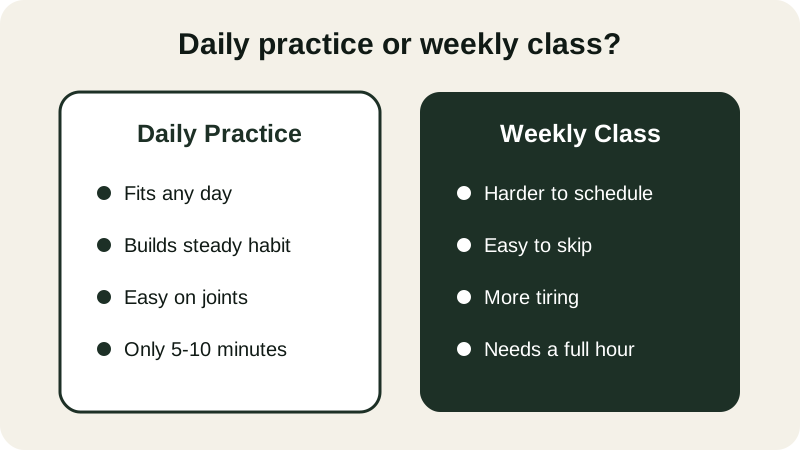
| Daily Practice | Weekly Class |
|---|---|
| Fits any day | Harder to schedule |
| Builds steady habit | Easy to skip |
| Easy on joints | More tiring |
| Only 5-10 minutes | Needs a full hour |
Consistency, not intensity, is what turns a few minutes of tai chi into a lasting habit. A simple habit tracker helps too — even a paper calendar with an X for each day adds a visible thread connecting today's five minutes to yesterday's, which matters more for motivation than any single session's content.
Our guide on how often seniors should practice tai chi walks through pacing week by week, and the tai chi warm-up exercises guide is a gentle place to start each session before the main flow.
How do you keep the habit going after day 28?
Most people simply restart the 28-day path, choosing new sessions to keep practice interesting, or move to one shorter check-in a day once the moves feel familiar. There's no single stopping point — the same weight shifts and wave hands can repeat for as long as they feel good.
Think of the first 28 days as training wheels, not a finish line. Once the structure feels familiar, many people shift the focus of their practice to match the moment — tai chi before bed to wind down, or a calmer flow built around breathing techniques when the day has felt heavy. Others simply keep the original 28-day path on repeat, which is just as valid.
What matters most is returning to the mat, chair, or quiet corner of the room on most days, not every day. A missed session or two doesn't erase the habit you've built — it just means the next short practice is waiting whenever you're ready for it. Over weeks, the habit stops needing willpower and starts running on its own, the way brushing your teeth does.
Is there an app that helps you build a tai chi habit?
Yes. Daily Tai Chi offers a 28-day path of short, guided sessions for iPhone and Android, with a free trial period and no account needed before you decide to continue.
How long does it take to build a tai chi habit?
It depends on how often you practice — there's no fixed number of days for everyone. Many people use a 28-day path as a simple structure: one short session a day until the movements feel familiar, then they repeat or extend it.
Do you need any equipment to start?
No special equipment is required. Wear comfortable clothes, clear a small patch of floor, and keep a stable chair, wall, or counter nearby for balance moves like a heel-to-toe stand or single-leg stand.
Can you still build the habit if you miss a day?
Yes — missing a day doesn't undo your progress. Simply pick up the next session where you left off instead of trying to make up for lost time; a 28-day path is designed to be rejoined at any point.