 DAILY TAI CHI
App to Learn Tai Chi Without a Teacher, 28 Days
This guide explains how to learn tai chi without a teacher using a guided, step-by-step routine, including which moves to start with and how long to practice each day.
Published
Quick answer
An app to learn tai chi without a teacher works when it shows each move slowly, lets you repeat it, and builds new moves onto what you already know. Five to ten minutes a day is enough to get started solo.
Key takeaways
- A day-by-day path turns tai chi into short, repeatable sessions you can follow solo.
- 5 to 10 minutes of guided practice is enough to learn one move at a time.
- Wave hands, weight shifts, and a heel-to-toe stand are good first moves to try.
- Slow video demonstrations let you pause, rewind, and repeat until a move feels natural.
- A stable chair, wall, or counter nearby makes solo balance practice safer.
Learning tai chi without a teacher is realistic once you swap a live class for a guided, step-by-step routine you can follow at home. All you need is a few quiet minutes, a clear patch of floor or a chair, and a session that shows you exactly what to do next, move by move.
Can you really learn tai chi without a teacher?
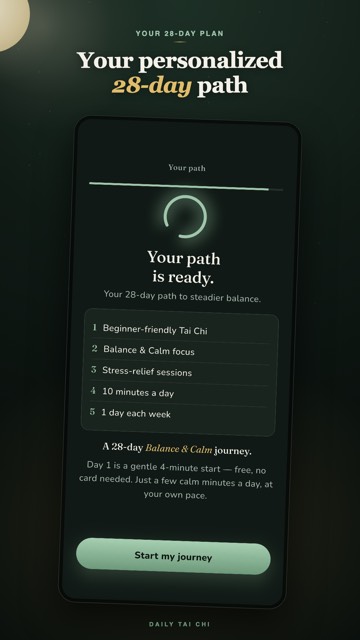
Yes, you can learn tai chi without a teacher by following a guided, step-by-step program that demonstrates each move slowly, repeats it until it feels familiar, and adds new moves onto ones you already know. This follow-along structure does much of what a live instructor would do, just on your own schedule.
This matters most if you're newer to exercise, managing stiff joints, or you simply prefer practicing privately rather than in a group. The unhurried pace of tai chi — often called meditation in motion — translates well to a solo screen, since nothing about it relies on an instructor correcting you in real time.
Daily Tai Chi, for instance, builds a 28-day path of short guided sessions designed for adults 55+ and complete beginners, so the structure that normally comes from a class is already built into the program itself.
If you'd like a fuller walkthrough of your very first session, our step-by-step guide to starting tai chi covers stance, breathing, and your first few minutes of movement.
What a good self-guided program should include
A program built for solo learners should show each move slowly, let you pause and repeat it as many times as you need, and introduce new movements gradually rather than all at once. Clear, large visuals matter too, since squinting at a small or cluttered demonstration makes it much harder to copy a movement with any confidence.
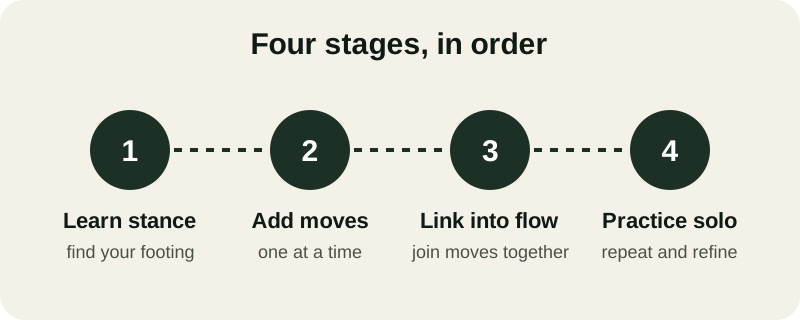
- Learn stance
- Add moves
- Link into flow
- Practice solo
Daily Tai Chi runs on iPhone and Android, so you can follow the same guided, step-by-step sessions whether you practice from a phone propped on a counter or a tablet in the living room.
For a closer look at how one movement breaks down into a full sequence, see our guide on learning tai chi moves step by step.
Five moves worth learning first
These five moves show up in almost every beginner routine, and each one adapts to standing or sitting. Learning them in roughly this order gives you a steady foundation before you try linking movements together into a longer flow.
- Wave hands — a soft side-to-side motion that loosens the shoulders and warms up the arms before anything more demanding.
- Gentle weight shifts — rocking slowly from one foot to the other, which builds steadiness without any need for speed.
- Heel-to-toe stand — standing with one foot directly in front of the other to practice balance in a controlled way.
- Single-leg stand — lifting one foot slightly off the floor while holding onto a chair for support.
- Ankle circles — slow rotations that keep the ankles loose and ready before any standing work.
For a longer list of postures and what they look like, our tai chi moves names list is a handy reference to keep nearby while you practice.
How long should a solo practice session be?
5 to 10 minutes, once or twice a day, is plenty when you're learning tai chi without a teacher. Short sessions let you repeat a single move until it feels steady, rather than rushing through a long routine from memory.
As those minutes start to feel easy, you can stretch a session a little or add a second short block later in the day. Consistency matters far more than length — a few minutes on most days will do more for your balance and confidence than one long session saved for the weekend.
If mornings work best for you, our 10-minute routine for seniors is a ready-made session you can follow the very same way.
Mistakes that slow down solo learners
Without a teacher watching, it's easy to pick up small habits that make learning harder than it needs to be. Most of these are simple to notice and even simpler to fix once you know what to look for.
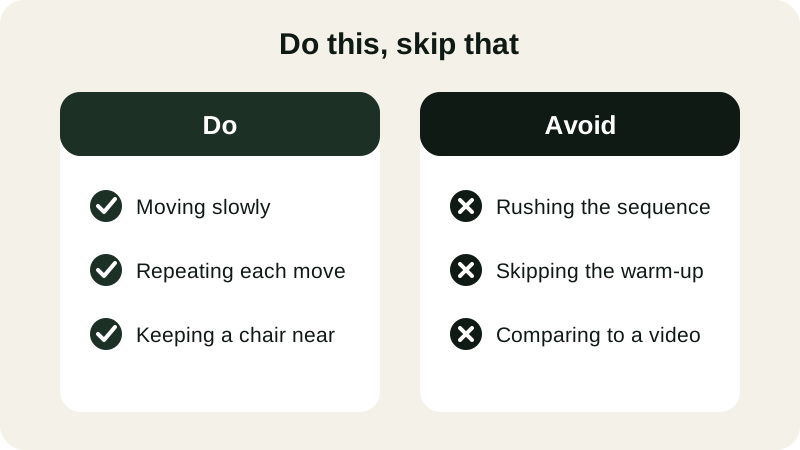
Keep these in mind:
- Moving slowly
- Repeating each move
- Keeping a chair near
Avoid these instead:
- Rushing the sequence
- Skipping the warm-up
- Comparing to a video
If you eventually want company along the way, practicing solo now doesn't rule that out later — our guide to finding a tai chi class near you can help whenever you're ready to add that in. For now, a short daily session, repeated patiently, is really all that learning tai chi on your own requires.
Sources
Do you need any equipment to learn tai chi without a teacher?
No special equipment is needed — just comfortable clothing and a clear patch of floor or a chair. Many moves, including wave hands and gentle weight shifts, adapt easily to sitting down, so you can start wherever you feel steadiest.
Is there an app for learning tai chi without a teacher?
Yes — Daily Tai Chi lets you try the first 4 days free, with no card and no account needed, before deciding whether the guided format works for you.
Can you learn tai chi from video alone, without ever attending a class?
Yes, many people learn entirely from guided video, following one slow move at a time and repeating it until it feels natural. If you'd rather add class time later, our guide to finding a tai chi class covers that option too.
How do you know if you're doing a move correctly without a teacher watching you?
Watch yourself in a mirror or record a short video, move slowly, and compare your position to the demonstration frame by frame. Comfort matters more than precision — if a position pinches or strains, make the movement smaller and ease off.