 DAILY TAI CHI
Tai Chi at Home With No Equipment: 5 Moves to Start
Tai chi at home needs no equipment beyond clear floor space and a stable chair or wall, and five simple moves are enough to build a daily practice.
Published
Quick answer
Tai chi at home needs no equipment — just a few feet of clear floor and a stable chair or wall nearby. Five moves, like wave hands and gentle weight shifts, done barefoot or in supportive shoes for 5 to 10 minutes a day, are enough to start.
Key takeaways
- No mat, bands, or special shoes needed — just clear floor space and comfortable clothing.
- Five starter moves: wave hands, gentle weight shifts, heel-to-toe stand, single-leg stand, ankle circles.
- Keep a stable chair, wall, or counter nearby for balance support.
- 5 to 10 minutes a day is enough to build a steady home practice.
- Stop and rest if you feel dizzy or unsteady at any point.
You can start a tai chi at home routine with no equipment at all — just a clear patch of floor, comfortable clothes, and a few quiet minutes to yourself.
Do you really need equipment for tai chi at home?

No special equipment is required. Tai chi uses only your own body weight and slow, controlled movement, so a few feet of clear floor, comfortable clothing, and a stable chair, wall, or counter nearby for balance support are all you really need to begin.
Many beginners expect they'll need a mat, resistance bands, or special shoes before they can start. None of that applies here. Tai chi was developed as a practice you could do almost anywhere — a courtyard, a park, a small room — long before specialized gear ever existed for it. At home, that means your living room, bedroom, or even a hallway will work fine, as long as you have room to turn and shift your weight without bumping into a side table or a pet underfoot.
If you're brand new to the practice, our step-by-step guide for beginners walks through the basic standing position and breathing before you try any actual moves.
Five no-equipment tai chi moves to start with
These five movements form a simple foundation, and every one of them can be practiced in a small space using nothing but your own hands, feet, and breath. You can do tai chi barefoot at home on carpet, in supportive shoes on a harder floor, or seated if standing for long feels tiring.
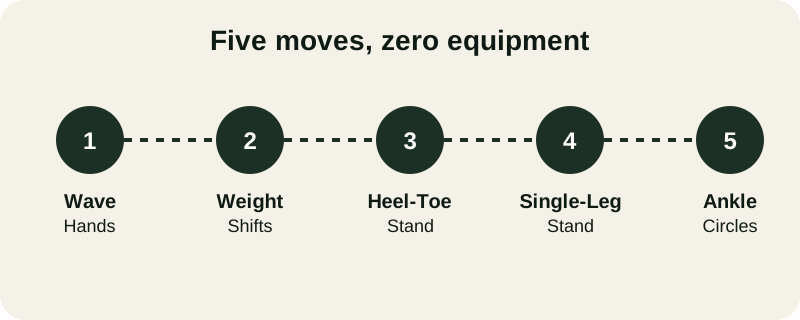
- Wave hands. Stand tall, feet hip-width apart, and let your arms float gently from side to side as if you were smoothing the surface of calm water.
- Gentle weight shifts. Rock your weight slowly from one foot to the other, letting your hips and knees soften with each shift, back and forth ten times.
- Heel-to-toe stand. Place one foot directly in front of the other, heel touching toe, and hold near your chair or wall for a few slow breaths.
- Single-leg stand. With a hand resting on a stable chair, wall, or counter, lift one foot a few inches off the floor, hold briefly, then switch sides.
- Ankle circles. Lift one foot slightly and trace slow, easy circles with your ankle in both directions, then repeat on the other side.
None of these need a mat, a resistance band, or any particular surface — carpet, hardwood, and tile all work equally well. For more moves with their traditional and plain-language names, see our list of tai chi move names.
Setting up a no-equipment tai chi space
You don't need a dedicated room to practice tai chi in a small space — just enough floor to stretch your arms out fully in every direction without touching anything, plus a stable chair, wall, or counter close enough to grab if needed.
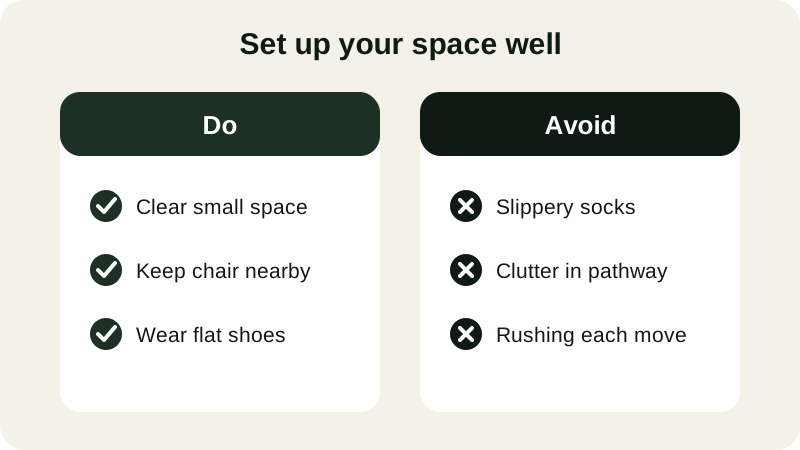
- Do: clear small space, keep chair nearby, wear flat shoes.
- Avoid: slippery socks, clutter in pathway, rushing each move.
Lighting matters more than most people expect. A room that's too dim makes it harder to judge where your foot lands, especially during the single-leg stand or heel-to-toe stand. Natural daylight from a nearby window or a bright lamp works well, and a plain wall in front of you gives your eyes a steady spot to rest on while you balance.
How long should a no-equipment session last?
Most beginners do well with 5 to 10 minutes a day. That's long enough to move through a brief warm-up, two or three of the moves above, and a calm finish, without feeling rushed or worn out.
It helps to think of tai chi less like a workout to push through and more like meditation in motion — slow, breath-led movement you return to daily rather than one long session you have to steel yourself for. Five minutes most mornings will likely do more for how steady and relaxed you feel than a single long session once every few weeks. If balance is your main reason for starting, our guide to balance exercises after 60 pairs naturally with the five moves above.
Building a simple daily habit
Pick one time of day — right after you wake up, during a quiet break, or before bed — and treat tai chi the way you'd treat brushing your teeth: quick, routine, nothing to dig out of a closet first.
This is the one place an app genuinely helps when you'd rather not plan a routine yourself. Daily Tai Chi builds a 28-day path of short, guided sessions for ages 55+, with slow, step-by-step instructions you follow right from your phone screen — no mat, no camera, no gear, just a clear screen propped where you can see it. The first 4 days are free, with no card and no account needed, and it runs on both iPhone and Android.
Whether you follow a guide or simply move through the five foundational moves on your own each day, the real habit is showing up on your own floor for a few quiet minutes, most days of the week, with nothing more than the body you already have.
Sources
Can you practice tai chi in a small apartment?
Yes. Tai chi movements are small and controlled, so a cleared patch of floor about six feet across is usually enough to turn, shift your weight, and raise your arms without bumping furniture. A corner of a bedroom or living room works well.
Do you need special shoes for tai chi at home?
No specific shoes are required. Flat, supportive shoes with good grip work well, and many people prefer bare feet or non-slip socks on carpet. Avoid slick-soled slippers or bare feet on polished hardwood, since smooth floors can be slippery during balance moves.
What if you don't have a stable chair or wall nearby?
Use whatever sturdy surface is close at hand — a kitchen counter, a heavy dresser, or a doorway you can lightly touch. The goal is simply a steady point of contact nearby in case you feel unsteady, not a particular piece of equipment.
Is tai chi at home as good as an in-person class?
It depends on what helps you stay consistent. A class offers in-person feedback and company, while practicing at home removes travel and lets you move at your own pace in private. Many people start at home and add a class later for extra guidance.