 DAILY TAI CHI
Tai Chi Classes Near Me: A Gentle Guide to Finding One
This guide explains where to look for tai chi classes near you, what a welcoming beginner class should feel like, and how a guided app can fill the gap when no class fits your schedule.
Quick answer
To find tai chi classes near me, start with your local senior center, community center, or parks and recreation department, then call ahead to ask about pace. If nothing nearby fits, a guided app offers the same gentle movements at home.
Key takeaways
- Senior centers, community centers, and parks departments often run beginner tai chi classes
- Call ahead and ask if the class moves slowly and offers seated options
- A good beginner class never rushes and repeats steps until they feel natural
- An app can fill the gap when no nearby class fits your schedule
- Keep a stable chair, wall, or counter nearby and check with a doctor first
If you're searching for tai chi classes near me, the simplest starting points are your local community center, senior center, or parks and recreation department. If nothing nearby fits your schedule or mobility, a slow, guided practice at home can be just as welcoming.
Finding the right class is really about finding the right pace, not the fanciest studio. Let's walk through where to look, what a good beginner class should feel like, what questions to ask before you go, and what to do if nothing nearby seems to fit.
How do you find tai chi classes near me?
Start close to home. Local recreation departments, senior centers, community colleges, and wellness programs at clinics often host beginner tai chi classes that meet weekly in a gym, a park, or a quiet multipurpose room.
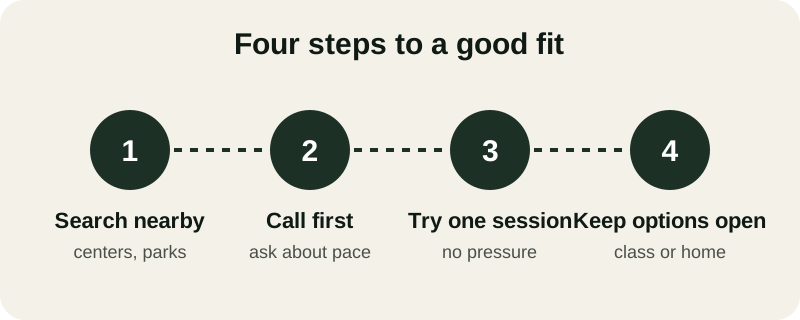
A phone call usually tells you more than a website or flyer ever can. Ask whether the class moves slowly, whether seated options are offered, and whether the instructor is comfortable with complete beginners.
- Senior centers and community centers — often the most affordable option, sometimes free for residents
- Parks and recreation departments — sometimes offer outdoor sessions in warmer months
- Community colleges and adult education programs — structured, multi-week courses
- Wellness programs at local clinics — occasionally tailored for gentle movement
- Libraries and places of worship — some host free or low-cost sessions in a quiet, familiar room
It's worth searching under a few different terms too. Some listings use "tai chi," others use "qigong," and some community calendars simply say "gentle movement class." Our qigong for seniors guide explains how that closely related practice compares, in case a nearby listing uses that name instead.
What should a beginner tai chi class feel like?
A good beginner class never rushes. Movements stay slow, breathing stays easy, and the instructor repeats each step until it feels natural rather than performed. Nobody should be out of breath or straining to keep up.
If you're unsure what "gentle" actually looks like in practice, our Tai Chi for seniors guide walks through the basic movements and pace step by step, so you know what to expect before you ever walk into a room.
Group size matters too. A smaller class usually means the instructor can watch your form and offer small corrections, which is especially helpful in your first few weeks. Larger classes can still work well, but they tend to move at a set pace that's harder to adjust for any one person.
It also helps to ask what a typical session includes. Many beginner classes open with a short warm-up, move into a handful of slow forms like gentle weight shifts or wave hands, and close with a few quiet minutes of stillness. If that structure sounds appealing, our warm-up exercises guide shows what those opening minutes often look like.
What questions should you ask before signing up?
A short phone call before your first visit can save you a wasted trip. A few useful questions to ask the instructor or front desk:
- Is this class designed for complete beginners, or does it assume some experience?
- Does the class offer a seated or chair-based option for anyone who needs it?
- How many people usually attend, and is there room to move slowly without feeling rushed?
- Is there a trial class or a free first visit before committing to a full term?
- What should I wear, and is there a chair, wall, or rail nearby for balance support?
Most instructors are happy to answer these questions, and their answers often tell you as much about the class's personality as the schedule itself.
What if there's no tai chi class near you?
Plenty of towns simply don't have a nearby option, especially outside bigger cities. That doesn't mean tai chi is out of reach — a guided app can walk you through the same slow, flowing movements at home, at your own pace, with nobody to keep up with.
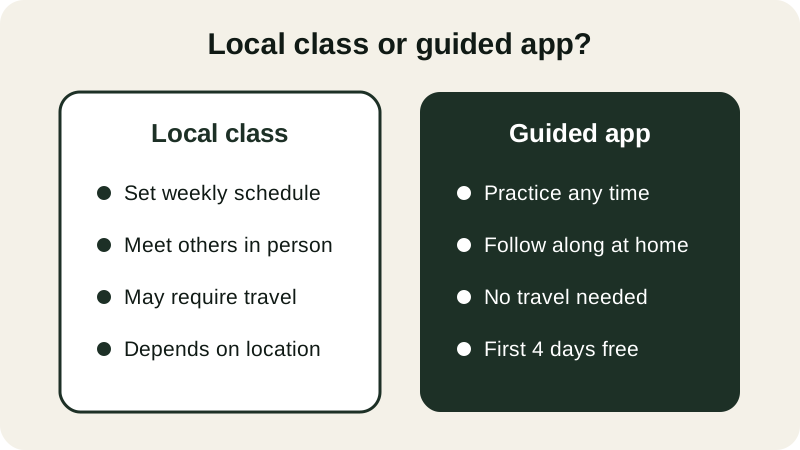
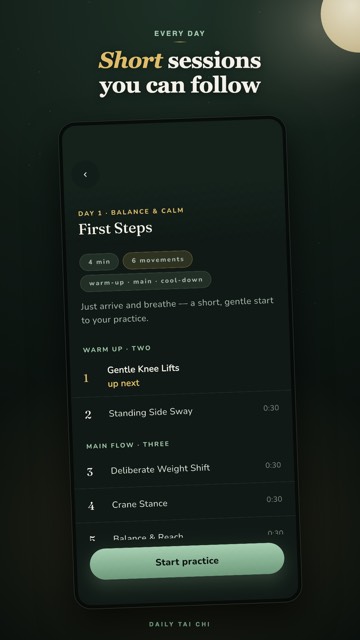
Daily Tai Chi offers a 28-day path of short, slow, follow-along sessions, usually just 5 to 10 minutes a day — gentle weight shifts, wave hands, a heel-to-toe stand, and other movements you'd meet in a beginner class. The first 4 days are free, with no card and no account needed, and it runs on iPhone and Android.
It's not a replacement for the social side of a class, but it's a warm way to start, or to keep practicing on the days a class doesn't meet. Some people even use it alongside a weekly class, as a way to review a form at home until it feels familiar.
If sitting feels more comfortable than standing right now, our guide on whether seniors can do tai chi addresses that question directly, and our chair Tai Chi guide adapts every movement to a seated version.
How do you know a class or home routine is safe for your body?
Whether you're in a studio or your own living room, the same simple rules apply. Move gently and never push into pain.
A good instructor, whether in person or on a screen, will remind you of this often rather than just once at the start. If a class ever feels rushed or leaves you short of breath, it's worth looking elsewhere — the slow pace is the whole point of tai chi, often described as meditation in motion.
Which option should you try first?
There's no wrong order here. Some people call a senior center this week, attend one class, and decide it's exactly the routine and company they wanted. Others start at home with a few quiet minutes each morning and look into local classes later, once they feel steadier on their feet.
Either way, the goal is the same: slow, kind movement that fits into your week without pressure. If you'd like a fuller sense of what to expect before your first session, our beginner's guide is a gentle place to start, and our morning routine offers a quiet first step if you'd rather begin at home today.
How do I find tai chi classes near me?
Check your local senior center, community center, parks and recreation department, or community college first — these often run beginner-friendly sessions. Calling ahead to ask about pace and group size usually tells you more than a website or flyer ever can.
Are tai chi classes expensive?
Classes at senior centers and community centers tend to be the most affordable, sometimes free or low-cost for residents. Private studios may cost more. If budget or distance is a barrier, a guided app can offer the same gentle movements at home.
What if there's no tai chi class in my area?
Many towns simply don't have a nearby option, especially in rural areas. A guided app lets you follow the same slow, flowing movements at your own pace at home, with no travel and no need to match someone else's schedule.
Is it okay to start tai chi without a class at all?
Yes. Tai chi is gentle and low-impact, and many people begin entirely on their own with short guided sessions. Move slowly, keep a stable chair or wall nearby, and check with your doctor first if you have any health concerns.
How long are typical beginner tai chi classes?
Most beginner classes run from thirty minutes to an hour, often once or twice a week. If that feels like a lot to start with, a home routine of just 5 to 10 minutes a day can build the same gentle habit.