 DAILY TAI CHI
Thai Chi for Seniors: A Gentle Beginner's Guide
This guide clears up the common 'thai chi' spelling, explains why tai chi suits seniors so well, and walks through what a first gentle session looks like.
If you searched for thai chi for seniors, you're in the right place — "thai chi" is simply a common way of writing tai chi, the slow, flowing movement practice that's become a favorite gentle exercise for older adults.
It's often called meditation in motion, and it was built for exactly this kind of unhurried, low-impact movement. This guide clears up the spelling mix-up, explains why tai chi fits so naturally into life after 55, and walks you through what a first gentle session actually looks like.
Is "thai chi" the same as tai chi?
Yes. There isn't a separate practice called thai chi — it's simply tai chi, spelled out the way it sounds when you say it aloud. The confusion is understandable; "tai" isn't a common English word, so plenty of people land on "thai" instead, especially when typing quickly into a search bar.
Whichever way you spell it, the practice itself is the same: slow, continuous movement, easy breathing, and a calm, steady focus. There's no need to worry you've found the "wrong" thing — the exercises, the pace, and the gentle benefits are identical no matter which spelling brought you here. If you'd like the fuller picture of where it comes from and how it works, our beginner's guide to tai chi for seniors is a good next stop.
Why is tai chi so popular with seniors?
Tai chi tends to fit the way older adults actually want to move. There's no jumping, no fast transitions, and no requirement to get down on the floor. Every motion can be adapted to standing or seated, which means it welcomes people managing stiff joints, limited mobility, or a cautious relationship with balance.
A typical session might include:
- Gentle weight shifts — slowly rocking your weight from one foot to the other
- Wave hands — a soft, circular arm movement that flows with your breath
- Ankle circles — easing stiffness in the feet and ankles before you begin
- A slow sit-to-stand — rising from a chair with control, rather than momentum
None of these require prior fitness. You simply move at your own pace, and the practice meets you exactly where you are. Some days you might feel steady enough to try a few new shapes; other days, repeating the same gentle motion is plenty. Either way counts as a full practice. If you want to read more about whether this kind of movement is appropriate at your stage of life, can seniors do tai chi? walks through that question directly.
What does a beginner session actually look like?
A first session usually starts with simply standing tall, feet hip-width apart, and taking a few slow breaths to settle in. From there, you might practice a gentle weight shift side to side, followed by a few rounds of wave hands to loosen the shoulders and arms.
Many people also try a heel-to-toe stand — placing one foot directly in front of the other — or work gradually toward a single-leg stand, holding a chair for support. These aren't tests to pass. They're simply ways of gently waking up the small stabilizing muscles in your legs and feet, at whatever pace feels right that day.
If standing for a full session doesn't feel comfortable yet, tai chi adapts easily to sitting down. Every movement described above has a seated version — the weight shift becomes a gentle lean, the wave hands stay exactly the same, and the sit-to-stand simply becomes a slower, more deliberate transition. Our chair tai chi guide covers the same slow, flowing ideas from a seated position, so you can still enjoy the practice fully.
How do you get started safely?
Move gently and never push into pain. Keep a stable chair, wall, or counter nearby in case you need it, and stop if you feel dizzy or unsteady. If you're new to exercise, recovering from anything, or managing ongoing health concerns, check with a doctor first before beginning.
Beyond that, the main thing to remember is that tai chi isn't about getting it "right." There's no performance element, no audience, and no pass or fail. You're simply moving slowly, breathing easily, and giving your body a few gentle minutes of attention. Wear whatever feels comfortable, choose flat shoes or go barefoot, and pick a quiet spot with enough room to shift your weight from side to side.
How often should seniors practice?
You don't need long sessions to get something meaningful out of tai chi. Five to ten minutes a day is a comfortable starting point — enough to settle into the movement without feeling rushed or tired. Consistency tends to matter far more than duration; a few gentle minutes most days will serve you better than one long session every so often.
Many people find a short morning session helps them start the day feeling a little more settled, while others prefer an evening practice as a way to wind down. There's no single correct time of day — the right moment is simply whichever one you're most likely to return to tomorrow. If you're wondering how to build this into an actual weekly rhythm, our guide on how often seniors should practice tai chi breaks this down in more detail.
Is there a simple way to follow along?
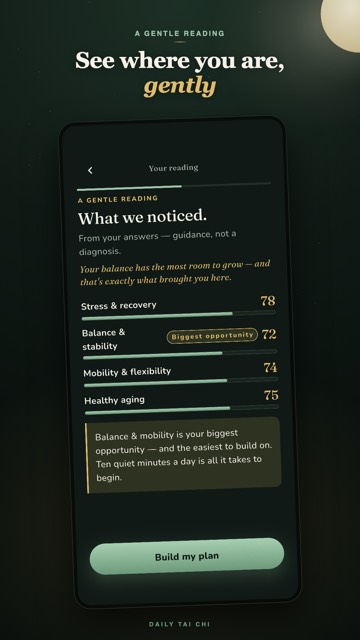
If learning new movement from a book or a photo feels tricky, a guided, follow-along format can make things much easier. Daily Tai Chi is a guided app, available on iPhone and Android, built around a 28-day path of short, slow sessions designed for complete beginners and adults 55 and older.
You can try the first 4 days free, with no card and no account required, which gives you a low-pressure way to see whether the slow, guided pace suits you before committing to anything further.
Whether you call it tai chi or thai chi, the practice itself doesn't change: slow movement, easy breathing, and a gentle, patient way of moving through your day. Many people also pair it with qigong, a related practice of slow breathing and simple movement, for an even calmer start to the morning.
There's no need to rush into anything. Start with a few minutes, keep a stable chair nearby if it helps you feel steadier, and let the rest unfold slowly, one gentle session at a time.
Is thai chi the same thing as tai chi?
Yes. 'Thai chi' is simply a common way people type or say tai chi, which is a slow, flowing Chinese movement practice often called meditation in motion. There's no separate practice called thai chi — it's the same gentle exercise, just a different spelling.
Can seniors with no exercise background try tai chi?
Yes. Tai chi is built around slow, low-impact movements like gentle weight shifts and wave hands, with no jumping or sudden motion. Many people start at 55 and older with no prior fitness experience, moving at whatever pace feels comfortable.
Do you need any equipment to start?
No special equipment is needed. You'll want comfortable clothing, flat shoes or bare feet, and a stable chair, wall, or counter nearby for balance support. Everything else is just your breath and slow, mindful movement.
How long should a beginner practice each day?
Five to ten minutes a day is plenty when you're starting out. Short, gentle sessions practiced consistently tend to feel better and build more comfort than one long, tiring workout.
Is it safe to practice tai chi if I have joint pain or balance concerns?
Tai chi movements are gentle and adaptable, but it's still wise to move carefully. Keep a stable chair, wall, or counter nearby, stop if you feel dizzy or unsteady, and check with a doctor first if you have ongoing health concerns.