 DAILY TAI CHI
Tai Chi for Energy in the Morning: Wave Hands Wake-Up
A short guide to using slow tai chi movements like wave hands and weight shifts first thing in the morning to ease stiffness and lift your energy naturally.
Published
Quick answer
Tai chi for energy in the morning works best as five to ten minutes of slow weight shifts, wave hands, and easy breathing done right after waking. Moving slowly increases circulation and eases overnight stiffness, leaving you steady rather than jittery.
Key takeaways
- Five to ten minutes of slow tai chi can wake circulation and ease morning stiffness
- Wave hands and soft weight shifts make a good first move of the day
- Keep a stable chair, wall, or counter nearby if you include balance moves
- Practicing at the same time each morning helps the habit stick
- Slow breathing paired with movement often feels steadier than a quick caffeine lift
A short tai chi practice can boost your energy in the morning without caffeine or a hard workout. Five to ten minutes of slow weight shifts and soft wave hands often wakes up a stiff body before the day speeds up.
Why does tai chi give you a morning energy boost?

Slow, continuous movement increases circulation and deepens your breathing, which many people feel as calm, steady energy rather than a quick jolt. The movements also loosen joints that stiffened overnight, leaving your body easier to move once you're up, and the slow pace means you wake gradually instead of jumping straight into a busy day.
This is part of why tai chi is often called meditation in motion. You're not raising your heart rate sharply or pushing through resistance — you're coaxing your whole body awake at its own pace, one slow motion at a time. Pairing movement with slow breathing adds to the effect, which is why routines built around tai chi breathing exercises tend to leave people feeling settled and clear-headed rather than tired or wired. Many people notice that this kind of steady, unhurried energy lasts longer through the morning than the quick lift of coffee, since it comes from your own breath and movement rather than from a stimulant that wears off by mid-morning.
A 5-minute morning tai chi routine
A simple morning sequence can take as little as five minutes, broken into four short parts, done standing or seated in a sturdy chair. You can run through it before you even open the curtains, and it works just as well in pajamas as in exercise clothes.
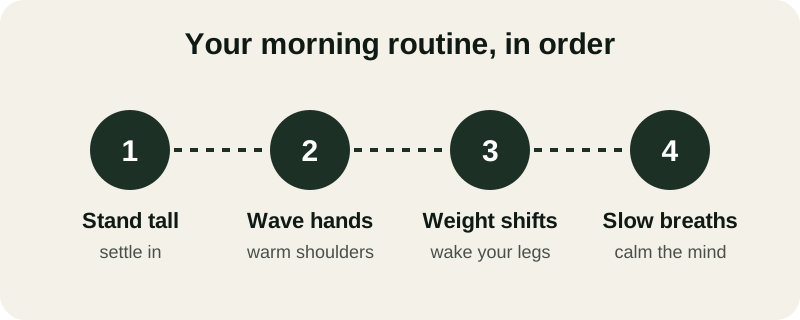
- Stand tall, feet hip-width apart, or sit tall in a chair if standing isn't comfortable yet, and take a few slow breaths before moving anything else.
- Wave hands slowly in front of you for about a minute, letting your arms float side to side to loosen stiff shoulders.
- Weight shifts from foot to foot come next, letting your hips and knees soften with each shift to wake up your legs.
- Finish with slow breaths, letting your shoulders drop and your mind settle before you start the rest of your morning.
The best tai chi moves for early morning
Wave hands, soft weight shifts, and ankle circles suit early mornings well because they are small, repeatable moves that don't ask much of a body fresh out of bed. Each one can be done slowly, without rushing, and all of them translate easily to a seated version if standing feels unsteady in the first few minutes after waking.
- Wave hands — loosens shoulders and gets your arms moving without strain.
- Soft weight shifts — wake up your legs and hips with a slow side-to-side motion.
- Ankle circles — a good seated option if your feet feel stiff on waking.
- Slow sit-to-stand — a few unhurried repetitions warm your legs without any rushing.
If your joints feel especially tight when you wake, spend an extra minute or two on warm-up exercises before moving into anything bigger, such as a heel-to-toe stand or single-leg stand. A routine built around tai chi for arthritis and stiff joints can be a kinder starting point on mornings when everything feels tender.
Common mistakes to avoid in a morning practice
The most common mistake is treating morning tai chi like a quick workout instead of a slow wake-up, which tends to leave people more tense than energized. Energy built through tension fades quickly, while energy built through steady, unhurried movement tends to carry you comfortably into the rest of your morning.
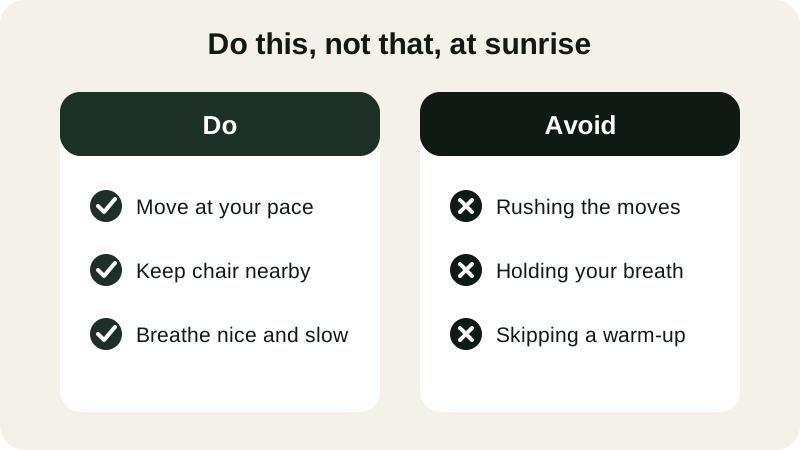
- Do: move at your own pace, keep a chair nearby, and breathe nice and slow.
- Avoid: rushing the moves, holding your breath, and skipping a warm-up.
Turning this into a daily habit
Pick one anchor point in your morning — right after you get out of bed, or just before you make coffee — and attach your practice there. A fixed moment matters more than a long session; five quiet minutes done daily will do more for your energy than an occasional long one done once a week. Many people find a sticky note by the kettle or a reminder on the nightstand helps the habit stick during the first couple of weeks.
You don't need every morning to look the same. Some days you might only manage a weight shift and a few wave hands before breakfast; other days you may have time for the full sequence. Both count, and showing up consistently matters far more than doing the complete routine every single time.
If you'd like the sequence guided for you rather than pieced together on your own, the app walks you through a 28-day path of short morning-friendly sessions, each with a warm-up, a main flow, and a calm cool-down, shown step by step on a large, clear screen. The first 4 days are free, with no card and no account needed, and it works on iPhone and Android, so you can try a morning session before deciding if it fits your routine.
Once mornings feel steady, you might also explore tai chi breathing techniques to deepen the calm, clear-headed feeling that makes this kind of practice so different from a caffeine jolt — and so much easier to keep doing, morning after morning. A few quiet minutes at sunrise can set a calmer tone for everything that follows, from breakfast to your first phone call of the day.
Sources
Can tai chi replace your morning coffee?
Tai chi won't give you caffeine's quick jolt, but slow movement and deeper breathing often leave people feeling calm and clear-headed instead of wired. Many enjoy both together — a few minutes of movement first, then coffee with breakfast, rather than relying on one to wake up the other.
Is it better to practice before or after breakfast?
Either can work well. Some people prefer moving first thing on an empty stomach since the motions are slow and easy; others like a small snack first if they feel lightheaded easily. Try both for a week and keep whichever leaves you steadier and more comfortable.
What should you do if you wake up with stiff joints?
Start slower than usual and keep your first movements small, such as soft weight shifts or ankle circles, rather than bigger steps. If a condition like arthritis is part of the picture, a routine built around moves for stiff joints tends to feel kinder on tender mornings.
Can you do a morning energy routine seated?
Yes. If standing feels unsteady first thing, a seated version works just as well — shift your weight softly from hip to hip, circle your ankles, and wave your hands slowly while seated in a sturdy chair. The lift comes from slow movement and breath, not from standing itself.