 DAILY TAI CHI
What to Wear for Tai Chi Practice: 5 Clothing Picks
A practical guide to choosing loose layers, flat flexible shoes, and the clothing to skip so nothing gets in the way of a slow, steady tai chi practice.
Published
Quick answer
For tai chi practice, wear loose, stretchy layers, a top that lets your arms swing freely, and flat, flexible shoes with a grippy sole, or bare feet or socks on a non-slip floor indoors. Skip tight waistbands, restrictive jeans, and dangling jewelry.
Key takeaways
- Choose loose, stretchy clothing that lets your arms and knees move without pulling
- Flat, flexible, thin-soled shoes grip the floor better than thick running shoes
- Bare feet or grip socks work fine indoors on a non-slip floor
- Skip tight waistbands, restrictive jeans, and dangling jewelry or scarves
- Dress in light layers so you can adjust as your body warms up
What you wear for tai chi practice matters less than you'd think, but a few simple choices make the movements easier: loose, stretchy layers, a top that lets your arms swing freely, and flat, flexible shoes or bare feet with good grip underfoot.
You don't need special workout gear or anything built for tai chi specifically. The goal is simply to move without anything pulling, pinching, or slipping, so your attention can stay on your breath and your weight shifts instead of your clothes.
What to wear for tai chi: the basics

Think in layers rather than one perfect outfit. A soft, breathable top that doesn't cling to your shoulders, paired with bottoms that bend easily at the knee and hip, covers almost every tai chi session. Sweatpants, loose joggers, leggings, or a roomy pair of cotton trousers all work fine.
The reason loose clothing matters so much in tai chi is that the practice relies on full, unhurried range of motion. You'll raise your arms overhead in some moves, sink low in others, and turn your torso gently from side to side. If a waistband digs in or a sleeve catches at the shoulder, it pulls your attention away from the slow, steady feeling the practice is built around — the whole point of what people call meditation in motion.
A few general guidelines:
- Choose a top with sleeves that move with your arms, not against them.
- Pick bottoms with some stretch, especially around the knees and hips.
- Avoid belts, structured waistbands, or anything with a hard buckle against your middle.
- Dress a little lighter than you think you need — slow movement still raises your body temperature gradually.
What shoes work best for tai chi practice?
Flat, flexible shoes with a thin, grippy sole work best for tai chi, because they let you feel the floor and shift your weight smoothly from foot to foot. Thick-soled running shoes, high heels, or anything with a raised heel can make slow balance work feel less stable.
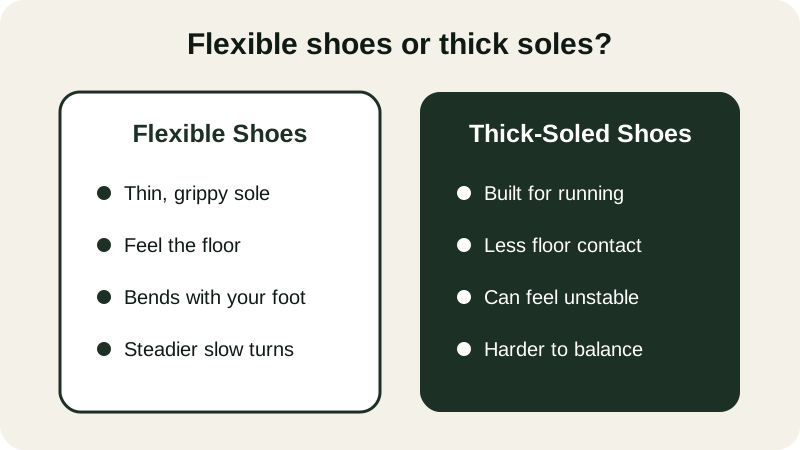
- Flexible shoes: thin, grippy sole; feel the floor; bends with your foot; steadier slow turns.
- Thick-soled shoes: built for running; less floor contact; can feel unstable; harder to balance.
Clothing to avoid during tai chi
A few common clothing choices quietly make tai chi harder than it needs to be. Stiff jeans restrict a deep knee bend, smooth-soled socks slide on hardwood, and long jewelry can swing or catch as your arms move through flowing shapes.
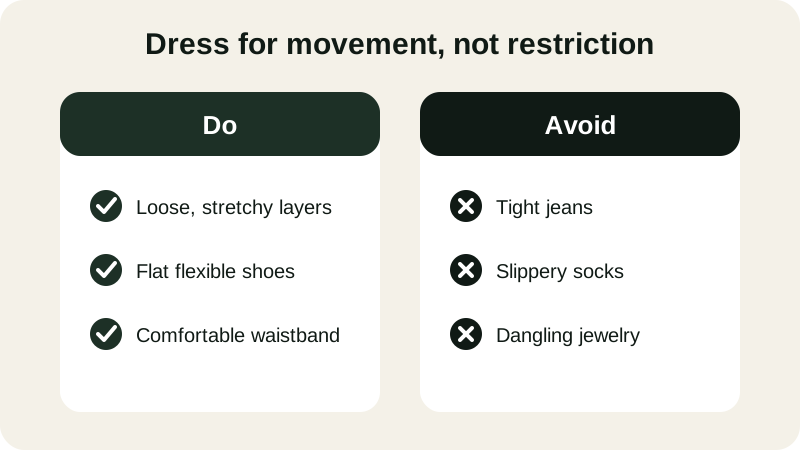
- Do: loose, stretchy layers; flat flexible shoes; comfortable waistband.
- Avoid: tight jeans; slippery socks; dangling jewelry.
A common mistake is grabbing whatever's on hand without checking how it moves. Try a slow weight shift or a few turns in your chosen outfit before you start a full session — you'll notice right away if something pulls or slides.
Should you practice tai chi barefoot or in socks?
Yes, bare feet work well for indoor tai chi practice on a non-slip floor like carpet, cork, or rubber matting. On smooth tile or hardwood, plain socks can be slippery, so either keep your shoes on or choose grip socks with rubber dots on the sole.
Barefoot practice has one real advantage: it lets you feel the floor directly during ankle circles, a single-leg stand, or a slow sit-to-stand, which can make balance work feel more precise. If your feet get cold easily, thin indoor slippers with a flexible, grippy sole are a reasonable middle ground.
Layering for weather and warm-up
Your body temperature rises gradually during a slow practice, even though tai chi never feels rushed. Starting a session feeling slightly cool, in a layer you can remove partway through, usually works better than starting bundled up.
Indoors, a light long-sleeved top and comfortable pants are often enough year-round. Outdoors, or in a cooler room, add a breathable jacket you can unzip, and consider thin gloves for hand and wrist moves if your fingers get stiff in the cold. For more on where and how to set up an outdoor session, our guide to tai chi for beginners outdoors covers footing and weather in more detail.
If you're brand new to the stance and starting position itself, it helps to get comfortable standing tall, feet hip-width apart, before worrying too much about wardrobe — our step-by-step beginner guide walks through that foundation.
Because app sessions are done standing, with a stable chair, wall, or counter nearby for support, the same clothing guidelines apply whether you're following along on a screen or practicing on your own. Daily Tai Chi's 28-day path shows each move with spoken cues and a short video clip, and the first 4 days are free with no card and no account, so you can try a session in whatever you're already wearing before deciding what feels comfortable long-term.
Finding your own comfortable routine
Once you've found an outfit and shoes that let you move freely, the clothing question mostly disappears, and you can focus on the practice itself: slow breathing, gentle weight shifts, and the quiet satisfaction of a few unhurried minutes. Keep a couple of go-to layers set aside so getting dressed never becomes a reason to skip a day.
What you wear is a small decision that quietly supports a bigger one — showing up regularly. A comfortable outfit removes one more small obstacle between you and your mat, chair, or quiet corner of the room.
Sources
Can you wear regular workout clothes for tai chi?
Yes. Any soft, stretchy workout clothing works well, as long as it doesn't pull across your shoulders or hips when you shift your weight. Avoid stiff waistbands or tight compression leggings that restrict a deep knee bend, and choose a top loose enough to let your arms float freely.
Do you need special tai chi shoes?
No special shoes are required. Look for flat, flexible, thin-soled shoes with a non-slip bottom — simple canvas shoes or soft-soled trainers both work well. The goal is to feel the floor under your feet so gentle weight shifts feel steady and controlled.
What about jewelry, watches, or glasses during practice?
Remove long necklaces, dangling earrings, and loose bracelets that might swing or catch as your arms move through flowing motions like wave hands. A watch or simple ring is usually fine. If glasses slip when you turn your head, a strap can help keep them in place.
What should you wear for tai chi outdoors in cold weather?
Dress in light layers you can remove as you warm up: a breathable base layer, a light jacket, and thin gloves that still let you feel your hands move. Keep your feet in flat, grippy shoes for uneven ground, and tuck in scarves so they don't catch in the wind or your arms.