 DAILY TAI CHI
Tai Chi for Beginners Outdoors: 5 Park-Friendly Tips
A practical guide to practicing tai chi outdoors as a beginner, covering where to practice, what to wear, uneven ground, and building a steady outdoor habit.
Published
Quick answer
Tai chi for beginners outdoors works best on a flat, grippy surface like a lawn or quiet path, in comfortable shoes, during calm weather. Keep sessions short, stay near a bench or railing for balance, and move indoors if the ground feels uneven or slick.
Key takeaways
- Choose flat grass or a paved path over gravel, sand, or sloped ground.
- Wear flat, non-slip shoes and dress in layers for changing weather.
- Practice in calm weather and soft morning or evening light.
- Keep a bench, railing, or low wall nearby for balance support.
- Start with five to ten minutes outdoors and build up slowly.
Beginners who want to practice tai chi outdoors just need a flat patch of ground, comfortable shoes, and a few quiet minutes of daylight to get started. The movements themselves don't change — only the setting does, and a little planning makes that setting feel easy rather than uncertain.
Where's the best spot to practice outdoors?

A good outdoor spot is flat, open, and free of roots, loose stones, or curbs — a mowed lawn, a quiet patio, or a smooth stretch of path all work well. Look for a corner near a bench, railing, or low wall, so you have something steady within reach if you need it.
Early mornings tend to be the quietest time to scout a location. Parks are calmer, the light is softer, and you're less likely to share the path with cyclists or dogs on long leashes. Walk the area once before you begin and notice anything that might catch a foot — a sprinkler head, a dip in the lawn, a loose paving stone. If you've been thinking about balance lately, our guide to tai chi for fall prevention is worth a read before you head out, since many of the same footing habits apply whether you're on a porch or a park lawn.
Shade matters too, especially once the sun climbs higher. A tree-lined path or a covered patio keeps glare out of your eyes during the slow, soft-focus gaze that tai chi asks for, and it keeps you comfortable enough to actually enjoy the ten minutes rather than rush through them. Midday sun also makes it harder to keep a relaxed, soft gaze, so a shaded spot keeps the whole session more comfortable, not just cooler.
If you practice somewhere public, a worn patch of grass under a quiet tree often feels more private than it looks — most passersby see slow, calm movement and simply walk on. Many beginners find that the self-consciousness fades faster than expected once the breathing settles in.
Weekday mornings tend to be quieter than weekends, if your schedule allows the choice. A near-empty park gives you room to move at your own pace without feeling like you're in anyone's way.
What to wear and bring outdoors
Outdoor tai chi calls for the same loose, comfortable clothing you'd wear indoors, plus a few extras: a hat for sun, a light jacket for a cool breeze, and a bottle of water if you'll be out for a while. Flat, grippy-soled shoes matter more outside than in, since grass can be damp and pavement can be uneven. A little sunscreen and a few sips of water go a long way on longer outdoor sessions, especially once the weather warms up.
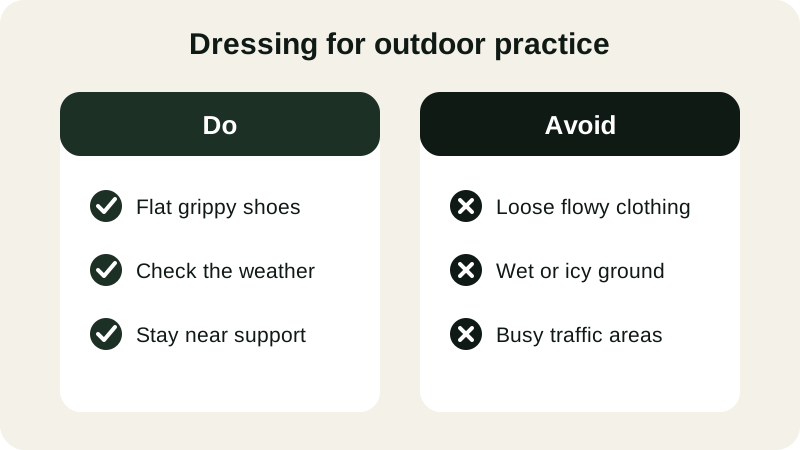
- Do: flat grippy shoes, check the weather, stay near support.
- Avoid: loose flowy clothing, wet or icy ground, busy traffic areas.
A short warm-up before you step outside helps cooler air feel less of a shock to stiff joints. Our tai chi warm-up exercises guide is a gentle way to ease in while you're still indoors, before you carry the practice out to your chosen spot.
How does uneven ground change your footing?
Uneven ground asks more of your balance than a flat studio floor, because small dips and slopes shift your weight before you expect it. Slow down, shorten your stance, and keep each weight shift smaller than you would indoors until the surface feels familiar.
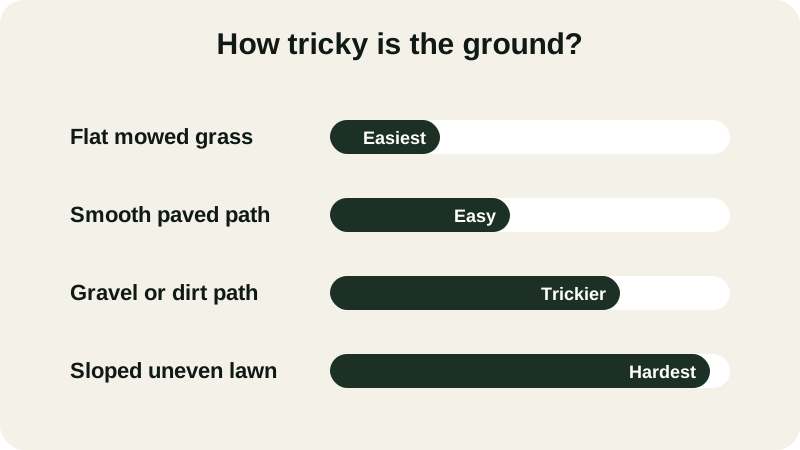
- Flat mowed grass — easiest
- Smooth paved path — easy
- Gravel or dirt path — trickier
- Sloped or uneven lawn — hardest
This is exactly the kind of challenge that sharpens balance over time. Our guide on how tai chi improves balance explains why those small, repeated weight shifts matter so much, indoors or out, and why slow practice on gently varied ground can feel more useful than a perfectly flat gym floor once you're steady enough to try it.
Building an outdoor habit without overdoing it
Five to ten minutes outdoors is plenty for your first few sessions — enough to feel the difference in air, light, and ground beneath your feet, without wearing out your legs or your patience. Add time gradually, the same way you would with any new routine, and treat the short walk to your favorite spot as part of the practice rather than a separate errand.
Weather will sometimes decide for you. A breezy, overcast morning is often lovely for tai chi, since the moving air feels pleasant rather than distracting. A thunderstorm, heavy fog, or icy path is a clear sign to wait, not a reason to push through. After rain, grass can stay slippery longer than it looks dry on top, so give it extra time or choose a paved path instead.
Spring puddles, summer heat, and autumn leaves each change what counts as a safe surface, so it's worth rechecking your favorite spot as the seasons shift rather than assuming it stays the same all year.
On days when wind, rain, or ice rule out the garden or the park, it helps to have a standing routine ready indoors instead of skipping practice altogether. Daily Tai Chi's 28-day path builds a personalized set of standing sessions — each one a warm-up, main flow, and cool-down — so the same slow, familiar movements keep going until the weather turns again. The step-by-step guided sessions walk you through each move one at a time, which makes it easy to pick up right where outdoor practice left off.
Whether you practice on a porch, in a backyard, or at a quiet corner of the park, the goal stays the same: slow, steady movement, one breath at a time. Pick a spot you can return to easily, and let the outdoor air become part of what makes the practice feel worthwhile. There's no need to master anything before you begin; the outdoors simply gives familiar movements a different kind of quiet to settle into.
What shoes are best for practicing tai chi outdoors?
Flat, grippy-soled shoes work best outdoors, since grass can be damp and paths can be uneven. Avoid sandals, slick-soled shoes, or heels. A simple walking or trail shoe with good tread gives your feet steady contact with the ground.
Can you practice tai chi outdoors in cold or windy weather?
Yes, with a few adjustments: dress in layers, wear gloves if your hands get cold, and shorten the session. If wind, rain, or ice make the ground unsafe, move indoors and practice the same slow movements in a hallway or living room instead.
Do you need special equipment to start tai chi outdoors?
No special equipment is required — loose clothing and flat, grippy shoes are enough to begin. A park bench, railing, or low wall nearby is useful for balance support, and a water bottle and hat are helpful on warmer days.
Is grass safer than pavement for tai chi beginners?
Each has trade-offs: grass is softer if you lose your footing but can hide dips and uneven patches, while pavement is flatter but less forgiving underfoot. A flat, mowed lawn or a smooth, dry path are both reasonable choices for beginners.