 DAILY TAI CHI
Tai Chi for Mood and Emotional Balance: Wave Hands Daily
Five slow, breath-led tai chi moves — starting with wave hands — can help settle mood swings and build steadier emotional balance with just a few minutes of daily practice.
Published
Quick answer
Tai chi supports mood and emotional balance by pairing slow, repeated movement with steady breathing, which gives restless thoughts something calm to follow. A short daily practice of a few slow moves can help you feel more even and settled over time.
Key takeaways
- Slow, repeated movement paired with steady breathing helps settle restless moods over time
- Five moves — wave hands, weight shifts, ankle circles, heel-to-toe stand, sit-to-stand — build a calming routine
- A stable chair, wall, or counter nearby makes practice feel safer and less distracting
- A few minutes most days matters more than one long occasional session
- Check with a doctor first if you're managing a health condition alongside a new practice
A slow, steady tai chi practice can genuinely support your mood and emotional balance, giving restless or anxious feelings something calm to settle into. You don't need a dance background or any prior exercise experience to begin — just a few quiet minutes and a willingness to move slowly.
This page walks through why that happens, five specific moves to try, and roughly how long before practice starts to feel different.
How does tai chi help mood and emotional balance?
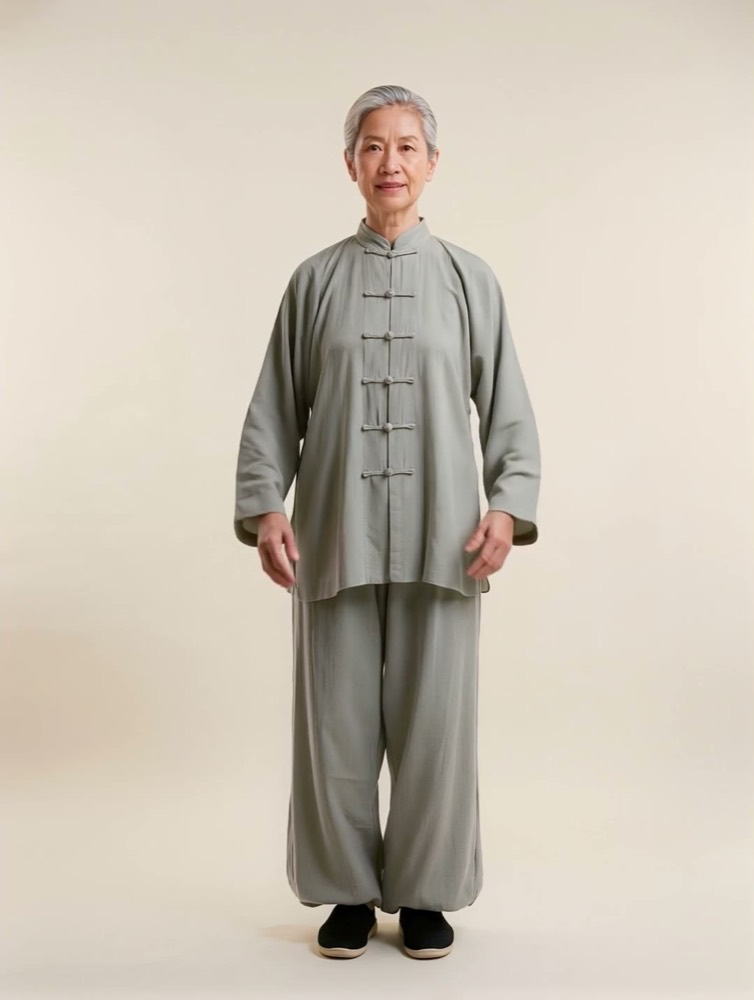
Tai chi helps by linking slow, repeated movement with steady breathing, giving your attention one calm task instead of racing thoughts. Shifting your weight slowly from foot to foot while breathing out can leave you feeling steadier within the same session.
Tai chi is often described as meditation in motion — meditation without needing to sit perfectly still. For people who find seated meditation restless or hard to sustain, moving slowly while breathing calmly offers a different route to the same quiet, steady feeling.
Many people come to this kind of practice after noticing mood swings, tension, or a low-grade worry without an obvious cause. Tai chi doesn't erase those feelings, but it gives you a reliable, repeatable way to return to a calmer baseline, day after day.
Breath is the quiet half of this work. Many tai chi sessions borrow pacing from qigong, where the breath leads the movement rather than following it. If you'd like a closer look at breathing specifically, our tai chi breathing techniques guide breaks down a few simple patterns you can try alongside these moves.
Five calming moves for emotional balance
These five moves are simple enough for a first attempt, and each one pairs slow physical motion with slow breathing — the combination that seems to matter most for emotional balance exercises like this one.
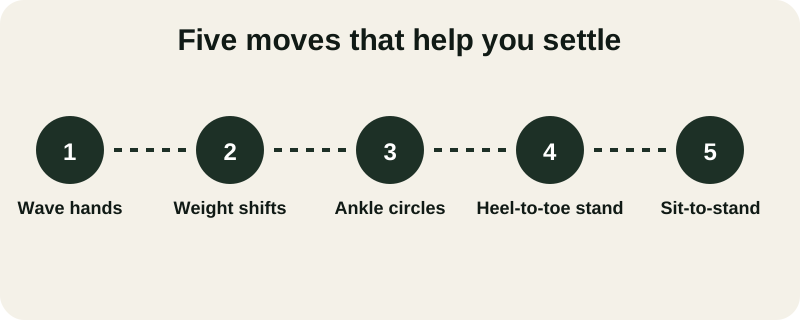
- Wave hands. Let your arms float side to side at chest height, as if smoothing calm water.
- Weight shifts. Rock your weight slowly from one foot to the other, breathing out as you shift.
- Ankle circles. Lift one heel slightly and circle the ankle slowly, then switch sides.
- Heel-to-toe stand. Place one foot directly in front of the other and hold, breathing slowly.
- Sit-to-stand. Rise slowly from a chair without using your hands, then lower just as slowly.
Stand tall, feet hip-width apart, with a stable chair, wall, or counter nearby if you'd like the extra steadiness. None of these moves need to look polished — the slowness itself is the point, not the shape. Even one move, repeated slowly for a minute or two, can shift how keyed-up you feel. Linking several together, as a short sequence, tends to work even better, because your mind has to keep tracking what comes next instead of wandering off.
What steadies your mood, and what stirs it up
A handful of small habits make the difference between a practice that calms you and one that leaves you frustrated. The good news is that all of them are easy to adjust once you notice them.
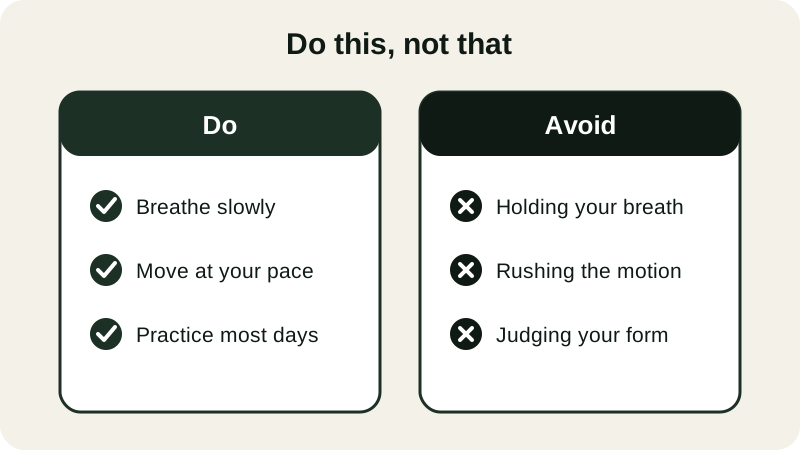
| Do | Avoid |
|---|---|
| Breathe slowly | Holding your breath |
| Move at your pace | Rushing the motion |
| Practice most days | Judging your form |
Holding your breath without noticing is one of the most common habits that undoes the calming effect — it tightens the chest and brings tension right back. Judging your form, comparing today's wobble with yesterday's, pulls your attention into self-criticism, which works against the very calm you're practicing for. Treat a short, regular session as a mood boost you return to, not a single fix for one hard day.
Daily Tai Chi builds this kind of steady rhythm into a 28-day path of short guided sessions, each with a warm-up, main flow, and cool-down, done standing with a stable chair, wall, or counter within reach. You choose 5, 10, 15, or 20+ minutes a day, and the first 4 days are free with no card and no account — enough time to feel whether this slow, repeatable pattern settles your own mood.
How much practice helps mood improve?
Most people notice a calmer mood after just 5 to 10 minutes of slow practice, especially when it happens around the same time each day. Consistency matters more than length — a short daily habit supports emotional balance better than one long, occasional session.
If standing practice feels tiring some days, the chair tai chi guide offers the same slow, breath-led movements seated, so you don't have to skip a day. If general stress, rather than mood swings, is your main concern, tai chi for stress relief covers a closely related angle, and if worry tends to spike in the evening, calming moves for anxiety pairs well with a wind-down before bed.
Give it a few weeks before judging the results. Emotional balance built through slow movement tends to arrive quietly — you may simply notice, on an ordinary afternoon, that you feel a little steadier than you did a month before.
Sources
Can tai chi help with mood swings specifically?
Yes — the slow, repeated movement and steady breathing in tai chi give you a dependable way to settle a swinging mood rather than being carried along by it. It won't erase the swings, but a short daily session builds a calmer baseline you return to more easily over time.
Is tai chi as effective as more vigorous exercise for mood?
It depends on what you want: vigorous exercise raises your heart rate quickly, while tai chi works through slow, mindful repetition and breath control. For steadying emotions specifically, many beginners find the slower, breath-led approach easier to sustain daily, which matters more than intensity.
Can you practice these moves while sitting down?
Yes. Most of these moves, including wave hands, ankle circles, and weight shifts, adapt well to a seated position if standing feels tiring. A chair tai chi guide walks through a full seated version you can follow at your own pace, on your own schedule.
How soon might a mood shift show up from practice?
Many people notice feeling calmer within the same session, simply from slowing down and breathing deliberately. A steadier overall mood tends to build over a few weeks of short, regular practice, rather than appearing after a single sitting or one occasional long session.