 DAILY TAI CHI
Tai Chi for Photographers: The Wave Hands Stance Fix
This article shows photographers how borrowing a few slow tai chi moves — wave hands, gentle weight shifts, a heel-to-toe stand — builds the steady stance and patience that photography demands.
Published
Quick answer
Tai chi for photographers builds the steady stance, soft knees, and slow exhale that keep a camera still at a slow shutter speed. A few moves — wave hands, gentle weight shifts, a heel-to-toe stand — train the same patience needed for a long wait behind the lens.
Key takeaways
- A relaxed tai chi stance trains the same soft knees and steady base a slow shutter speed needs.
- Wave hands and gentle weight shifts build patience for a long wait behind the camera.
- A heel-to-toe stand or ankle circles can steady your footing on uneven shooting ground.
- Shoulder and wrist moves ease the strain of carrying a camera bag or strap for hours.
- A short warm-up before a shoot can loosen stiff shoulders and settle a restless mind.
Tai chi for photographers comes down to training the same stillness a camera needs: a relaxed stance, soft knees, and a slow, even breath right before you press the shutter.
Why do photographers need steady hands and a patient stance?
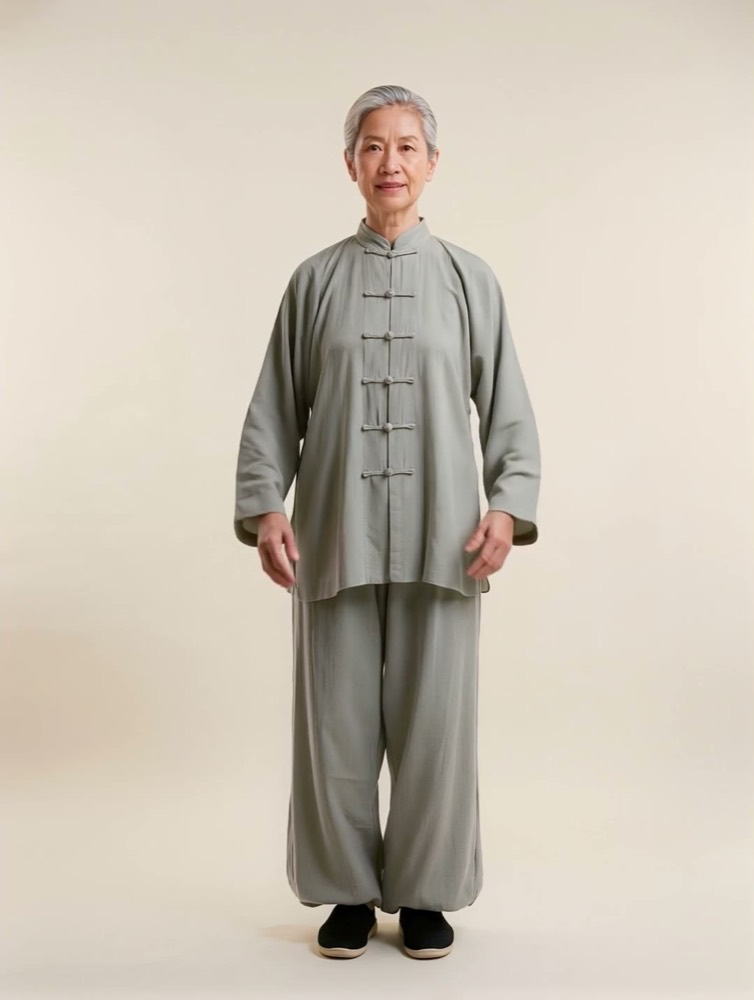
A steady camera and a calm, grounded body come from the same place. Photographers who shoot handheld at slow shutter speeds, carry a long lens, or wait minutes for the light to turn all depend on the same relaxed stillness that tai chi practices every day.
Photography asks your body to do two opposite things at once: hold very still, and stay alert enough to react the instant the shot appears. A wildlife photographer crouched in a blind, a street photographer leaning against a wall waiting for someone to walk into frame, a landscape photographer standing at a tripod through a slow sunset exposure — all three need a body that can settle into one position without getting tense or restless. Even a portrait photographer directing a sitting subject benefits from projecting that same calm; a tense photographer often produces a tense subject. Tai chi trains exactly this combination of soft readiness, often described as meditation in motion: slow, low-impact movement paired with quiet attention, never asking for strength or speed.
You don't need to learn a whole form to borrow this. A handful of simple tai chi moves, practiced for a few minutes before or after a shoot, build the specific kind of steadiness photography asks for. If you'd like to build that quiet readiness on its own, apart from any camera gear, our guide to tai chi standing meditation offers a short practice worth trying on a day between shoots.
Tai chi moves that build a steadier shutter hand
A few tai chi moves translate almost directly into photography. Each one trains a different part of the stillness you need to hold a camera steady through a slow exposure, a long lens, or a long wait for the right moment.
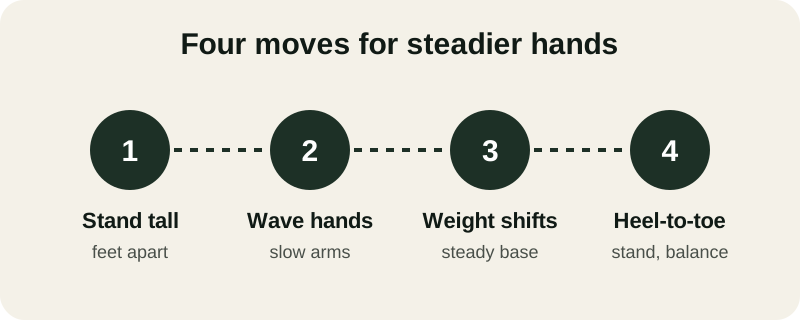
- Stand tall, feet apart
- Wave hands
- Weight shifts
- Heel-to-toe stand
Start by standing tall, feet hip-width apart, knees soft rather than locked — the same base you'd use behind a tripod. Wave hands, the slow circular arm motion tai chi is known for, trains your arms to move smoothly rather than jerk, which carries over into a slow pan or a careful zoom. Gentle weight shifts from one foot to the other build the quiet balance you need when you're crouched at an odd angle for a low shot. A heel-to-toe stand, one foot placed directly in front of the other, strengthens the small stabilizing muscles that keep a long lens from drifting as you track a moving subject. Practicing ankle circles beforehand loosens the feet, which matters more than it sounds when you're standing on uneven ground for an hour. For more on loosening tight wrists and fingers so they don't shake on a long exposure, our guide to tai chi for wrist and hand mobility walks through five simple stretches.
How does tai chi help with gear and long days on your feet?
Tai chi's slow shoulder and arm circles loosen the same muscles a camera strap or bag tightens, and its standing postures teach you to carry weight through your whole body instead of letting your neck and shoulders round forward.
Photographers often carry ten or fifteen pounds of gear for hours at a time, and that load tends to settle in the same few places: the neck from looking down at an LCD screen, the upper back from a shoulder strap, the wrists from gripping a camera body. A short routine that opens the shoulders and rotates the wrists before and after a shoot — like the moves in our tai chi for shoulder mobility guide — can loosen that tension before it turns into a stiff neck by the end of the day. Slow, even breathing helps too. Many photographers find that a calmer breath, paired with a settled tai chi stance, steadies their hands as much as a brace or a monopod does. Our piece on tai chi breathing techniques covers a few simple patterns you can borrow for the moment right before you release the shutter.
Fitting a short tai chi practice around your shoot days
Five to ten minutes before you head out, or once you're home unloading gear, is often enough to loosen stiff shoulders and settle a restless mind before a long day of shooting. Daily Tai Chi's 28-day path breaks a session like this into a short warm-up, a main flow, and a cool-down, shown one move at a time on a large screen, so you're never guessing what comes next between shots or before an early sunrise session. App sessions are done standing, with a wall or counter within reach, and the first four days are free, with no card and no account needed to start.
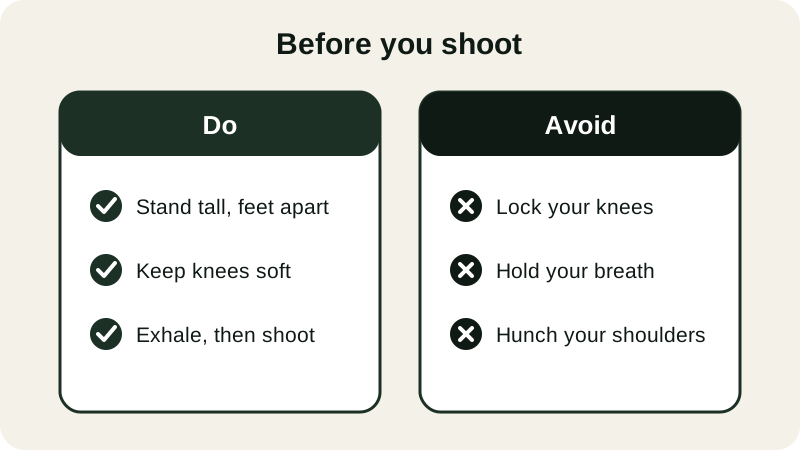
Do
- Stand tall, feet apart
- Keep knees soft
- Exhale, then shoot
Avoid
- Lock your knees
- Hold your breath
- Hunch your shoulders
Whether you practice standing in your living room, in a hotel room before a travel shoot, or in a parking lot before a sunrise hike, the goal stays the same: a calm, steady body that's ready the instant the light is right. If the stances mentioned here are new to you, our step-by-step beginner guide walks through the basic stance and first moves, and our warm-up exercises guide is a simple way to loosen up before any of them.
Sources
Can tai chi actually reduce camera shake?
Tai chi won't change your gear, but its slow weight shifts and steady stances train the same calm base photographers rely on at slow shutter speeds. Holding a relaxed stance for a minute or two before you shoot builds the quiet stillness that keeps a long lens from wobbling.
Does tai chi help with neck and shoulder strain from a camera bag?
Gentle shoulder rolls and the slow arm circles used in tai chi loosen the same muscles that tighten under a camera strap or bag. A few minutes focused on the shoulders and upper back, done before or after a shoot, often eases that tightness more than stretching alone.
How long before a shoot should you practice?
A short warm-up — even just a few minutes — is often enough to loosen your joints and settle your breathing before you start shooting. Practicing first thing in the morning or right before you leave the house leaves your hands relaxed and your stance steady, rather than stiff from a drive or a flight.
Is tai chi worth it if you mostly do landscape or wildlife photography?
Yes — the slow weight shifts and standing postures in tai chi train your legs to hold a relaxed, steady position for longer without locking your knees. That same patience and stillness carries directly into a long wait behind a tripod or at the edge of a wildlife blind.