 DAILY TAI CHI
How to Track Tai Chi Progress at Home: 5 Simple Signs
This guide shows how to track tai chi progress at home using five simple physical signs and a short weekly record, without any device or score.
Published
Quick answer
You can track tai chi progress at home by watching five simple signs — steadier balance, looser joints, slower breathing, smoother moves, and a calmer mood — and jotting a few quick notes after each short session, no device or score needed.
Key takeaways
- Progress shows up as five signs: steadier balance, looser joints, slower breathing, smoother moves, calmer mood.
- A heel-to-toe stand or single-leg stand near a stable chair gives you an easy weekly balance check.
- A short weekly record — date, length, one easier move, one word for mood — is enough to track change.
- Compare only your own notes week to week, never your results to someone else's practice.
- Move gently during balance checks and stop if you feel dizzy or unsteady.
You can track your tai chi progress at home just by paying attention to a handful of small signs each week. No stopwatch, no scorecard, and no special equipment required.
Tai chi is often called meditation in motion, and that phrase matters here: progress in a slow, breath-led practice doesn't look like a faster time or a heavier weight. It looks like standing a little steadier, breathing a little slower, and feeling less resistance in your own joints when you move through a familiar sequence.
What counts as progress in tai chi?

Progress in tai chi at home shows up as small, physical signs rather than a single score. You might stand a touch longer on one foot, breathe more slowly through a wave hands sequence, or notice your shoulders have dropped away from your ears by the end of a session.
Because tai chi is slow and low-impact, change builds in thin layers. A gentle weight shift that felt wobbly in your first week can feel almost automatic by the fourth. Breath that used to catch halfway through a move starts to flow all the way through it. None of this needs a device to confirm — you simply notice it felt different than last time, and that noticing is the whole point.
That's really what you're tracking: not a score, but a felt sense of ease. Signs of tai chi progress are personal, and your own notes from a few weeks back are the only fair comparison you need.
Five signs you can track at home
These five signs tend to show up first, long before any form feels polished, and each one takes only a moment to notice at the end of a session.
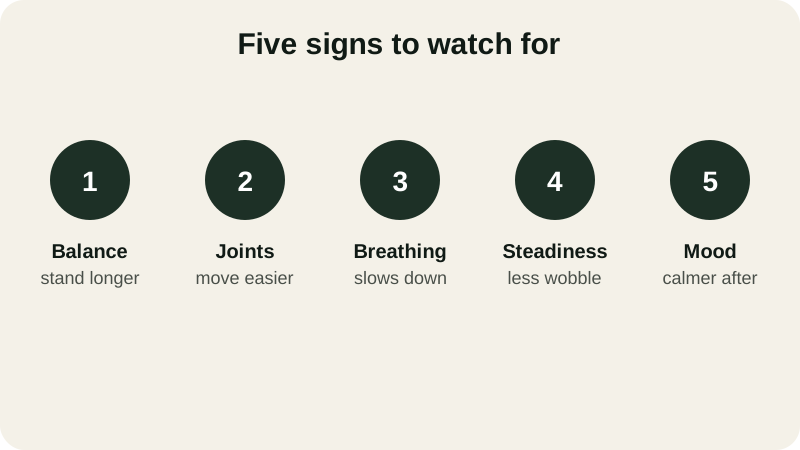
- Balance: you stand longer on one foot before reaching for the chair.
- Joints: everyday reaches and turns feel a little less stiff.
- Breathing: your breath slows and smooths out during a session.
- Steadiness: familiar moves have less wobble and hesitation.
- Mood: you feel calmer in the hour after you practice.
The balance sign is often the easiest to test the same way each week. Try a heel-to-toe stand or a single-leg stand near a stable chair, wall, or counter, and simply count how many slow breaths you can hold it — no stopwatch needed. For more on why this particular sign matters, see how tai chi improves balance.
The joints sign is just as easy to feel. Notice whether reaching for a top shelf, or turning to check behind you in the car, feels any less stiff than it did a few weeks ago. If stiff joints are part of why you started, our guide to tai chi for arthritis and stiff joints has more slow moves worth adding to your notes.
How do you keep a weekly tai chi record?
Keep a weekly record by jotting a few lines after each session: the date, how long you practiced, one move that felt easier, and a single word for how you felt afterward. A plain notebook or the notes app on your phone works fine.
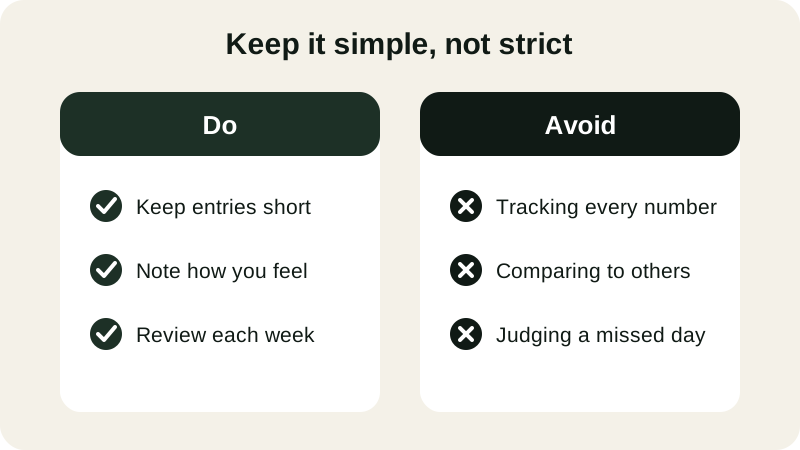
- Do: keep entries short.
- Do: note how you feel.
- Do: review each week.
- Avoid: tracking every number.
- Avoid: comparing to others.
- Avoid: judging a missed day.
If you'd rather follow a set method than freestyle your notes, these five steps work well for most people, whether you prefer a notebook, a wall calendar, or a phone's notes app.
- Pick one simple format — a notebook, wall calendar, or phone notes app.
- After each session, write the date and how long you practiced.
- Note one move, like wave hands or a gentle weight shift, that felt smoother than last time.
- Add a single word for your mood or energy afterward.
- At the end of the week, read back over your notes before you write a new one.
A tai chi progress journal doesn't need to be tidy or complete. Missing a day, or writing three words instead of three sentences, doesn't undo the week before it — it just means next week's notes pick up where this week's left off.
Making progress visible without overdoing it
A daily reminder at a time you choose can help you actually sit down and make these notes, since the easiest way to lose track of progress is to forget the session itself. If you'd like a closer look at logging practice inside an app, our guide to tracking tai chi progress in an app covers that in more detail, and our piece on setting a daily reminder for tai chi practice is worth a look if reminders are the piece you're missing.
Milestones like a longer heel-to-toe stand, a few extra slow sit-to-stands without pushing off the arms of the chair, or ankle circles that feel looser are worth a line in your notes — but treat them as signs, not targets to chase. If you'd like more ways to keep showing up after the first few weeks, seven ways to stay consistent with a tai chi practice pairs well with whatever record-keeping habit you settle on.
However you choose to measure tai chi improvement at home, the real measure is simpler than it sounds: did this week's practice feel a little easier than last week's, even slightly? If the answer is yes, that's progress worth writing down, and it's really all the tracking you ever need.
Sources
How long before you notice tai chi progress at home?
Many people notice small changes, like steadier balance or slower breathing, within the first few weeks of short, regular sessions. Progress varies by person and by how often you practice, so use your own notes from earlier weeks as the real benchmark rather than any fixed timeline.
Can you track tai chi progress without writing anything down?
Yes. Pay attention to physical cues instead — how long you can hold a single-leg stand, whether your shoulders feel looser after wave hands, or how calm you feel afterward. A quick mental check-in works, though a few jotted words make patterns easier to spot over time.
What if your tai chi progress seems to stall?
A plateau is common and usually means the routine has become familiar, not that you've stopped improving. Try lengthening or shortening your session, revisiting an earlier move with fresh attention, or checking with a doctor first if pain or dizziness is holding you back.
Should you compare your tai chi progress to someone else's?
No — compare your notes only to your own earlier entries instead. Everyone starts from a different level of balance and flexibility, so the useful comparison is this week's practice against last week's, not against another person's pace or form.
Does a longer single-leg stand mean you're improving?
Yes, in most cases. Holding a single-leg stand a few seconds longer than last week is a reliable, easy-to-repeat sign of improving balance, as long as you check it near a stable chair, wall, or counter for safety.