 DAILY TAI CHI
Tai Chi for Weight Loss: A Gentle Approach
This article explains how tai chi supports gentle, sustainable weight management through consistent daily movement rather than high-intensity exercise.
Published
Quick answer
Tai chi for weight loss works best as a gentle daily habit rather than an intense workout. Slow, low-impact movement helps you stay consistently active, which matters more for steady weight management than any single hard session.
Key takeaways
- Tai chi for weight loss works best as a steady daily habit, not a one-time workout.
- 5 to 10 minutes most days builds consistency without soreness or burnout.
- Gentle moves like weight shifts, wave hands, and sit-to-stand need no equipment.
- The app's 28-day path offers short guided sessions, with the first 4 days free.
- Check with a doctor first if you're new to exercise or managing a condition.
Tai chi for weight loss isn't about burning as many calories as possible in a single session — it's about building a gentle, daily movement habit you can actually keep up. That consistency, more than intensity, is what tends to support steady weight management over time.
If you've pictured tai chi as too slow and quiet to matter for weight, it helps to think of it differently. This is meditation in motion, and even gentle movement adds up when you return to it most days of the week.
Think of it less as a workout to power through and more as a daily appointment with your own body — one that happens to also keep you moving.
Can tai chi really help you lose weight?

Tai chi alone is unlikely to replace a structured weight-loss plan, and no gentle movement practice can promise a specific result. What it can do is help you move your body consistently, breathe more fully, and feel steadier on your feet — all of which make it easier to stay active through the rest of your day.
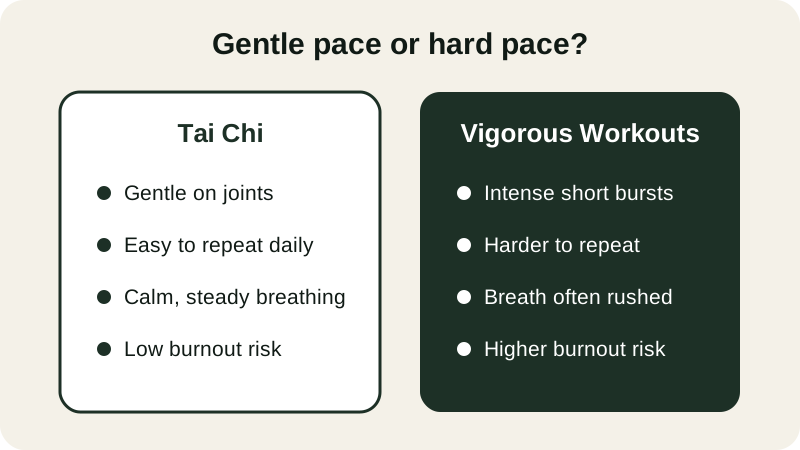
Many people find that a slow, low-impact practice is simply easier to stick with than a workout that leaves them sore or discouraged. Showing up for a few gentle minutes most days matters more than any single hard session — a point we unpack further in our guide to tai chi daily practice.
How does tai chi support healthy weight management?
Gentle, flowing movement works on several fronts at once. It keeps your joints, muscles, and metabolism gently engaged, it calms a busy mind, and it can make it easier to notice how your body actually feels — tired, restless, or ready to rest — instead of pushing through the day on autopilot.
This kind of body awareness often grows naturally from slow, attentive movement. Instead of rushing through poses or counting out intense reps, you're encouraged to notice tension easing from your shoulders, warmth spreading through your legs, or your breath settling into a steadier rhythm.
Organizations such as the National Institute on Aging and NCCIH have written about tai chi as a gentle option for older adults who want to stay active without high-impact strain. Resources like MedlinePlus and Harvard Health Publishing also cover tai chi among the gentle movement practices worth discussing with your doctor.
If calm, steady breathing is something you'd like more of in your day, our guide to tai chi for stress relief covers that side of the practice in more depth.
What does a gentle tai chi weight-loss routine look like?
You don't need special equipment or a gym membership. A simple routine built from a handful of familiar movements is enough to get started, whether you practice standing or seated.
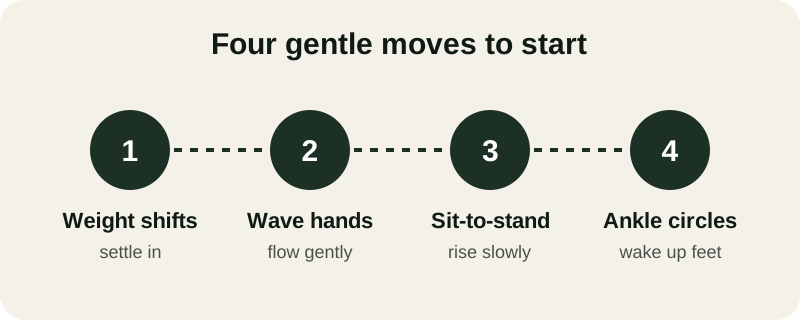
- Gentle weight shifts — rocking slowly from one foot to the other to wake up your legs.
- Wave hands — a soft, flowing arm movement that keeps shoulders and upper body moving.
- Heel-to-toe stand and single-leg stand — simple ways to build steadiness while standing tall.
- Slow sit-to-stand — rising from a chair at an unhurried pace, which gently works the legs.
- Ankle circles — a seated or standing movement that keeps the lower legs limber.
As these movements start to feel familiar, you can string a few together into a short flow — a weight shift into wave hands, followed by a slow sit-to-stand — rather than practicing each one in isolation.
If standing for a full routine feels like too much some days, our chair tai chi guide walks through a seated version of these same gentle ideas.
How often should you practice for steady results?
Short and frequent beats long and occasional. 5 to 10 minutes most days of the week is enough to feel the benefit build gradually, without leaving you sore or worn out.
The app is built around this idea: a 28-day path of short, guided sessions you can follow at your own pace, standing or seated, on iPhone and Android. The first 4 days are free, with no card and no account needed, so you can try a few sessions before deciding if it fits your routine.
For more on building this into a lasting habit, see our guide on how often seniors should practice tai chi.
How soon will you notice a difference?
It's tempting to look for quick signs of progress, but a gentle practice like this tends to reward patience more than urgency. In the first couple of weeks, you may simply notice that you feel more coordinated, breathe a little easier, or find a brief balance hold easier than you expected — small things, but they add up.
The app's 28-day path is built around this slower pace of change: short sessions that build on each other, so that each week gently asks a little more of your balance and coordination than the last. There's no pressure to rush ahead — moving at your own pace is the point.
Is tai chi enough movement on its own?
For many people, tai chi works best as one gentle piece of a broader routine rather than the only form of movement in a day. Pairing it with everyday activities like walking, light chores, or stretching rounds out your week nicely. If you'd like to add slow, breath-led movement alongside tai chi, qigong for seniors is a closely related practice worth exploring.
Whatever you choose, the goal isn't to rush toward a number on a scale. It's to build a calm, repeatable habit of moving your body — one gentle session at a time.
Sources
Can tai chi really help with weight loss?
Tai chi for weight loss works best as part of a broader, consistent movement habit rather than a stand-alone fix. It won't replace a structured plan, but gentle daily practice helps you stay active, move more comfortably, and build a routine you can actually keep up over time.
How many calories does tai chi burn?
Tai chi is a slow, low-impact practice, so it isn't designed to maximize calories burned in a single session. Its value comes from how easy it is to repeat daily without soreness, which supports a more active lifestyle overall rather than one intense workout.
How often should I practice tai chi for weight loss?
5 to 10 minutes most days of the week is a gentle, sustainable starting point. Short, frequent sessions tend to build steadier habits than occasional long ones, which is why the app guides you through a 28-day path of short daily practices.
Do I need to be fit already to start tai chi?
No. Tai chi is designed for complete beginners, including adults 55+ who have never exercised this way before. Every movement can be adapted to standing or seated, so you can begin exactly where you are and build gradually.
Can I practice tai chi for weight loss sitting down?
Yes. Many tai chi movements, including gentle weight shifts and ankle circles, adapt easily to a seated version. A chair-based routine still keeps your body moving and can fit comfortably into a daily habit, even on days when standing feels like too much.