 DAILY TAI CHI
Tai Chi for High Blood Pressure: A Gentle Approach
This article explains how gentle, slow-paced tai chi movements and breathing can fit into a calm daily routine for people managing high blood pressure, with safety guidance throughout.
Tai chi for high blood pressure works best as a gentle, daily habit — slow movement paired with easy breathing, done consistently rather than intensely.
It won't replace your doctor's guidance, but it can be a calming addition to your day. If you've ever felt your shoulders creep up toward your ears during a stressful afternoon, you already know how closely tension and blood pressure feel connected. Tai chi offers a slow, unhurried way to loosen that tension, one small movement at a time.
What does tai chi actually involve?
Tai chi is often called meditation in motion. Instead of sitting still to quiet your mind, you keep your body moving — softly, slowly, without strain. You shift your weight from one foot to the other, let your arms float gently through the air, and breathe at an easy, unforced pace throughout.
There's no jumping, no fast footwork, and nothing jarring on the joints. Every movement can be done standing, and just as easily adapted to a chair. That's part of what makes it approachable for adults 55+ who are new to structured movement of any kind.
According to Harvard Health Publishing and MedlinePlus, gentle mind-body movement practices like tai chi are commonly explored as a calming complement to daily life. Tai chi is not a treatment for high blood pressure, and it should never replace medication, monitoring, or your doctor's advice — but as a slow, low-impact habit, it can be a soothing part of your routine.
How might slow movement support a calmer routine?
Start Tai Chi the gentle way
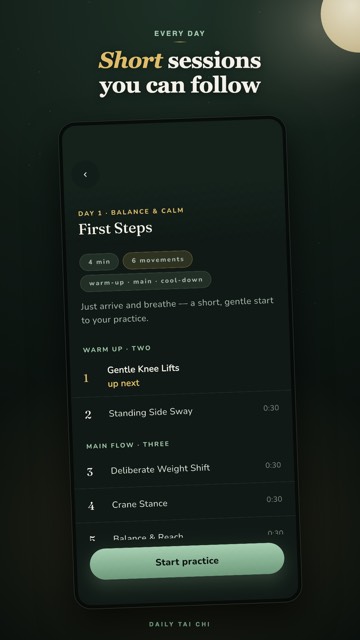
Daily Tai Chi guides you through a 28-day path — slow, follow-along sessions made for beginners and ages 55+.
Start free on Google Play Start free on the App StoreMuch of tai chi's appeal comes from what it asks you to leave behind: speed, effort, and pressure to perform. A typical short session might include:
- Gentle weight shifts — rocking slowly from one foot to the other, like a soft, steady sway.
- Wave hands — letting your arms drift and turn in front of you, unhurried, like smoothing calm water.
- Ankle circles — small, easy rotations that loosen the lower legs without any strain.
- Slow sit-to-stand — rising from a chair at your own pace, using your legs gently rather than pushing hard.
None of these movements ask your heart to work hard or your breath to quicken. That slow, steady quality is the whole point. Pairing movement with calm breathing is also central to the practice — our guide to tai chi breathing exercises walks through some simple patterns you can bring into any session.
Is standing required, or can you sit through it?
You don't need to stand for any of this. Many people begin seated, especially if standing balance feels uncertain or if getting up and down repeatedly feels tiring. Seated versions of weight shifts, arm movements, and gentle breathing all carry the same calming quality.
Our chair tai chi guide is a good place to start if sitting feels more comfortable right now. There's no rule that says standing practice is "more real" — the slow, mindful quality is what matters, not the posture.
How much practice is enough to feel a difference?
You don't need long sessions. Five to 10 minutes on most days is plenty to start, and that short, steady rhythm matters more than any single long practice. Think of it the way you'd think of a daily walk around the block — small, repeatable, and easy to stick with.
If mornings work best for you, a short morning tai chi routine can ease you into the day before things get busy. If you'd rather unwind in the evening, our evening wind-down routine offers the same slow pace at the other end of the day. Either way, consistency — not intensity — is the real habit worth building.
The app offers a 28-day path of exactly these kinds of short, guided sessions, so you're never left guessing what to do next. The first 4 days are free, with no card and no account needed, and it works on iPhone and Android if you'd like to try it at your own pace.
What about balance and stability while practicing?
Some tai chi movements — like a heel-to-toe stand or a single-leg stand — gently challenge your balance. These are optional, and there's no need to rush toward them. Start with simple weight shifts, and only explore trickier positions once you feel steady and comfortable.
Balance work isn't unrelated to this topic either — feeling steadier on your feet often goes hand in hand with feeling calmer overall. If that interests you, our piece on how tai chi improves balance covers this in more depth, and gentle balance exercises after 60 offers a few more simple options to try.
What safety steps should you keep in mind?
Move gently and never push into any position that feels uncomfortable. Practice near a stable chair, wall, or counter, especially while you're still getting used to standing movements. Stop right away if you feel dizzy or unsteady, and rest as needed.
Because this topic touches directly on a health condition, it's worth repeating clearly: check with a doctor first before starting any new movement routine, especially if you're managing blood pressure, taking medication, or have other health concerns. Tai chi can be a gentle, calming addition to your days, but it works alongside medical care — not in place of it.
Where should you begin?
If you're brand new to all of this, our tai chi for seniors guide is the best first stop — it covers the basics of stance, breathing, and pacing without any pressure to get things "right." From there, a short daily session, whether standing or seated, is really all you need to begin.
Start small. Stand tall, feet hip-width apart, or settle comfortably into a chair. Breathe slowly. Let your arms move like water. That's tai chi — and it's enough.
Start Tai Chi the gentle way
Daily Tai Chi guides you through a 28-day path — slow, follow-along sessions made for beginners and ages 55+.
Start free on Google Play Start free on the App StoreCan tai chi replace blood pressure medication?
No. Tai chi is a gentle movement practice, not a medical treatment, and it should never replace medication or medical advice. Always check with a doctor first before making any changes to how you manage your blood pressure.
How long should a session be?
Start small. Five to 10 minutes on most days is a good beginning. The app offers short, guided sessions in that same range, so you never have to guess how long to practice.
Is tai chi safe if I feel dizzy sometimes?
Move gently and stop right away if you feel dizzy or unsteady. Practice near a stable chair, wall, or counter, and check with a doctor first if dizziness is a regular concern for you.
Do I need to stand up to practice?
Not at all. Many tai chi movements adapt easily to sitting. Our chair tai chi guide walks through seated versions of the same slow, calming motions.
What is the difference between tai chi and qigong for this?
Both are slow, breath-led practices often described as gentle movement meditation. Qigong tends to focus more on standing postures and breathing patterns, while tai chi links movements into a flowing sequence — either can fit a calm daily routine.