 DAILY TAI CHI
Tai Chi for Diabetes: A Gentle Approach
Tai chi for diabetes is a gentle, low-impact movement practice that can fit comfortably alongside a doctor's guidance for managing daily life with diabetes.
Quick answer
Tai chi for diabetes means gentle, low-impact movement you can fold into daily life — not a treatment, but a calming habit that pairs well with your doctor's guidance on managing blood sugar and overall activity.
Key takeaways
- Tai chi offers gentle, low-impact movement that's easy on joints and feet.
- Sessions of 5 to 10 minutes fit easily around meals and medication routines.
- Always check with a doctor first if you have diabetes-related complications.
- Seated versions work well if neuropathy or foot sensitivity is a concern.
- Qigong-style breathing pairs naturally with tai chi for a calmer mind.
Tai chi for diabetes is best understood as a gentle, low-impact movement practice that fits into daily life — not a treatment, but a calming habit that sits alongside your doctor's guidance. It's slow, steady, and easy to adapt whether you're standing or seated.
If managing diabetes already means tracking meals, medication, and blood sugar, the last thing you need is another demanding workout. Tai chi offers something different: unhurried movement, often called meditation in motion, that asks very little of your joints or your energy while still giving you a reason to move most days. It's the kind of practice that fits quietly into an afternoon without reshuffling your whole schedule.
Can gentle movement help with diabetes?
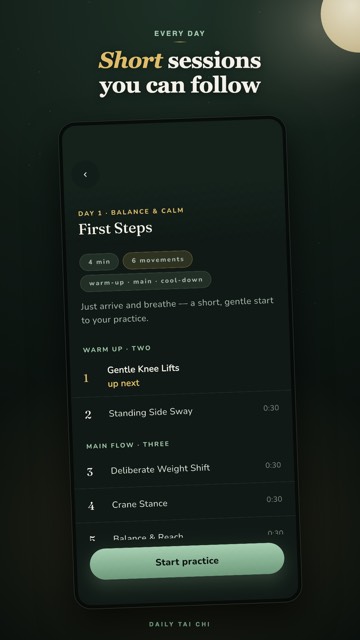
Gentle movement like tai chi won't manage diabetes on its own, and it isn't a substitute for the care plan you've worked out with your doctor. What it can offer is a low-impact way to build more daily movement into your life, which general health resources such as Harvard Health Publishing, MedlinePlus, and the National Institute on Aging often describe as a helpful piece of an active, balanced routine for older adults.
What makes tai chi worth considering specifically is how little it demands. There's no running, jumping, or straining — just slow weight shifts, soft turns, and relaxed breathing. For many people living with type 2 diabetes, that's exactly the kind of activity that feels doable on tired days and on good days alike. It doesn't ask you to push through discomfort, and there's no pace to keep up with besides your own.
Think of it less as exercise in the traditional sense and more as a daily ritual of gentle motion. Some days that might mean a full standing session; other days, a few slow breaths and a handful of seated movements may be all you have energy for, and that's perfectly fine.
What does a tai chi session for diabetes look like?
A typical gentle session has a simple shape: you settle in, warm up slowly, move through a few flowing postures, and finish with quiet breathing. Nothing is rushed, and every step can be done standing or seated.
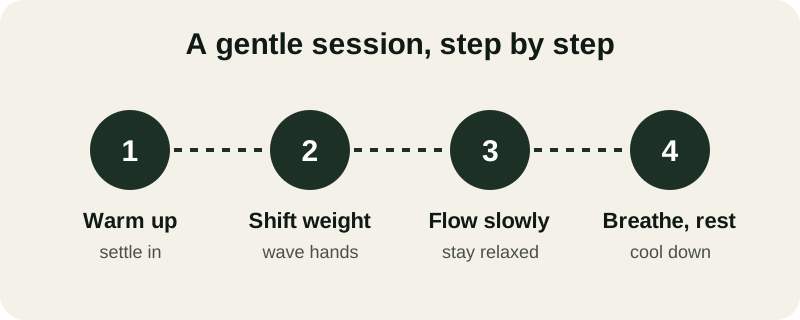
Along the way you might practice gentle weight shifts, a slow sit-to-stand, ankle circles, or the soft arm motion known as wave hands. None of these require strength or speed — just patience and a willingness to move a little slower than you're used to.
- Gentle weight shifts wake up the legs without strain.
- Wave hands keeps the shoulders and arms moving softly.
- Ankle circles are easy to do seated, even on a tired day.
- Slow sit-to-stand builds everyday strength at your own pace.
- Single-leg stand can be added later, once you feel steady and have a chair nearby.
If sitting feels more comfortable than standing, the chair Tai Chi guide covers the same gentle movements from a seated position, which can be especially welcome if foot sensitivity or fatigue is part of daily life. Many people move between standing and seated practice depending on how their feet or energy feel that day, and there's no reason not to switch back and forth as needed.
Is tai chi safe if you have diabetes complications?
For many people it is, but the honest answer depends on your own health picture — things like neuropathy, vision changes, or blood sugar swings can all affect how a session feels. That's why checking with your doctor first matters more here than in most gentle exercise.
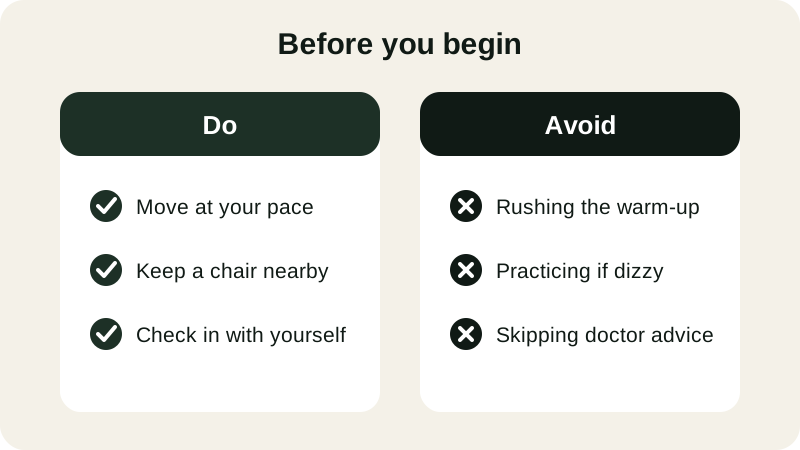
Balance can also be worth a closer look if neuropathy affects your feet. Our guide on how Tai Chi improves balance walks through the same slow, steady approach in more detail, and it pairs naturally with the gentle practices here. Standing tall with feet hip-width apart, with a chair or wall nearby, is a simple starting position worth returning to before any session.
How often should you practice tai chi with diabetes?
Five to ten minutes on most days is plenty, especially when you're just starting out. Consistency matters far more than duration — a short, steady habit tends to stick better than an occasional long session.
A short morning session can be a calm way to start the day, while an evening session might simply feel like a quiet way to unwind. Either way, the goal is to make it easy to return to tomorrow. For more on building a rhythm that lasts, see our guide on how often seniors should do Tai Chi.
It can help to think of these minutes less as a workout to complete and more as a small pause built into your day — a few quiet moments where the only task is to breathe and move slowly. Some people like the structure of following along with a guide rather than trying to remember a sequence on their own, which is one reason a short, repeatable routine tends to work better than trying to design your own from scratch.
What else pairs well with tai chi for diabetes management?
Slow breathing is a natural companion to tai chi, and many people find it just as calming on its own. Qigong, a related practice of gentle breath-led movement, shares the same unhurried spirit and can be a lovely addition to your routine, especially on days when standing practice feels like too much.
If blood pressure is also something you're keeping an eye on alongside diabetes, our piece on Tai Chi for high blood pressure covers the same gentle approach from that angle. And if you'd simply like a structured place to begin, the app offers a 28-day path of short, guided sessions — the first 4 days are free, with no card and no account needed, on iPhone and Android.
Whatever pace you start at, the point isn't to perform tai chi perfectly. It's to give your body a few gentle minutes of movement, most days, in a way that feels kind rather than demanding — and to let that small habit sit comfortably alongside the rest of your care.
Sources
Can tai chi lower blood sugar?
Tai chi is not a treatment for diabetes, and it shouldn't replace medication or medical care. What it offers is gentle, regular movement that many people find easy to stick with, which can be a pleasant part of an overall active daily routine alongside your doctor's guidance.
Is tai chi safe with diabetic neuropathy?
It can be, especially seated or with support nearby. Move gently, keep a stable chair, wall, or counter within reach, and stop if you feel dizzy or unsteady. Check with a doctor first, since foot sensitivity and balance concerns vary from person to person.
How long should a tai chi session be?
Five to ten minutes is plenty, especially when you're starting out. Short, steady sessions most days tend to feel more sustainable than occasional long ones, and they're easy to fit around meals, medication schedules, or blood sugar checks.
Can I practice tai chi seated if I have diabetes?
Yes. Many tai chi movements adapt fully to a seated version, which is helpful if foot numbness, fatigue, or balance concerns make standing practice feel less comfortable. A seated session still includes gentle weight shifts and flowing arm movements.
What time of day is best for tai chi with diabetes?
There's no single right answer — morning sessions can start your day calmly, while a short practice after a meal may simply feel good as part of your routine. Choose a time that fits naturally into your schedule and stick with it.