 DAILY TAI CHI
Tai Chi for Renters: Wave Hands in a Small Room
A guide to practicing tai chi in a rented apartment — how much space it needs, how to keep it quiet for neighbors, and how to protect hard rental floors.
Published
Quick answer
Tai chi for renters fits almost any apartment: a cleared corner about the size of a towel, a rug or mat for hard floors, and a stable chair or wall nearby for balance moves — no gym, no heavy equipment, and quiet enough for neighbors.
Key takeaways
- Most tai chi moves fit in a space about the size of a bath towel.
- A rug, mat, or folded towel adds grip on hard rental floors.
- No jumping or stomping makes tai chi quiet for shared walls and floors.
- Keep a stable chair, wall, or counter nearby for balance moves.
- No equipment to buy or pack makes it easy to keep up between moves.
Tai chi for renters comes down to one reassuring fact: you don't need a yard, a gym membership, or a room of your own to practice. All you need is enough floor to stand tall, feet hip-width apart, and a plan for the parts of renting that make movement tricky — thin walls, hard floors, and a space that might not be yours for long.
How much space does tai chi need in a rented apartment?
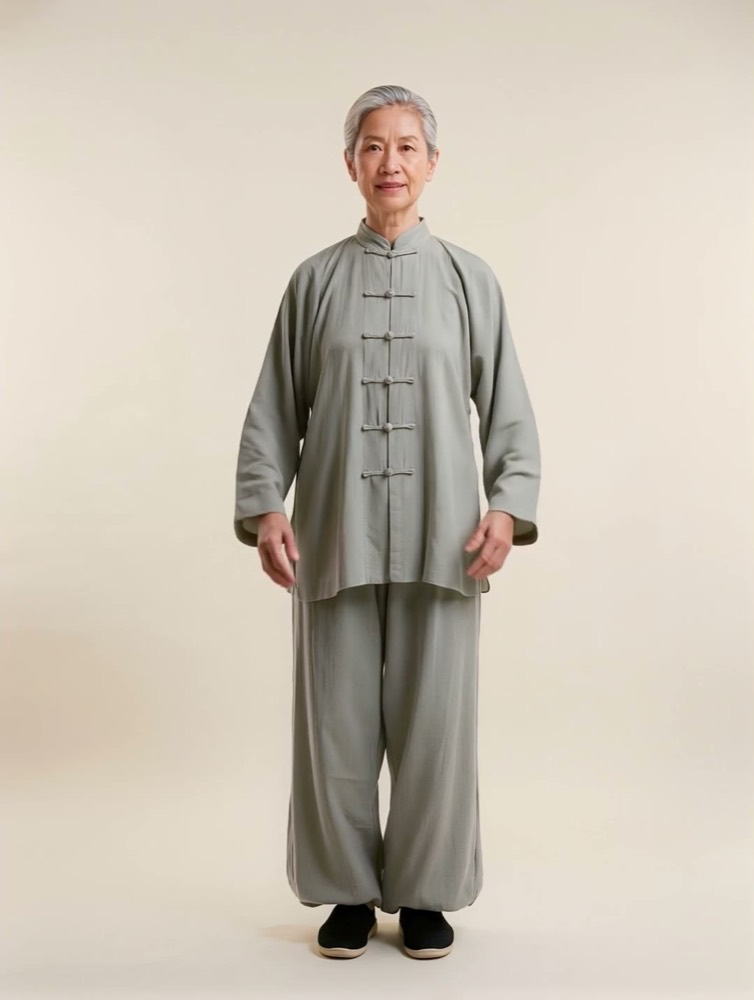
Most tai chi moves fit inside an area about the size of a bath towel laid flat on the floor. Wave hands, gentle weight shifts, and ankle circles all happen within arm's reach of where you stand, so a cleared corner of a bedroom, a hallway, or the end of a living room is usually plenty.
Moves that ask you to shift your weight a little further, like a heel-to-toe stand or a single-leg stand, still don't need much more room — just a stable chair, wall, or counter nearby in case you want a hand for balance. If your current rental feels especially tight, a short routine built around close quarters can show you exactly how little space these movements take. Our guide on practicing tai chi in small spaces walks through moves sized for a single corner, step by step.
It also helps to think about ceiling height and reach, not just floor space. Wave hands and other arm movements float gently rather than swing wide, so even a room with a low light fixture or a shelf nearby rarely gets in the way. If you share your apartment with roommates or family, picking a time when the room is naturally empty — early morning, or right after everyone else has left for the day — often solves the space question better than finding a bigger room ever could.
Keeping your practice neighbor-friendly
Tai chi is naturally quiet. There's no jumping, no stomping, and nothing heavy that bangs against a shared wall or floor, which makes it one of the easier ways to move your body in a building where someone lives below or beside you.
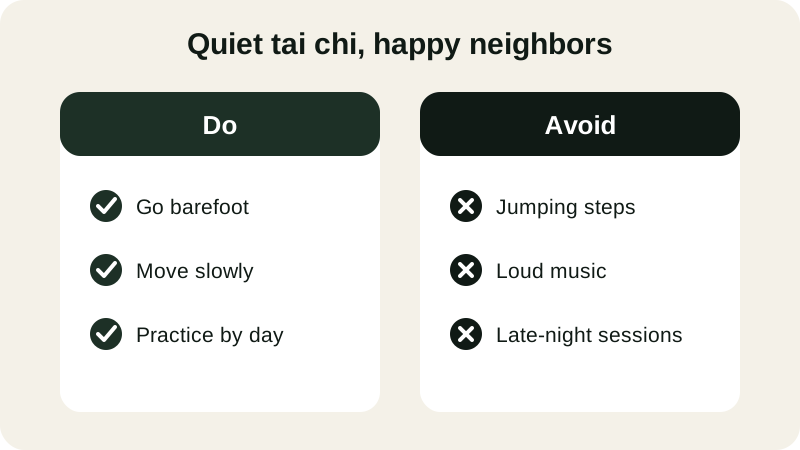
- Do: Go barefoot
- Do: Move slowly
- Do: Practice by day
- Avoid: Jumping steps
- Avoid: Loud music
- Avoid: Late-night sessions
Timing matters too. A slow flow at seven in the morning or nine at night can still travel through an older building's floors, so many renters find that practicing in daylight hours, or whenever their building tends to be livelier anyway, draws the least attention. If you're ever unsure whether a session might carry through a wall, it helps to remember that tai chi's slowest moves, like ankle circles and weight shifts, create almost no impact at all — they're closer to standing still than to walking across a room.
What should you do about hard floors and thin walls?
Lay a thin rug, mat, or folded towel under your feet if your rental has laminate, tile, or hardwood, and keep a stable chair, wall, or counter within reach for any move that challenges your balance. Carpet usually needs nothing extra underfoot at all.
| Floor type | What helps |
|---|---|
| Carpet | Practice as-is; grip is already good |
| Hardwood or laminate | Bare feet or grip-soled socks, plus a thin rug |
| Tile | A folded towel or mat for warmth and grip |
Thin walls call for the same answer as noisy neighbors — slow weight shifts rather than any stepping with real force — and a rug does double duty here, softening both your footing and the sound that travels downstairs. If your rental agreement mentions flooring protection or restricts certain floor coverings, a removable rug or interlocking foam square is usually easy to take with you at the end of a lease, unlike glued-down flooring or anything that marks the surface underneath.
Setting up a tai chi-friendly corner
You don't need a dedicated room to make tai chi part of your routine — just one repeatable spot you return to, even if that corner is shared space the rest of the day.
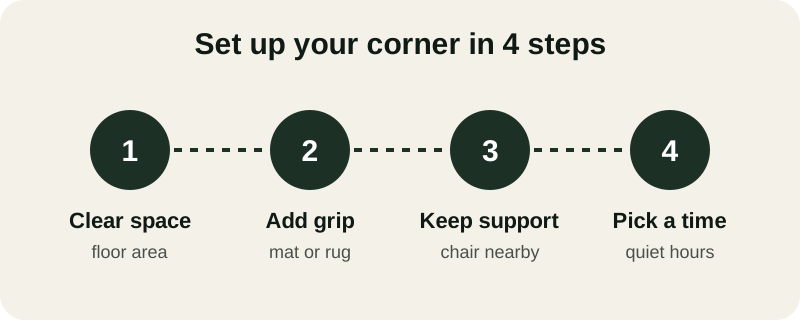
- Clear space — floor area
- Add grip — mat or rug
- Keep support — chair nearby
- Pick a time — quiet hours
Keep the corner clear of trip hazards like cords or shoes, and store your mat or rug somewhere nearby so setting up takes seconds rather than minutes. The easier the spot is to reach, the more likely you are to actually use it. Some renters find it helps to pick a spot near a window, where morning light makes the few minutes feel less like a chore and more like a small daily pause — standing meditation in motion rather than another task on the list.
If your building has a shared lobby, courtyard, or laundry room that's usually quiet at certain hours, that can work as a backup spot on days when your own apartment feels too cramped or too noisy to settle into. The goal isn't a perfect setup — it's a spot you can reach quickly enough that skipping practice feels like more effort than doing it.
Practicing without equipment you need to pack
Renters often move more than homeowners do, and the last thing you want is a practice that depends on gear you'll have to box up and reassemble every time your lease changes. Tai chi needs almost none of that — just comfortable clothing, as covered in our guide to what to wear for tai chi, and enough floor to stand on.
App sessions are done standing, each one built from a warm-up, main flow, and cool-down, and you choose 5, 10, 15 or 20+ minutes a day depending on how your schedule or your living situation looks that week. Daily Tai Chi shows spoken cues and a short video clip for each move, and the first 4 days are free, with no card and no account needed, so you can try a session in your current space before deciding whether it fits.
If sitting down feels more comfortable on some days, our chair tai chi guide is a gentle alternative that asks for even less floor space. And once you've settled into a corner that works, you may find it useful to build the habit slowly, starting with just a few minutes before you lengthen each session — a small, repeatable routine travels far better between rentals than a complicated one ever could.
Sources
Do you need a yoga mat to practice tai chi in an apartment?
Not necessarily — a bare floor works fine for most moves. A thin rug, mat, or folded towel helps if your floor is hard or slippery, mainly for comfort underfoot and a little extra grip during weight shifts and balance moves like the heel-to-toe stand.
Can you practice tai chi in a studio apartment?
Yes. Moves like wave hands and gentle weight shifts fit in a space roughly the size of a towel, so a cleared corner of a studio is usually enough room to stand, turn, and shift your weight comfortably without bumping into furniture.
Will tai chi disturb neighbors in a shared building?
It's unlikely to — tai chi has no jumping or heavy footfalls, so it's quieter than most home workouts. For extra reassurance, practice barefoot or in grippy socks, lay down a rug, and keep sessions to daytime hours when buildings are naturally livelier.
How do you keep up a tai chi routine when you move apartments often?
Keep the routine simple and portable: a few minutes standing in whatever corner is clear that week, with no equipment to pack or unpack. A consistent time of day matters more than a consistent address for turning tai chi into a lasting habit.
What if your rental doesn't allow furniture to be moved around?
You rarely need to move anything. Most tai chi moves fit in a gap the size of a towel between existing furniture, so you can practice in a hallway, a cleared bit of carpet, or beside your bed without rearranging a single piece.