 DAILY TAI CHI
Tai Chi for Upper Body Strength: Try Holding the Ball
Slow, repeated arm movements like wave hands and holding the ball build upper body strength through steady muscular effort, with no weights or jarring motion required.
Published
Quick answer
Tai chi for upper body strength works through slow, repeated arm moves like wave hands and holding the ball, building shoulder, arm and core endurance without weights. Move slowly and keep your shoulders relaxed throughout.
Key takeaways
- Wave hands and holding the ball build shoulder, arm and core strength without weights
- Slow, controlled motion builds muscle endurance without jarring or heavy lifting
- Five to ten minutes most days matters more than one long session
- Keep a stable chair, wall or counter nearby if balance feels uncertain
- Move within a comfortable range and check with a doctor first if you have joint pain
If you want tai chi to build upper body strength, slow, flowing arm moves like wave hands and holding the ball are the place to start, working your shoulders, arms and core without any weights. Done standing, the motion itself provides all the resistance you need.
Why does tai chi build upper body strength?

Yes. The slow, continuous arm paths in tai chi ask your shoulders, upper arms and core to stay active the entire time your arms are lifted, creating steady muscular effort instead of a quick burst, which is what builds endurance over weeks of regular practice.
This isn't strength training in the traditional sense of lifting something heavy. It's closer to holding a plank, except the position keeps moving: your arms stay extended through long, slow circles instead of resting at your sides between repetitions. Harvard Health Publishing and the National Institute on Aging both note tai chi as a low-impact way for older adults to stay physically active, and steady, repeated arm work is part of why the practice appeals to people who've never exercised in a traditional gym setting.
Related practices like qigong use similar slow arm patterns and breathing, though qigong tends to emphasize breath and stillness over the flowing sequences tai chi strings together. If your shoulders feel tight rather than weak, our guide to tai chi for shoulder mobility covers the same slow arm paths from a flexibility angle.
Posture matters as much as the arm movement itself. Standing tall, feet hip-width apart, with your weight settled evenly lets your shoulders and arms move freely instead of compensating for a slumped spine. A few minutes of standing tall before you begin can make the rest of the practice feel noticeably easier on your upper body.
Five arm moves that build strength
Each of these arm strengthening moves can be practiced standing, with a stable chair, wall, or counter nearby if you want extra steadiness. Move slowly, keep your shoulders relaxed away from your ears, and let your breath stay easy throughout.
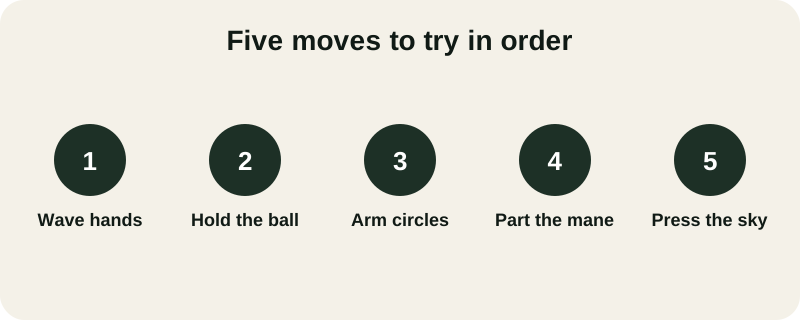
- Wave hands
- Hold the ball
- Arm circles
- Part the mane
- Press the sky
- Wave hands. Shift your weight slowly from side to side while your hands float and turn in front of you, as if smoothing the surface of calm water. Your arms stay lifted the whole time, which is exactly what works them. Repeat for a minute or two, letting the motion feel unhurried rather than precise.
- Holding the ball. Cup your hands as though holding a large, light ball at chest height, elbows softly rounded. Hold the shape for several slow breaths, then release and reset. This builds quiet endurance in the shoulders and upper arms without any equipment at all.
- Slow arm circles. Lift both arms out to the sides and trace wide, unhurried circles, starting small and widening them as your shoulders warm up. Reverse direction after a few rounds so both sides of the shoulder get equal attention.
- Part the horse's mane. Step forward and open one arm upward while the other sweeps down, as if gently parting something in front of you. Switch sides slowly and evenly, keeping your weight centered between your feet as you turn.
- Press the sky. Raise one arm overhead with the palm turned up, as though pressing against the ceiling, then lower with control and switch arms. This move carries the shoulder through its full range while still building strength.
Every one of these moves adapts to sitting: stay seated with your feet flat on the floor, skip the weight shifts, and keep the arm motion exactly the same. Our chair Tai Chi guide walks through seated versions of similar movements in more depth.
What helps, and what gets in the way
A relaxed shoulder is a working shoulder. The most common mistake with these arm strengthening moves is tensing up or rushing through them, which tires you out quickly without actually building anything. Slow, even breathing keeps the muscles working steadily instead of straining in short bursts, and that steadiness is where the real strength comes from.
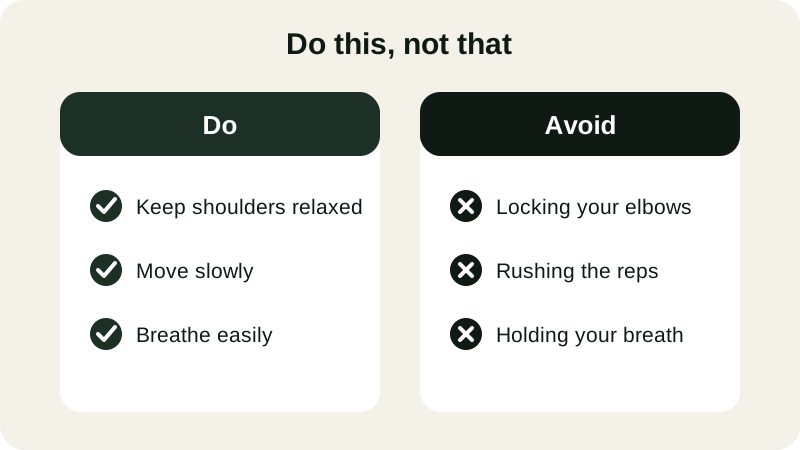
- Do: keep shoulders relaxed, move slowly, breathe easily.
- Avoid: locking your elbows, rushing the reps, holding your breath.
How long before you notice stronger arms?
Most people notice their arms feel less shaky and more capable within a few weeks of practicing five to ten minutes most days. Frequency matters more than the length of any single session.
Daily Tai Chi builds a personalized 28-day path of short, standing sessions, with spoken cues and a short video clip for each move so you can see exactly how an arm should move before trying it yourself. You choose 5, 10, 15 or 20+ minutes a day, and the first 4 days are free, with no card and no account needed to start.
Once your shoulders and arms feel steadier, our guide to tai chi for grip strength covers the same slow, steady approach for your hands and wrists, and how often seniors should practice tai chi can help you settle into a weekly rhythm that fits your week.
Sources
Do you need weights for tai chi to build upper body strength?
No. Your own arm's weight, moved slowly and with control, provides enough resistance to work the shoulders and arms. Some people later add light hand weights once the movements feel familiar, but it isn't necessary to benefit from the practice.
Can tai chi help with shoulder stiffness as well as strength?
Often, yes. The same slow, circular arm paths that build strength also take your shoulders through their full range of motion, which can ease stiffness over time. Our guide to tai chi for shoulder mobility covers this in more detail.
Is tai chi safe for people with shoulder or wrist concerns?
It can be, when you move within a comfortable range and keep a stable chair, wall, or counter nearby for balance. If you have ongoing shoulder or wrist pain, check with a doctor first before starting any new arm movement routine.
What's the best time of day to practice for strength?
Whatever time you'll actually repeat. Some people prefer morning arm circles to loosen up for the day, others wind down with slower moves in the evening. Consistency across the week matters more than the exact hour you choose.