 DAILY TAI CHI
Tai Chi for Grip Strength: 5 Hand Moves to Try
Tai chi supports grip strength indirectly by moving fingers, wrists, and forearms through slow, repeated motion rather than resistance training.
Published
Quick answer
Tai chi doesn't train grip strength directly, but moves like wave hands, wrist circles, and holding the ball keep fingers, wrists, and forearms moving, which helps hands stay supple and coordinated for everyday tasks.
Key takeaways
- Tai chi supports grip strength indirectly, through slow wrist and finger movement, not resistance.
- Wave hands, wrist circles, and holding the ball are the closest tai chi moves to grip work.
- Stiff, weak hands often come from disuse — regular movement keeps them supple.
- Pair tai chi with a soft ball or putty squeeze for more targeted grip training.
- A few minutes most days matters more than one long session.
If your hands feel stiff some mornings or your grip isn't quite what it used to be, you might be wondering what tai chi can do for your grip strength. The honest answer is that tai chi helps indirectly, through slow, repeated hand and wrist movement rather than resistance training.
Hands are easy to forget until they start feeling clumsy — struggling with a jar lid, dropping a mug, fumbling a button, or fumbling the clasp on a necklace. Tai chi won't turn back the clock, but it keeps the small muscles and joints in your hands moving, which is a quietly meaningful part of staying capable day to day. Many people come to a tai chi practice first for their knees or their balance, and are pleasantly surprised at how much looser their hands feel after a few weeks of regular, unhurried movement.
Can tai chi really help your grip strength?
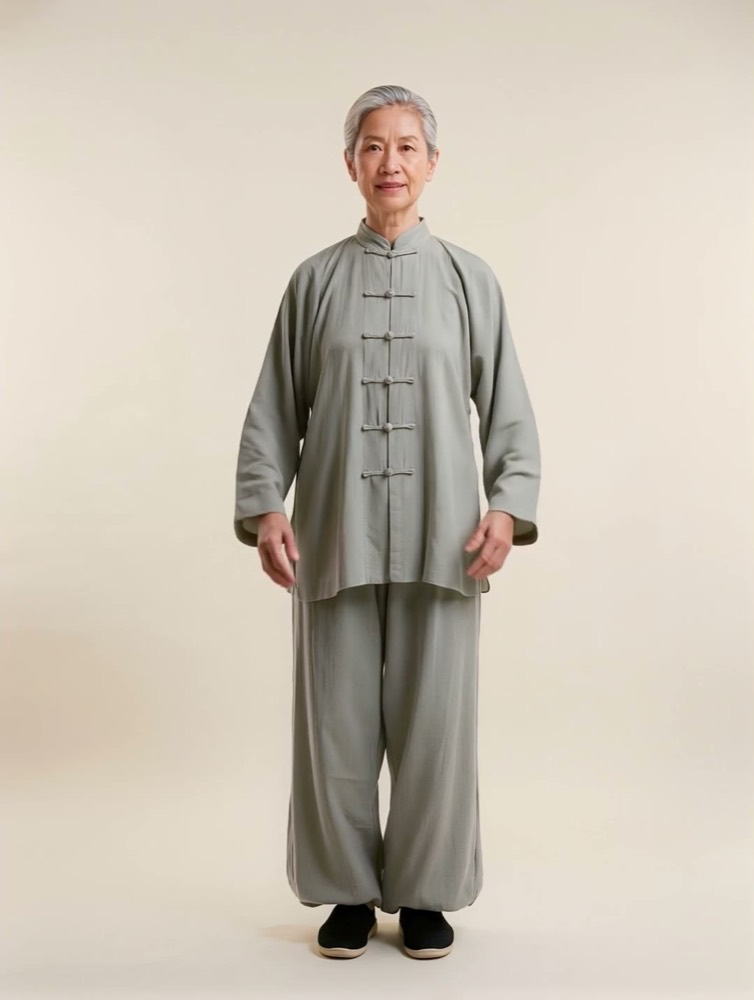
Tai chi doesn't train grip strength the way a hand gripper or squeeze ball does. Moves like wave hands, wrist circles, and holding the ball guide your fingers, wrists, and forearms through their full range of motion, which keeps hands supple, coordinated, and easier to use for everyday tasks.
Think of it as maintenance rather than training. A warm, mobile hand holds a key, a cup, or a pen more easily than a stiff one, even if the raw squeezing power hasn't changed much. Many of the same moves that loosen wrists and fingers also show up in a broader tai chi practice, so you're rarely doing hand work in isolation — it comes folded into the same slow sequences that help shoulders, hips, and balance. For more detail on moving wrists and fingers through tai chi, see our guide to wrist and hand mobility moves.
Five hand and wrist moves worth trying
These five moves are easy to layer into any standing or seated practice, and each one works a different part of the hand and wrist. Go slowly, breathe easily, and treat any sharp pain as a signal to stop, rather than pushing through it.
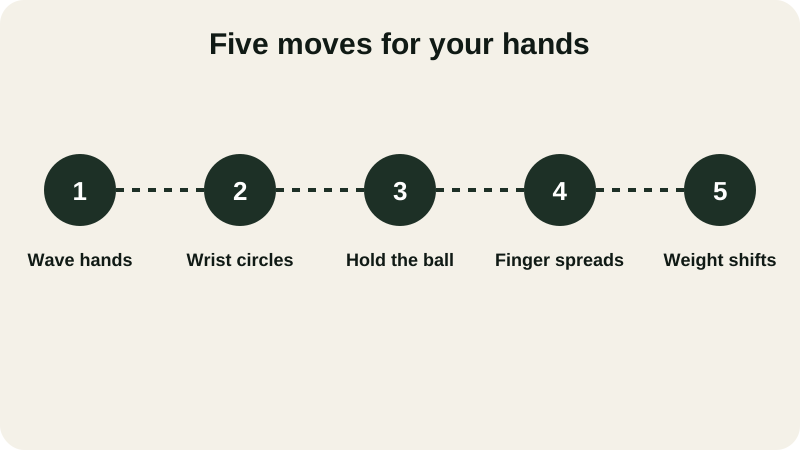
- Wave hands. Standing with feet hip-width apart, let your wrists float and turn softly in front of you, as if smoothing the surface of water. This moves the whole hand and forearm together.
- Wrist circles. Extend your arms gently and circle each wrist slowly, a few turns one way, then the other. Small, unhurried movement works best.
- Hold the ball. Cup your hands as if holding a large, soft ball at chest height. Press in gently, then let your hands drift slightly apart, again and again.
- Finger spreads. Open your fingers wide, hold for a breath, then curl into a soft fist. Repeat slowly, noticing the stretch across your palm.
- Weight shifts with open palms. As you shift weight from one foot to the other, let your palms open and soften rather than staying clenched.
Notice how every one of these stays slow and well within a comfortable range — there's no gripping tightly or forcing a stretch anywhere in the sequence. That ease is the whole point. Tai chi asks your hands to move often and freely, not to strain against resistance.
What weakens grip as the years go by
Grip often fades less from age itself and more from disuse — hands that sit still for long stretches get stiffer, and stiffer joints move even less, in a quiet feedback loop that's easy to miss until a jar lid wins.
Stiff, aching joints can speed up that cycle, which is part of why gentle, regular movement matters so much for hands affected by arthritis and stiff joints. Keep movements slow and well within a comfortable range rather than forcing a stretch, and let stiffness ease gradually rather than pushing through it.
Repetitive strain from gripping tools, gardening, or typing can add to this stiffness too. A few slow, open-palm movements worked into your day — even just opening and closing your hands while the kettle boils — can help offset hours spent in a tight grip elsewhere.
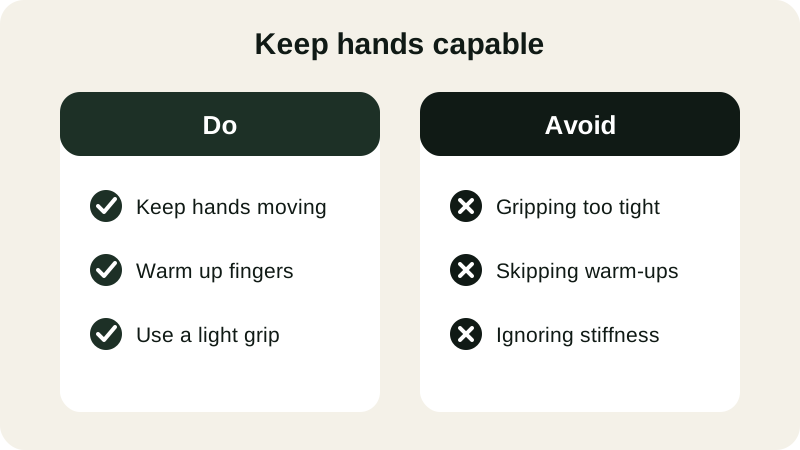
| Do | Avoid |
|---|---|
| Keep hands moving | Gripping too tight |
| Warm up fingers | Skipping warm-ups |
| Use a light grip | Ignoring stiffness |
How often should you practice for stronger hands?
A few minutes most days works better than one long session. Even 5 to 10 minutes of slow hand and wrist movement, done regularly, keeps joints supple and hands responsive over the weeks.
If you'd like a structured way to build this into your day, Daily Tai Chi's 28-day path opens each session with a warm-up that includes gentle wrist and hand movement before moving into the main flow and cool-down. Sessions run 5, 10, 15 or 20+ minutes, the first 4 days are free, and there's no card or account needed to start — just iPhone and Android. Each move is shown one at a time with spoken cues and a short video clip, so you can focus on your own hands and wrists without worrying about what comes next.
For a fuller beginner routine that includes these same hand movements alongside steadier footwork, start with our tai chi for seniors guide, or try our chair tai chi guide if standing for long isn't comfortable yet. Either way, a few relaxed minutes with your hands moving most days is worth far more than one long session you dread.
Does tai chi build muscle the way weightlifting does?
No — tai chi uses body weight and slow, flowing movement rather than resistance training, so it won't build muscle mass the way weights do. It does keep joints and small muscles active, which pairs well with light resistance work like a soft ball squeeze if you want more targeted grip training.
Can tai chi help hands affected by arthritis?
Many people with stiff, arthritic hands find slow, gentle movement feels better than staying still. Move at your own pace and keep a stable chair, wall, or counter nearby, and check with a doctor first if you're unsure what's right for your joints.
What's a good grip tool to pair with tai chi?
A soft stress ball, a rolled sock, or therapy putty all work well. Squeeze gently for a few seconds and release, a handful of times a day, alongside your tai chi practice, for a bit more targeted grip work.
Is wrist or hand pain a reason to stop practicing?
Sharp or worsening pain is a signal to pause and check with a doctor before continuing. Mild stiffness that eases as you warm up is common; if it doesn't ease, try shorter, slower movements or rest the hand for a day instead.