 DAILY TAI CHI
Tai Chi for Improving Circulation: 5 Moves Like Wave Hands
Slow, rhythmic tai chi moves like wave hands, gentle weight shifts, and ankle circles use the leg and arm muscles to support healthy blood flow without strain.
Published
Quick answer
Tai chi for improving circulation works through slow weight shifts, soft stretches like wave hands, and easy breathing that get blood moving without strain. It's low-impact and beginner-friendly; check with a doctor first if you have a circulation condition.
Key takeaways
- Slow moves like wave hands and weight shifts encourage blood flow without strain.
- Ankle circles and heel-to-toe stands warm up feet and lower legs.
- Five to ten minutes most days works better than one long session.
- Stop if you feel dizzy, and check with a doctor first if you have a circulation condition.
- A seated routine works too if standing feels unsteady.
If you're hoping tai chi can improve your circulation, the short answer is that slow, rhythmic movement — not intense exercise — is what gets blood moving comfortably through your hands, feet, and legs.
Can tai chi help improve circulation?

Yes — tai chi's slow weight shifts, soft stretches, and steady breathing use your leg and arm muscles the way a gentle pump works, pushing blood back toward the heart. It isn't a treatment for a diagnosed circulation condition, but it's a comfortable way to keep moving if you sit for long stretches.
Long periods of sitting are often what leave hands and feet feeling cold, heavy, or tingly. Tai chi interrupts that stillness with continuous, low-impact motion, so your calves and forearms — the muscles that help return blood toward your heart — stay gently active throughout a session instead of sitting idle.
Why slow movement helps blood flow
Every time you bend a knee, shift your weight, or raise an arm in tai chi, nearby muscles squeeze and release around the blood vessels running through them. That squeeze-and-release action is sometimes called the "muscle pump," and it's one reason why standing up and moving, even slowly, feels different from staying seated for an hour.
Health resources such as Harvard Health Publishing and the National Institute on Aging commonly describe tai chi as a low-impact, whole-body movement practice — one reason it suits people who find standard exercise too strenuous or who are managing stiff joints. The slow pace means your heart rate rises only a little, which is exactly the point: you're encouraging movement, not pushing for intensity.
Breathing plays a part too. Slow, even breaths — the kind practiced in tai chi breathing exercises and in qigong — help the whole body relax, which can make the difference between tense, shallow breathing and an easy rhythm that supports movement rather than fighting it.
Five moves that get your blood moving
These five moves are simple enough for a first tai chi session, and each one keeps a different part of your body lightly active.
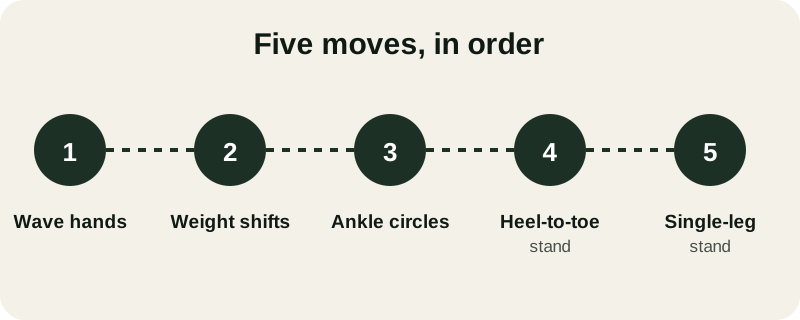
- Wave hands. Stand tall, feet hip-width apart, and let your arms float side to side at chest height as your weight shifts underneath them. This keeps shoulders and wrists loose while the legs do quiet work.
- Weight shifts. Rock your weight slowly from one foot to the other, letting the back knee soften as you go. This is the simplest way to wake up the leg muscles that support blood flow back toward the heart.
- Ankle circles. Lift one heel, point the toes, and draw slow circles with the ankle. Hold a chair or wall for balance. This warms the lower leg and foot, often the first place cold or stiffness shows up.
- Heel-to-toe stand. Place one foot directly in front of the other, heel to toe, holding a stable chair, wall, or counter. Hold for a few slow breaths, then switch feet.
- Single-leg stand. With support nearby, lift one foot a few inches off the floor for a slow count, then lower and switch sides. This adds a touch more leg engagement once the earlier moves feel comfortable.
What might make circulation issues worse
A few habits can work against you during practice, even when the moves themselves are slow and safe.
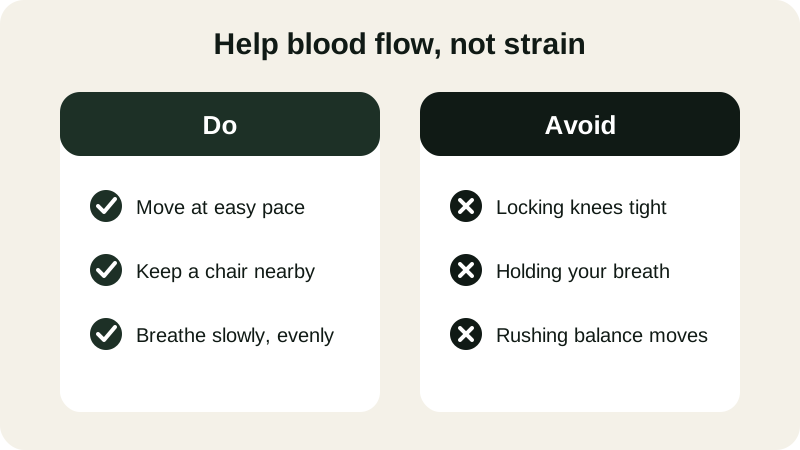
- Do: Move at easy pace, keep a chair nearby, breathe slowly and evenly.
- Avoid: Locking knees tight, holding your breath, rushing balance moves.
Locking the knees straight restricts the easy bend that helps the leg muscles do their work, and holding your breath during a weight shift tenses the chest and shoulders instead of letting blood move freely. If a stiff joint is part of the picture, our guide to tai chi for arthritis and stiff joints covers how to adapt moves like these around a sensitive knee or hip.
How much practice is enough?
Five to ten minutes most days is enough to notice a difference in how your hands, feet, and legs feel — consistency matters more than session length.
A short daily habit beats one long weekly session, partly because the muscle-pump effect fades once you sit still again. Spreading a few minutes across most days keeps that gentle activity going more often, which is part of why a short morning routine works well for people easing into practice.
If you'd rather follow along instead of guessing what to do next, the Daily Tai Chi app builds a personalized 28-day path of standing sessions — each with a warm-up, main flow, and cool-down — in lengths of 5, 10, 15, or 20+ minutes, done with a chair or wall within reach the whole time. The first 4 days are free, with no card and no account needed, so you can try a session or two before deciding if it fits your routine.
If standing for a full session doesn't suit you yet, a seated practice is a solid way to start the same kind of arm and breathing work — see the chair tai chi guide for five seated moves, or the tai chi for high blood pressure guide if heart health is part of what brought you here.
Sources
Does tai chi help with cold hands and feet?
Many people notice their hands and feet feel warmer after a session, since the slow arm and leg movement encourages blood flow to the extremities. If cold hands and feet are persistent or severe, check with a doctor first, since this can point to a condition that needs its own care.
How soon might you notice a difference?
Some people feel warmer hands or looser legs by the end of a single session, simply from moving after sitting still. Lasting change tends to come from showing up most days for five to ten minutes rather than from one long practice.
Can tai chi help circulation problems linked to diabetes?
Tai chi's slow, low-impact movement is often used alongside standard diabetes care as gentle daily activity, not as a replacement for it. If you have diabetes-related circulation changes, check with a doctor first; our diabetes guide covers this in more detail.
Do you have to stand, or can circulation-friendly tai chi be done seated?
Standing lets you use the full leg muscles, which helps blood return to the heart, but a seated routine is a solid alternative if standing isn't comfortable. See the chair tai chi guide for a seated version of similar arm and breathing work.
Is qigong different from tai chi for circulation?
Qigong is usually simpler and more repetitive, often a single breathing-and-movement pattern held for several minutes, while tai chi links several moves into a flowing sequence. Both use slow movement and breath, so either is a reasonable starting point.