 DAILY TAI CHI
Tai Chi for Easing Tension in the Back: 3 Moves
Three slow, standing tai chi moves — wave hands, weight shifts, and a slow sit-to-stand — paired with easy breathing can help loosen tight muscles along the back.
Published
Quick answer
Tai chi for easing tension in the back uses slow, standing moves like wave hands and gentle weight shifts, paired with steady breathing, so tight muscles along the spine can soften over a few minutes most days.
Key takeaways
- Wave hands, weight shifts, and a slow sit-to-stand target different parts of the back.
- Slow, steady breathing matters as much as the movement itself.
- Practice 5 to 10 minutes most days rather than one long weekly session.
- Keep a stable chair, wall, or counter nearby and move within your comfort.
- Check with a doctor first if back pain is ongoing or severe.
A slow, standing tai chi practice is a reliable way to begin easing tension in the back, because the movement pairs with steady breathing to help tight muscles along the spine let go gradually. A few quiet minutes most days works better than one long session now and then.
Why your back holds so much tension
Hours of sitting, hunching over a counter or a phone, and carrying stress in the shoulders all pull the muscles along your spine into a tight, guarded position. Over the course of a day, that guarding adds up, even if you've never lifted anything heavy or done anything you'd call strenuous.
The lower back and the muscles between your shoulder blades are especially prone to this because they hold you upright for hours at a stretch, often without much variety of movement. Your spine is built to twist, bend, and rock gently, and when it only ever does one thing — sitting still, facing forward — the muscles around it stay braced instead of cycling between effort and rest.
Tai chi's slow turns and weight shifts move the spine through a range it rarely gets otherwise, which is part of why people reach for it when they're reducing muscle tension more broadly, not just in the back. The same slow pacing also shows up in a tai chi posture practice, since a back that moves more easily tends to sit a little taller, too.
Which tai chi moves ease tension in the back?
Three moves help most: wave hands, which turns the spine gently from side to side; weight shifts, which loosen the lower back and hips; and a slow sit-to-stand, which builds the support your back relies on all day. Practice each one slowly, for about a minute, with a stable chair nearby.
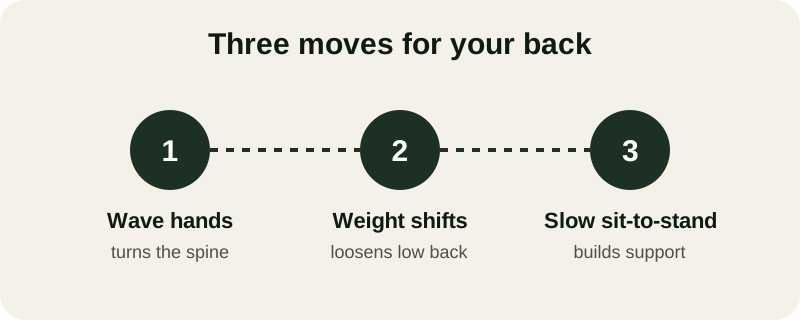
- Wave hands — stand tall, feet hip-width apart, and let your arms float side to side as your waist turns softly, loosening the muscles along your spine one breath at a time.
- Weight shifts — rock your weight slowly from one foot to the other, letting your hips and lower back soften a little more with each shift instead of staying locked in place.
- Slow sit-to-stand — from a stable chair, rise and lower yourself slowly, keeping your back long rather than rounded, to build the quiet support it relies on all day.
Each move asks for very little range of motion, so there's no need to force a deep twist or a big stretch — small, repeated movement is what does the work. If standing for all three feels like too much on a given day, you can work through the same ideas sitting down with our chair tai chi guide, and our piece on tai chi for back pain walks through a few more moves aimed specifically at the lower back.
How breathing supports a relaxed back
Breath and back tension are closely linked, because a held breath tends to come with a held, tight torso. Slow, even breathing — in through the nose, long and unhurried out through the mouth — gives the muscles around your spine permission to soften as you move, rather than bracing against each turn or shift.
It helps to think of the exhale as the moment your back actually releases. Many people breathe in as their weight settles into one foot, then let the breath out slowly as they turn or sway, almost as if the breath were drawing the tension out through the arms. You don't need to count or time it precisely — just notice whether your shoulders drop a little on the out-breath.
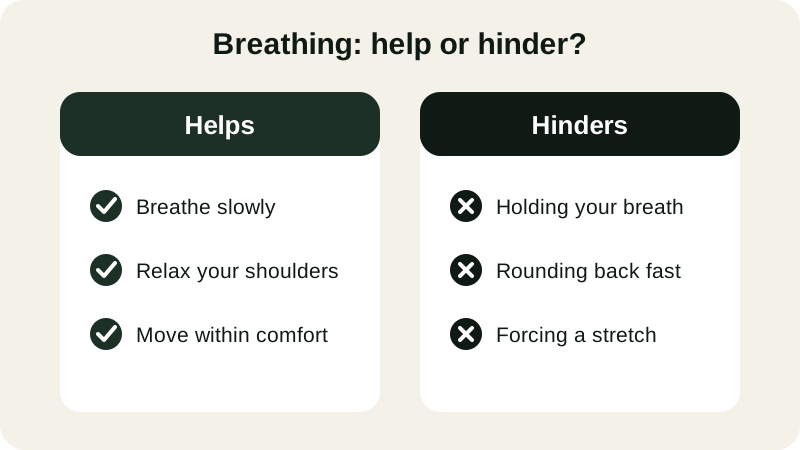
- Helps: breathe slowly, relax your shoulders, move within comfort.
- Hinders: holding your breath, rounding back fast, forcing a stretch.
Our guide to tai chi breathing exercises walks through this pacing in more detail, if you'd like a slower, guided way to practice the breath on its own before adding it to movement.
How often should you practice to feel relief?
Most people notice less tightness when they practice tai chi for 5 to 10 minutes on most days rather than saving it for one long weekly session. Consistency matters more than duration, since the slow, repeated movement is what gradually teaches tight muscles to release.
A short morning or evening slot tends to work better than trying to fit in a long block on the weekend, because the back responds to frequency. Even on days when you only have time for wave hands and a few weight shifts, that small dose still counts, and it adds up over the course of a week far more than you might expect from something so unhurried.
This is the one place an app genuinely helps: Daily Tai Chi builds a personalized 28-day path of standing sessions, each with a warm-up, main flow, and cool-down, so moves like wave hands and weight shifts show up in order instead of you having to plan a sequence yourself. The first 4 days are free, with no card and no account needed, and you can set a daily reminder at a time you choose if mornings or evenings suit your back better.
Whichever way you practice, the pattern that helps a tense back is the same one tai chi is built around: slow, unhurried movement, done often, with breath that matches the pace. For a few more lower-back-specific moves to add into the mix, our guide to tai chi for back pain is a good next stop, and our broader tai chi for seniors guide is worth a look if you're still finding your footing with the basics.
Can tai chi help with chronic lower back pain?
It depends on what's causing the pain, so check with a doctor first before starting. Once you're cleared to move, slow, low-impact practice like weight shifts and wave hands is a gentle way to add movement back into a stiff lower back.
Is tai chi better than stretching for a tight back?
They work differently rather than one replacing the other. Stretching lengthens a single muscle at a time, while tai chi moves the spine through continuous, flowing motion alongside slow breathing, which many people find eases tension more broadly.
Should you practice standing or seated if your back is sore?
Either can work depending on how your back feels that day. Standing moves use a stable chair, wall, or counter for support; if standing feels like too much, our chair tai chi guide shows the same ideas done fully seated.
How long before tai chi eases back tension?
This varies by person and by how long the tension has been building. Many people notice their back feels looser after a few weeks of short daily practice, since the relief comes from repetition rather than a single session.