 DAILY TAI CHI
Tai Chi for Back Pain: 4 Moves Seniors Can Try
Tai chi for back pain in seniors uses slow weight shifts, wave hands, and a slow sit-to-stand to move a stiff lower back through a small, comfortable range instead of stretching or bracing it.
Published
Quick answer
Tai chi for back pain in seniors works through slow weight shifts, wave hands, and a slow sit-to-stand that move the spine gently without bending or twisting. A few minutes a day can ease stiffness, though sudden or spreading pain needs attention first.
Key takeaways
- Weight shifts and wave hands move the spine through a small range without bending or twisting far.
- Keep a stable chair, wall, or counter nearby, and stop if you feel dizzy or unsteady.
- A short 5 to 10 minute daily session often helps more than one long, occasional one.
- Chair tai chi gives the same slow movements fully seated, which suits flare-up days.
- Sudden, sharp pain or pain spreading down a leg needs medical attention first.
Seniors living with back pain often find that tai chi eases stiffness by moving the spine through slow, controlled ranges instead of stretching or bracing against it. A short daily practice can loosen a tight lower back without the deep bending or twisting that many workouts ask for.
Can tai chi help with back pain?

Yes. Tai chi's slow, low-impact movements rotate and shift weight gently through the trunk, hips, and legs, easing stiffness in the lower back without the bending or jarring that many other activities require. It won't erase every ache, but practiced slowly and often, many people notice their back feels looser and easier to move.
Much of this comes from how tai chi trains your trunk to move as one connected unit. Instead of isolating the lower back with a deep stretch, you shift weight through the hips and let the spine follow along — which many people find kinder on a sensitive back than toe-touches or sit-ups. This slow, low-impact approach is one reason tai chi for lower back pain keeps coming up as an option worth trying at home, especially for people who have found other forms of exercise too jarring in the past.
There's also a mental side to this. A tense, guarded back often moves less freely than a relaxed one. The slow pace of tai chi, paired with easy breathing, gives your nervous system time to settle, which can make the same small movement feel more comfortable than it would if you rushed into it cold.
Movements that ease a stiff lower back
Weight shifts, wave hands, and a slow sit-to-stand are among the easiest tai chi movements for a stiff lower back, because they move the spine through a small, comfortable range rather than forcing a stretch. A single-leg stand or heel-to-toe stand can come later, once your balance feels steady and your back has warmed up.
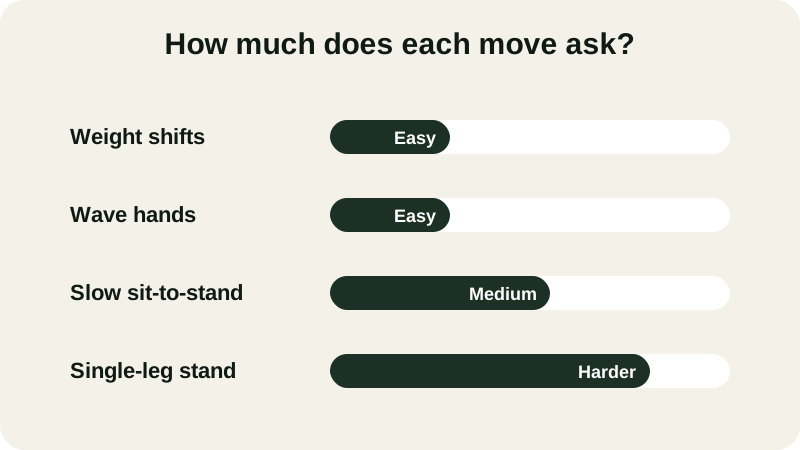
- Weight shifts — easy
- Wave hands — easy
- Slow sit-to-stand — medium
- Single-leg stand — harder
Ankle circles make a nice warm-up before any of these, since loose ankles help the weight shifts above feel steadier under a tender back. Keep your knees soft rather than locked, and let your arms hang relaxed at your sides so your shoulders aren't adding extra tension to an already tight back.
Building a daily routine for back pain
A short, slow tai chi routine for seniors works best when it follows the same shape every day: a brief warm-up, a few minutes of the main flow, and a slower cool-down. This rhythm gives a stiff back time to warm up before it's asked to move through weight shifts, and time to settle afterward instead of stopping abruptly.
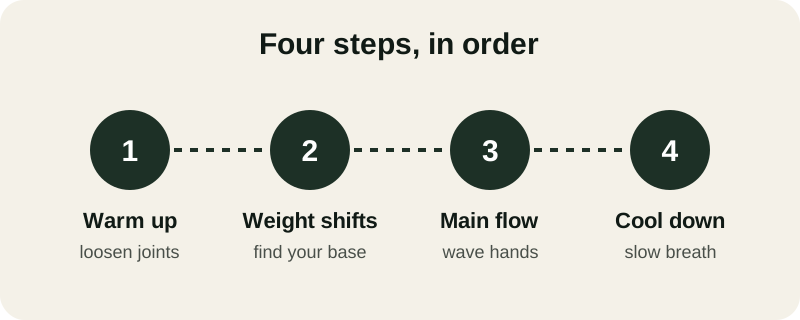
- Warm up — loosen joints
- Weight shifts — find your base
- Main flow — wave hands
- Cool down — slow breath
Ankle circles and a few small weight shifts make a good warm-up on their own — see our tai chi warm-up exercises for seniors for a short sequence to start with. Five to ten minutes is a reasonable target for most days; there's no need to push past that, and shorter is fine on days when your back feels extra tight.
If keeping track of warm-up, flow, and cool-down feels like a lot to remember, Daily Tai Chi lays it out for you: a 28-day path of 5 to 10 minute guided sessions, each built with its own warm-up, main flow, and cool-down already in place. The first 4 days are free, with no card and no account needed, and it runs on iPhone and Android.
On days when your back feels too sore to stand for long, the same slow movements work seated. Our chair tai chi for seniors guide covers chair tai chi for back pain using the same small weight shifts and wave hands, just from a stable seat.
Standing and breathing tips for a back-friendly practice
Posture matters as much as the movements themselves. Stand tall, feet hip-width apart, with your weight settled evenly over both feet rather than leaning forward or arching back. A tall, relaxed spine gives your lower back more room to move without pinching.
Breath is the other half of this. Slow, easy breathing — in through the nose, out gently through the mouth or nose — helps your back muscles release rather than grip. If you find yourself holding your breath during a weight shift, that's usually a sign to slow down and make the movement smaller. Our guide to tai chi breathing exercises walks through a few simple patterns you can pair with any of the moves above.
It can also help to notice where you carry tension. Many people with back pain unconsciously clench their jaw, shoulders, or hands during a new movement. Scanning down your body before you begin — jaw soft, shoulders dropped, hands loose — often lets the lower back follow that same relaxed signal.
When does back pain need a doctor's attention?
Back pain needs medical attention when it is sudden, severe, spreads down one or both legs, or comes with numbness, weakness, or changes in bladder or bowel control — those signs call for a doctor's evaluation before continuing any movement practice, tai chi included.
For ongoing, manageable stiffness without those warning signs, many people pair tai chi for back stiffness with the same movements used for other joints. Our guide to tai chi for hip pain shares several moves that overlap nicely with the lower back, since the hips and spine tend to move together in daily life.
Is tai chi safe for sciatica or a herniated disc?
It depends on your specific diagnosis, so check with a doctor first before starting. Many people with mild sciatica find slow weight shifts and wave hands comfortable because they avoid deep forward bending, but severe or worsening symptoms need medical guidance rather than a general routine.
Can tai chi for back pain make it worse?
Any movement can aggravate a sensitive back if it's rushed or forced. Keep weight shifts small, stay within a comfortable range, and stop if something sharpens rather than eases. If a movement consistently increases your pain, skip it and ask a doctor about that specific motion.
How soon might a stiff back feel looser?
This varies a great deal from person to person. Some notice their back moves more easily within the first couple of weeks of short daily sessions, while others take longer. Consistency matters more than speed, so aim for a few slow minutes most days rather than one long, occasional session.
Can you practice tai chi for back pain while seated?
Yes. Nearly every standing movement, including weight shifts and wave hands, has a seated version that keeps the same slow pace without asking you to stand for long. A chair tai chi routine walks through a full seated practice you can use on tougher, more painful days.