 DAILY TAI CHI
Tai Chi for Reducing Muscle Tension in 5 Minutes
A practical guide to four slow tai chi moves and breathing habits that help release tense shoulders, neck, back, and jaw muscles at home.
Published
Quick answer
Tai chi reduces muscle tension by combining slow, continuous movement with relaxed breathing, which lets tight shoulders, neck, and back muscles soften instead of staying braced. A few moves like wave hands and weight shifts, done for five to ten minutes, can leave your body feeling looser.
Key takeaways
- Slow, continuous movement relaxes muscles better than sudden stretching.
- Wave hands and weight shifts loosen the shoulders, neck, and back.
- Five to ten minutes a day is enough to notice looser muscles.
- Slow breathing helps release tension that builds up from stress.
- Keep a stable chair or wall nearby while you practice standing moves.
Tai chi reduces muscle tension by pairing slow, continuous movement with easy breathing, so tight shoulders, necks, and backs get a chance to let go instead of being forced into a stretch. You need no equipment and no prior experience — just enough space to shift your weight from one foot to the other.
Why does tai chi ease muscle tension?
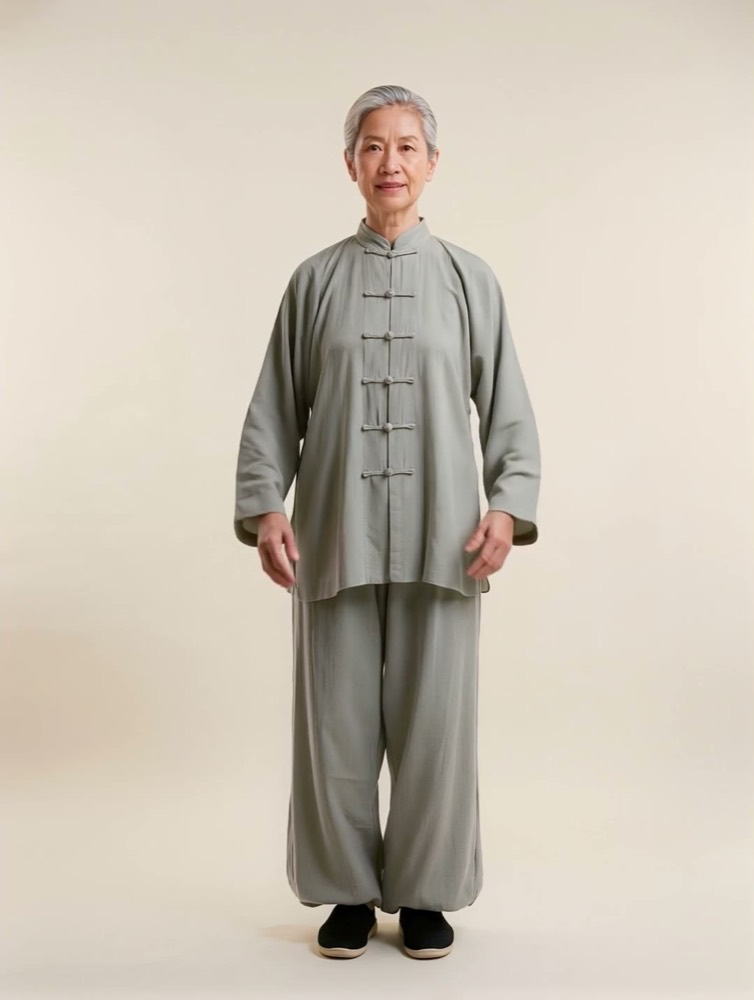
Muscle tension often comes from holding one position too long, from stress, or from the body guarding against discomfort, and it tends to tighten further the longer it's ignored. Tai chi interrupts that pattern with slow, flowing movement and steady breathing, which calms the nervous system and lets held muscles soften instead of staying braced.
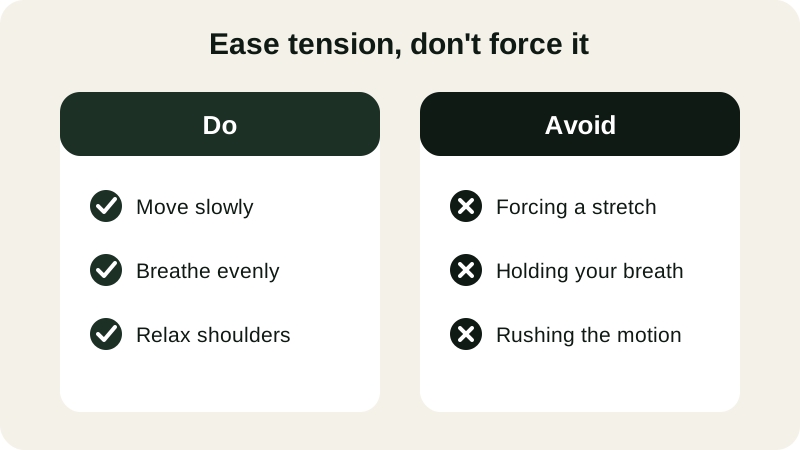
- Do: move slowly
- Do: breathe evenly
- Do: relax shoulders
- Avoid: forcing a stretch
- Avoid: holding your breath
- Avoid: rushing the motion
Many people carry tension in the same few spots — shoulders pulled up toward the ears, a clenched jaw, a lower back braced from sitting or standing too long. Repeated, slow movement gives those muscles a signal that it's safe to lengthen again, without the sudden stretch that can make a tight muscle clamp down even harder.
This slow pace is part of why tai chi is often described as meditation in motion: moving at an unhurried speed keeps your attention on how your body actually feels right now, so you notice tightness as it starts to build rather than after it has settled in, and you can ease off before it turns into real discomfort.
Four slow moves that loosen tight muscles
These four moves target the spots that tend to hold the most tension: the shoulders, the neck, the upper back, and even the jaw. Stand tall with your feet hip-width apart, keep a stable chair, wall, or counter within reach, and repeat each move slowly for about a minute before moving on to the next one.
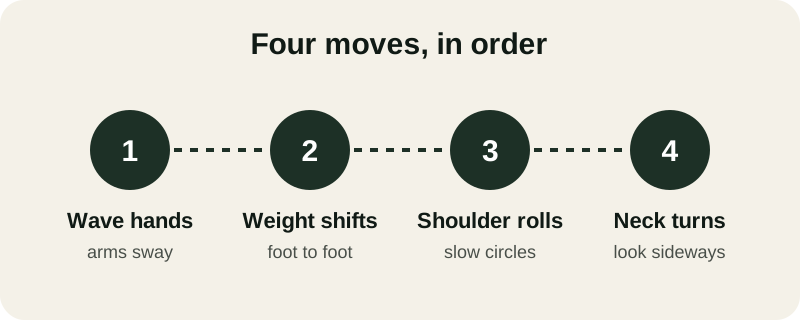
- Wave hands — arms sway
- Weight shifts — foot to foot
- Shoulder rolls — slow circles
- Neck turns — look sideways
For wave hands, shift your weight slowly from one foot to the other while your arms float and swim from side to side in front of you — this loosens the shoulders without any strain. For weight shifts on their own, simply rock your weight from foot to foot, letting your hips and lower back soften with each shift. Add slow, backward shoulder rolls, lifting the shoulders up, back, and down in one smooth circle. Finish with slow neck turns — look gently over one shoulder, pause, then the other — keeping the motion small if your neck feels stiff today.
Every one of these moves also works seated: wave hands and shoulder rolls translate easily to a chair, and weight shifts become small rocks of your hips from side to side. If standing isn't comfortable right now, our chair Tai Chi guide walks through a fully seated routine. For more on the shoulder specifically, see our guide to tai chi for shoulder mobility, and for the neck, our guide to tai chi moves for neck tension relief.
Breathing and posture work together
Tense muscles and shallow breathing tend to feed each other — a tight chest shortens the breath, and short, shallow breathing keeps the muscles around it braced and ready to tighten further. Slowing your breath while you move is often what turns ordinary motion into something that genuinely releases tension instead of just repositioning it.
As you practice any of the moves above, breathe in slowly through the nose as your arms rise or your weight shifts forward, and breathe out slowly as they lower or shift back. Let your shoulders drop an inch with every exhale. Our tai chi breathing exercises guide walks through a slow, unhurried breath you can pair with any of these moves, and it's worth practicing on its own for a minute before you begin the rest.
Posture plays a quiet role too. Standing with your weight even on both feet, knees soft, and chin level takes the guesswork out of where your muscles should be working, so each move has less resistance to work against and less reason to hold on tight.
How much tai chi do you need to feel looser?
Five to ten minutes of slow movement most days is usually enough to notice less tightness in the shoulders and neck. Longer sessions aren't necessary — what matters more is moving slowly and breathing easily on most days, rather than one long session every so often.
If you'd rather follow along than build a routine from scratch, Daily Tai Chi offers a 28-day path of short guided sessions — each with a warm-up, main flow, and cool-down — with spoken cues and a short video clip for each move, so you can see exactly how a shoulder roll or a round of wave hands should look and feel. You can also set a daily reminder at a time you choose, which helps turn this from an occasional stretch into something steadier. The first 4 days are free, with no card and no account needed.
However you practice, the aim isn't perfect form — it's a body that feels a little less braced by the end of each session. For more on building this into a daily rhythm, see our guide to tai chi for calming the nervous system.
Sources
Can tai chi help with tension headaches?
Tai chi doesn't cure tension headaches, but the slow neck and shoulder movement plus relaxed breathing it uses can loosen the muscle tightness that often feeds that kind of headache. Try the shoulder rolls and neck turns in this guide a few minutes a day, and check with a doctor first if headaches are frequent or severe.
Is tai chi better than stretching for tight muscles?
Tai chi and stretching both loosen tight muscles, but they work differently — stretching lengthens a muscle in place, while tai chi moves it slowly through its full range while you breathe. Many people find the two work well together: a few tai chi moves most days, plus a longer stretch session once or twice a week.
Can you release muscle tension while sitting down?
Yes — shoulder rolls, seated wave hands, and slow neck turns all adapt easily to a chair. Keep your feet flat on the floor and move at the same unhurried pace you would standing. A chair Tai Chi routine is a good option if sitting is more comfortable for you right now.
How soon will tight muscles feel looser?
How quickly you feel looser depends on how tense you started and how regularly you practice. Many people notice some ease after a single slow session, with steadier, longer-lasting looseness building over days of five to ten minutes of practice.