 DAILY TAI CHI
Tai Chi for Building Confidence While Walking: 4 Moves
Four slow tai chi moves — weight shifts, heel-to-toe stands, ankle circles, and single-leg stands — rehearse the balance skills that make everyday walking feel steadier and more confident.
Published
Quick answer
Tai chi builds confidence while walking by practicing the same weight shifts and balance corrections your legs use with every step, just done slowly and with support nearby. A few minutes a day, standing near a chair or wall, is enough to start feeling steadier on your feet.
Key takeaways
- Gentle weight shifts and heel-to-toe stands rehearse the same balance walking requires
- Practice near a stable chair, wall, or counter while you build confidence
- Five to ten minutes a day is enough to start feeling steadier underfoot
- Stop and check in with your body if you ever feel dizzy or unsteady
- Ankle circles and single-leg stands sharpen the small adjustments a confident stride needs
Building confidence while walking with tai chi starts with practicing the same small corrections your legs already make with every step — slowly, standing still, before you ever take them out the door. A few weight shifts and a heel-to-toe stand a day can make an everyday walk feel noticeably steadier.
Maybe you've noticed yourself gripping a railing a little tighter, slowing down on uneven sidewalks, or watching your feet more than the view. That hesitation is common, and it tends to ease with the same kind of calm, repeated practice tai chi is built around — meditation in motion, done one small step at a time.
This isn't about relearning how to walk. It's about rehearsing the balance your walk already depends on, in a setting where losing your footing costs nothing at all.
Why walking can feel less steady as the years go by
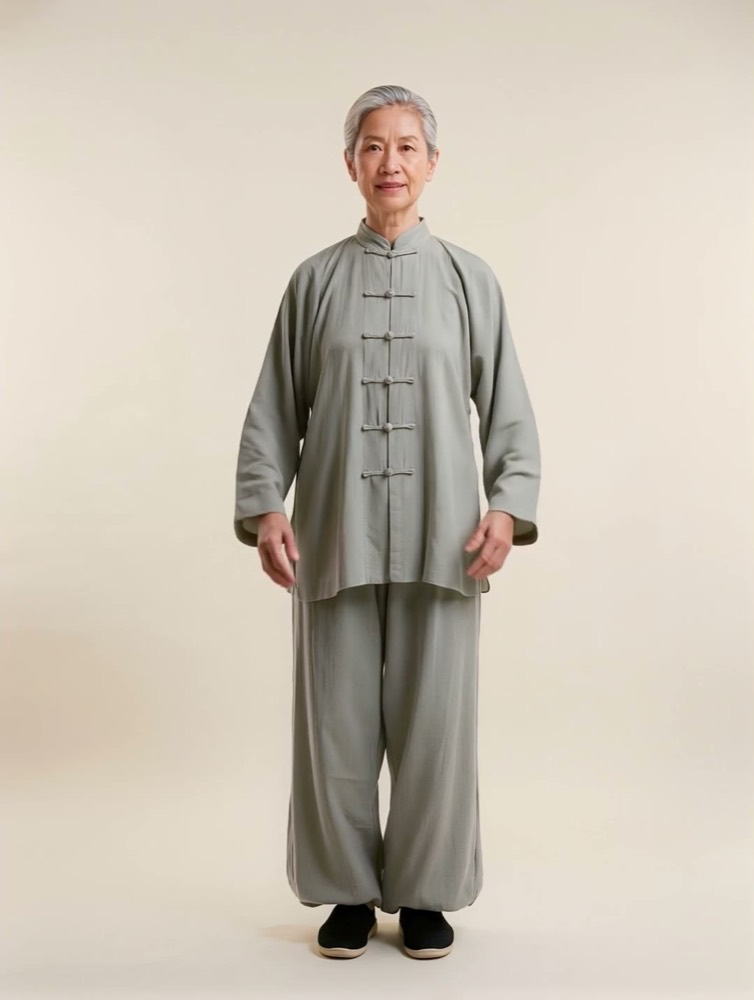
Balance depends on dozens of small signals from your eyes, your inner ear, and the muscles in your feet and ankles. When any of those signals get a little slower or less precise, your brain compensates — shortening your stride, watching the ground, or reaching for a wall. All of that can make walking feel less confident even when nothing is actually wrong.
Tai chi doesn't target any one of those systems in isolation. Instead, it gives all of them repeated, low-pressure practice at once: shifting weight slowly, finding a quiet center, and trusting your feet without rushing. That slow rebuilding is what eventually shows up as steadier, more assured footsteps.
Can tai chi help you feel steadier on your feet?
Yes. Tai chi trains the same weight shifts, small corrections, and brief single-leg balance that walking asks of you, just done more slowly and with support close by. Practicing those movements standing still, a few minutes a day, carries over into steadier steps once you're actually out walking.
The connection isn't about mimicking a walking stride exactly. It's about rehearsing the underlying skills — shifting weight smoothly, adjusting quickly to a shift in the ground, and staying relaxed instead of tensing up when you feel unsure. For a closer look at that link, see how tai chi improves balance.
Four tai chi moves that build walking confidence
These four moves show up in most beginner tai chi routines, and each one rehearses a different piece of a confident walking stride.
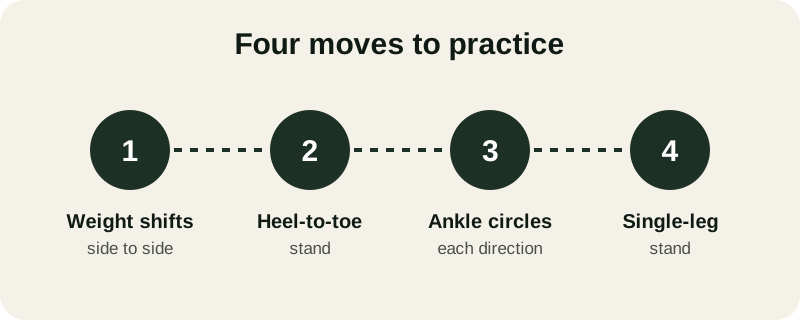
- Weight shifts. Stand tall, feet hip-width apart, and rock your weight slowly from one foot to the other. This is the same shift that happens every time you take a step.
- Heel-to-toe stand. Place one foot directly in front of the other, heel touching toe, and hold near a stable chair, wall, or counter. It narrows your base the way a confident stride naturally does.
- Ankle circles. Lift one foot slightly and circle the ankle slowly in each direction. Loose, mobile ankles make it easier to adjust to uneven ground mid-step.
- Single-leg stand. Holding support, lift one foot a few inches off the floor and hold for a few slow breaths. This builds the brief one-legged balance every walking stride depends on.
What should you watch for as you build confidence?
Dizziness, sharp pain, or a sense of rushing are the signals to slow down or stop for the day. Confidence builds fastest when every session stays slow, supported, and well within what feels comfortable, never pushed past it.
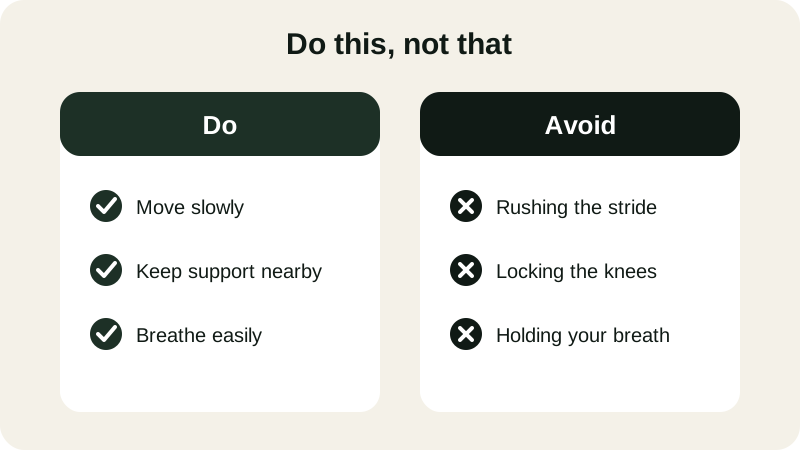
- Do: move slowly, keep support nearby, breathe easily.
- Avoid: rushing the stride, locking the knees, holding your breath.
Bringing tai chi into your daily walking habit
The carryover from practice to pavement works best when you practice often, not occasionally. Five to ten minutes of standing practice most days does more for steady walking than one long session saved for the weekend.
If you'd like some structure around that daily habit, Daily Tai Chi builds a personalized 28-day path of short sessions, each with a warm-up, main flow, and cool-down, with a daily reminder set at a time you choose so you don't have to plan it yourself each morning. The first 4 days are free, with no card and no account needed, on iPhone and Android.
For more on the balance side of this practice, our guide to gentle balance exercises after 60 pairs well with these four moves. And if standing practice doesn't feel comfortable yet, start seated instead with our chair tai chi guide — the same slow weight shifts, just from a chair.
Sources
How soon might walking feel more confident with tai chi?
It depends on how often you practice and where you're starting from. Many people notice steadier footing within a few weeks of practicing five to ten minutes most days — consistency matters more than any single long session.
Can you practice these moves if you normally use a cane or walker?
Yes, as long as you keep it within reach or hold a stable chair, wall, or counter instead. Try the moves seated first if standing feels uncertain — our chair tai chi guide walks through the same ideas sitting down.
Is tai chi enough on its own, or should you keep walking too?
Both work well together. Tai chi rehearses balance and weight shifts in a controlled setting, while regular walking lets you apply that steadiness outdoors. Neither replaces the other; pairing them tends to build confidence faster than either alone.
Do you need special shoes to practice these moves?
No special shoes are required — flat, flexible shoes or bare feet on a non-slip floor work fine. The main thing is a firm, even surface and enough room to shift your weight side to side without tripping on rugs or cords.