 DAILY TAI CHI
Tai Chi for Recovery After Surgery: 4 Gentle Moves
This guide explains when it's safe to start tai chi after surgery, which moves to try first, and how to build up standing balance work in stages.
Published
Quick answer
Tai chi for recovery after surgery can be a good way to move again once your doctor clears gentle movement — slow weight shifts, ankle circles and wave hands are easy starting points. Keep a stable chair or wall nearby and stop if you feel dizzy or unsteady.
Key takeaways
- Ask your doctor before starting any new movement after surgery.
- Start seated or supported with ankle circles and weight shifts.
- Keep a stable chair, wall, or counter within reach for balance.
- Stop any movement if you feel dizzy or unsteady.
- Build up in stages — seated, supported standing, then free standing.
Tai chi can support your recovery after surgery once your doctor has cleared you for movement, offering slow, low-impact ways to rebuild balance, loosen stiff muscles, and ease back into daily activity. This guide walks through when to start, which moves to try first, and how to pace yourself as you heal.
Many people come to tai chi for the first time during recovery, not because they were into exercise before, but because someone suggested something slow and calming while they rebuild strength and confidence. Whether you're a few days past a procedure or several months into recovery, the same unhurried approach applies: small movements, repeated often, done at a pace that never feels like a push.
How soon can you start tai chi after surgery?

The right timing depends on your specific surgery and your surgeon's clearance, not on a fixed calendar. Once you've been told that light movement is safe, tai chi's slow pace makes it a natural next step — start seated or with a simple weight shift, and ask specifically when standing balance work fits your stage of healing.
Every surgery heals differently, and so does every body. Someone recovering from a joint replacement follows a different timeline than someone recovering from a procedure on the shoulder or the back. What stays the same is the approach: move slowly, notice how your body responds, and only build up as far as feels steady.
Moves worth trying first
A handful of simple moves give you somewhere to begin without asking too much of a healing body. None of them involve jumping, twisting quickly, or holding your breath — just slow, steady motion you can repeat as often as feels right.
- Ankle circles. Seated or standing with support, trace slow circles with one foot, then the other. This keeps the lower leg and foot moving without any weight-bearing strain.
- Weight shifts. Stand tall, feet hip-width apart, holding a chair or counter, and shift your weight slowly from one foot to the other and back again.
- Slow sit-to-stand. From a sturdy chair, rise slowly using your legs and arms together, then lower back down with the same unhurried control.
- Wave hands. A flowing arm movement that keeps the shoulders and upper body loose while your feet stay still or shift gently side to side.
Pairing each move with slow breathing — in as you rise or reach, out as you lower or settle — helps keep the whole thing unhurried. Our guide to tai chi breathing techniques covers this pairing in more detail.
If your surgery involved a knee or hip, you may want to start with moves that don't load that joint directly. Our guides to tai chi for knee pain and tai chi for hip pain cover easier variations worth trying first.
Building back up, one stage at a time
Most people move through recovery in stages rather than jumping straight to a full standing routine. Moving through each stage only when it feels steady matters more than how quickly you get there.
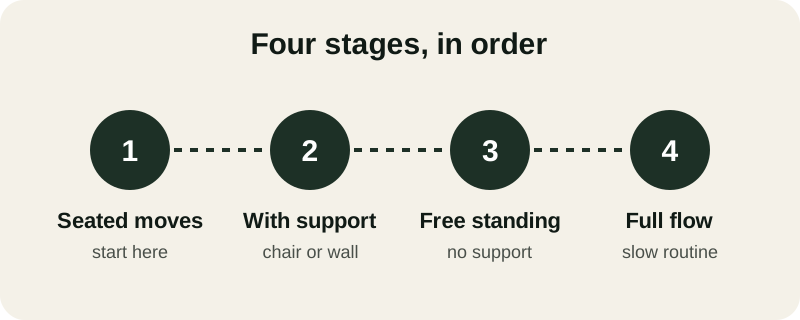
- Seated moves — getting the body used to motion again, with no weight-bearing demand.
- With support — standing at a chair or wall, practicing balance without the stakes of a fall.
- Free standing — the same moves without holding on, once support starts to feel unnecessary.
- Full flow — a short sequence of moves done back to back, once each earlier stage feels easy.
There's no need to rush between stages. Some people move through all four within days of being cleared for activity; others take weeks, and that's just as reasonable. Let how steady and comfortable you feel guide the pace, not the calendar.
What should you watch for as you move more?
Watch for dizziness, sharp or new pain, swelling, or unusual shortness of breath — any of these are reasons to stop, rest, and mention it at your next appointment. A mild, stretch-like feeling in muscles you haven't used in a while is normal and usually settles as you continue.
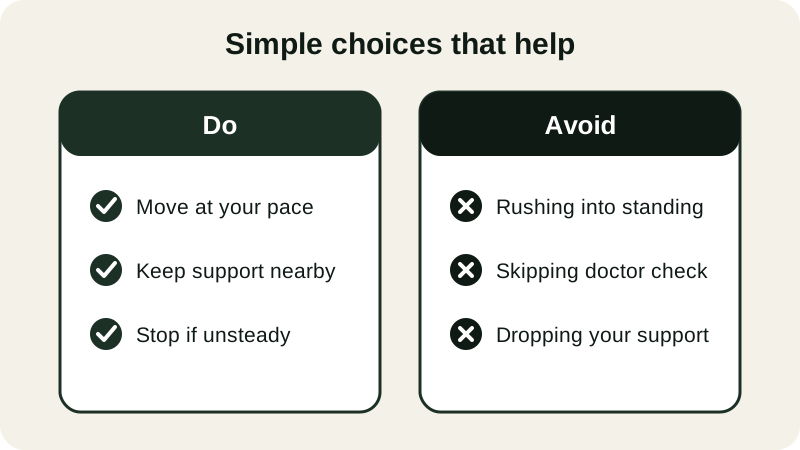
Do:
- Move at your pace
- Keep support nearby
- Stop if unsteady
Avoid:
- Rushing into standing
- Skipping doctor check
- Dropping your support
Starting seated if standing isn't comfortable yet
If standing balance work still feels like too much, there's a full seated path you can follow instead. Our chair tai chi guide walks through the same slow movements from a seated position, and seated tai chi for seniors offers five chair moves built for exactly this kind of easing-in.
Seated practice isn't a lesser version — it's simply a different stage. Many people use it for the first week or two after surgery, then move to standing support once they feel ready, and some stay with seated moves for much longer, which is perfectly fine too.
Where a guided app fits once you're ready
Once you've been cleared for standing practice, Daily Tai Chi's 28-day path can give you a structure to ease back in: each session opens with a warm-up, moves into a short main flow, and closes with a cool-down, built from 10 to 30 slow moves shown one at a time, each with spoken cues and a short video clip. Sessions are done standing, with a stable chair, wall, or counter within reach — the app itself has no seated version, so if you're not ready to stand yet, the chair guide above is the better starting point for now. The first 4 days are free, with no card and no account needed, so you can try a few minutes at your own pace and see how it feels.
Recovery isn't a race, and tai chi's unhurried pace fits that reality well. Start wherever you've been cleared to begin, keep support within reach, and let consistency — a few minutes most days — do more for you than any single long session ever could.
Is tai chi safe after joint replacement surgery?
It depends on your specific procedure and your surgeon's guidance, so check with your doctor before adding any new movement. Many people return to slow, standing balance work over time, and seated moves like ankle circles are a reasonable way to start while you wait for clearance.
How long should a tai chi session be after surgery?
Five to 10 minutes is a comfortable length for most people easing back into movement, whether standing or seated. You can stop sooner if you feel tired, and build toward longer sessions as the weeks go by and movement feels easier.
Can tai chi replace physical therapy after surgery?
Tai chi is a slow, flowing complement to movement rather than a substitute for any specific rehabilitation plan your care team has given you. Think of it as an additional low-impact habit to layer in once you're cleared, alongside whatever exercises you've already been prescribed.
What if you feel unsteady during a tai chi move after surgery?
Stop the movement right away, hold onto a chair, wall, or counter, and rest until the feeling passes. If unsteadiness continues or happens often, mention it at your next appointment so it can be looked into properly before you continue practicing.