 DAILY TAI CHI
Gentle Tai Chi for Low Energy Days: Try Wave Hands
On a low-energy day, tai chi works best shortened to one to three slow moves near a chair, with rest as the better choice if you feel dizzy, unwell, or unsteady.
Published
Quick answer
Gentle tai chi for a low-energy day means shortening practice to one to three slow moves, like ankle circles, wave hands, or a soft weight shift, done standing near a chair. Rest instead if you feel dizzy, unwell, or unsteady.
Key takeaways
- On low-energy days, shorten tai chi to one to three slow moves instead of skipping it entirely.
- Ankle circles, wave hands, and a soft weight shift all work standing near a chair or seated.
- Rest instead of practicing if you feel dizzy, unwell, or unsteady, and get checked over if it continues.
- A one-minute practice still counts — consistency matters more than length on a tired day.
- Save longer, livelier sessions for days when your energy is higher.
Gentle tai chi for a low-energy day starts with doing less, not nothing. Pick two or three slow moves — wave hands, ankle circles, a soft weight shift — and stay near a chair for support.
Low energy might mean a rough night's sleep, a long week, or simply a day when your body is asking for rest more than motion. Tai chi when tired doesn't need to disappear from your routine — it just needs to shrink down to something small enough to actually do.
What does tai chi look like on a low-energy day?
Tai chi on a low-energy day is a shortened, standing practice built around one to three slow moves, done near a stable chair, wall, or counter. It skips any move that feels effortful and keeps breathing slow and unforced. The goal is simply to move a little, not to complete a full routine.
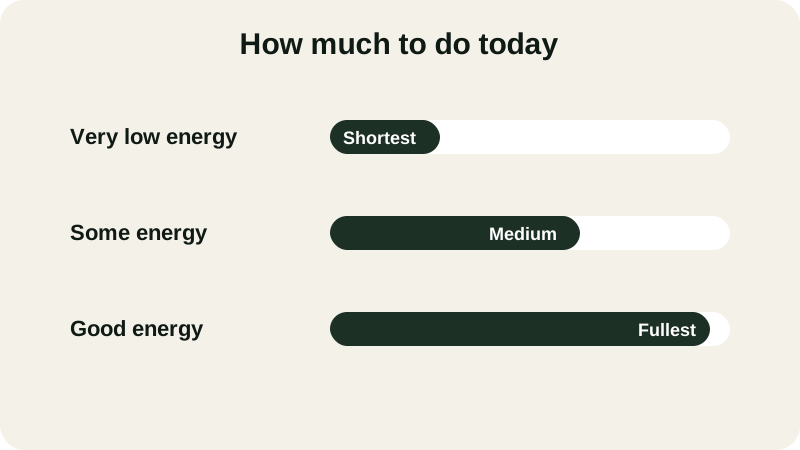
- Very low energy: shortest practice
- Some energy: medium practice
- Good energy: fullest practice
There's no fixed length that counts as "enough." A session that used to take ten minutes can shrink to three without losing its value — the slow, steady quality of the movement matters more than how long you keep it up. Some days a single round of wave hands is the whole practice, and that's a complete session, not an unfinished one.
Breathing matters as much as the moves themselves on a tired day. Slow, easy breaths help signal to the body that it's safe to settle rather than push through. If even three moves feels like too much, a minute of just this kind of slow breathing, standing or seated, still counts as practice.
Three slow moves that ask little of you
These three moves show up often in a slow tai chi practice because they ask so little of the body. Each one works standing, each one can be trimmed to a single round, and each one can be done seated if standing isn't appealing today.
- Ankle circles. Sit or stand, lift one foot slightly off the floor, and trace slow circles with your ankle. Go one way, then the other, then switch feet. This wakes up circulation in the lower legs without raising your heart rate much at all.
- Wave hands. Stand tall, feet hip-width apart, and let your arms float side to side as your weight shifts slowly underneath them. Keep the motion small on a tired day — even a few inches of movement still counts as practice.
- Gentle weight shifts. With a chair, wall, or counter nearby, rock your weight slowly from one foot to the other, letting your knees soften as you go. If standing feels like too much today, shift your weight side to side while seated instead.
None of these moves need special clothes, a mat, or a particular time of day. You can do them barefoot in socks by the kitchen counter, in slippers by an armchair, or sitting at the edge of the bed before you decide whether to get up at all.
How do you know whether to rest or move anyway?
Move slowly if you can still breathe easily, hold a light conversation, and feel steady on your feet — a short, slow practice often leaves you calmer, not more tired. Rest instead if you feel dizzy, unsteady, feverish, or unusually unwell, and get checked over if low energy drags on for more than a few days.
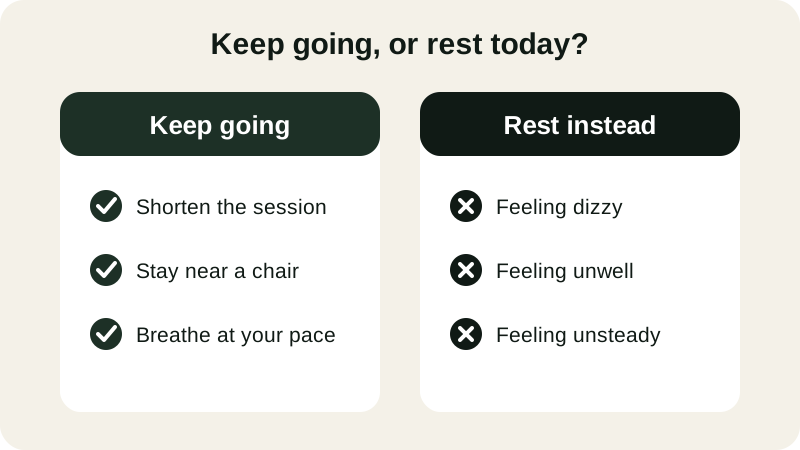
- Keep going: shorten the session, stay near a chair, breathe at your pace
- Rest instead: feeling dizzy, feeling unwell, feeling unsteady
A short, slow practice can genuinely help on a tired day — slowing the breath and relaxing the shoulders often leaves people feeling a little steadier rather than more worn out. But tai chi isn't meant to push through real illness, sharp pain, or a day when your body is clearly asking you to stop. Listening to that difference matters more than finishing any particular routine.
Making a short routine part of a low-energy week
A low-energy tai chi routine doesn't need to look impressive to be worthwhile. Some days it's three moves standing by the kitchen counter; other days it's one move before you decide you'd rather lie down, and that's fine too.
What tends to help most is keeping the moves themselves familiar, so you're not learning something new on a day when your energy is already thin. The same two or three moves, practiced in whatever order feels natural, build a kind of muscle memory — your body already knows what to do, so your mind doesn't have to work for it.
If you'd like a ready-made short session for days like this, Daily Tai Chi lets you choose a length of 5, 10, 15 or 20+ minutes before each practice, so a low-energy day can mean picking the shortest option rather than skipping the app altogether.
Over a full week, low-energy days and high-energy days tend to average out. A few short sessions on the harder days, paired with a slightly longer one when you feel more like yourself, add up to more consistent practice than waiting for the "right" day every single time.
For a longer option on brighter mornings, see our guide to tai chi for morning energy. If standing doesn't appeal today, our chair tai chi guide walks through similar slow moves while seated, and our note on how long a beginner session should be can help you decide how much time to give yourself.
Is it okay to skip tai chi entirely on a very low-energy day?
Full rest is fine occasionally, but where possible, try one slow move first — a minute of wave hands or a few ankle circles — before deciding to skip completely. It keeps the habit going and often takes less effort than it seems.
Can a short tai chi session actually raise your energy?
Many people feel steadier and a little more alert after a few slow, breath-led moves, since the practice relaxes tense shoulders and slows rushed breathing. It isn't a jolt of energy like caffeine — it's closer to a quiet reset you can return to several times a day.
Is it better to practice tai chi lying down on a very tired day?
Tai chi is normally practiced sitting or standing rather than lying down, so on a very tired day, try the seated versions in a chair tai chi guide instead — many of the same slow moves, including wave hands and weight shifts, adapt well to a chair.
How long should a low-energy tai chi session be?
There's no set minimum — even one slow move for a minute still counts. Many people aim for around five to ten minutes on an ordinary day, but on a tired day, two or three minutes of slow, standing movement near a chair is a complete session on its own.
Does tai chi for low energy differ from a regular practice?
Not much changes except length: the same slow moves apply, just fewer of them, with longer pauses between and more time resting near a chair. Save a fuller, livelier flow for days when you have more energy to spend.