 DAILY TAI CHI
Tai Chi for Parkinson's: A Gentle Guide
This article explains what a gentle tai chi for Parkinson's practice looks like, how to adapt it safely day to day, and which slow movements tend to feel most useful.
Quick answer
Tai chi for Parkinson's is a slow, low-impact practice of gentle weight shifts, flowing arm movements, and calm breathing that adapts to standing or seated, used alongside — never instead of — usual medical care.
Key takeaways
- Tai chi can be practiced standing or fully seated, whichever suits your day
- Gentle weight shifts, ankle circles, and wave hands are good starting movements
- Short sessions of 5 to 10 minutes most days suit changing energy and stiffness
- Keep a stable chair, wall, or counter nearby and stop if you feel dizzy
- Tai chi is not a treatment for Parkinson's — check with a doctor first
Tai Chi for Parkinson's is a slow, low-impact movement practice that many people use alongside their usual care, not instead of it. Its gentle weight shifts and flowing arm movements adapt easily to standing or seated, so you can meet your body wherever it is on any given day.
This isn't a performance style of exercise, and it was never meant to be rushed. Sometimes called meditation in motion, Tai Chi pairs unhurried movement with easy breathing, which is part of why it suits people managing tremor, stiffness, or balance changes so naturally. Below is a plain look at what a session involves, how to practice safely, and which movements tend to feel especially good.
What does tai chi for Parkinson's actually involve?

A typical session is made of slow, continuous shapes — shifting your weight from one foot to the other, turning gently at the waist, letting your arms float up and around in soft, rounded arcs. There's no jumping, no sudden twisting, and no requirement that you've ever danced or exercised before. You simply move at the pace your body wants to go.
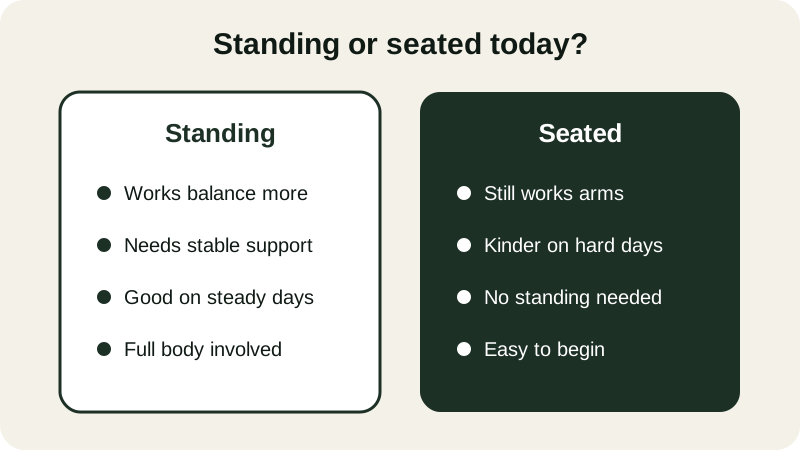
Some mornings standing practice will feel right, your feet rooted and weight shifting slowly from one leg to the other. Other days, especially if tremor or fatigue is more noticeable, a fully seated version covers the exact same gentle shapes without ever leaving the chair. Neither one is "the real version" — both are complete practices on their own. If seated practice sounds like the better fit today, our seated Tai Chi guide walks through it in detail.
Is tai chi safe if you have Parkinson's?
Tai Chi is generally considered gentle enough for a wide range of abilities, which is part of why it's so often suggested for older adults. But Parkinson's affects everyone differently — tremor, stiffness, and balance can all vary from person to person and from day to day — so safety here is personal rather than general.
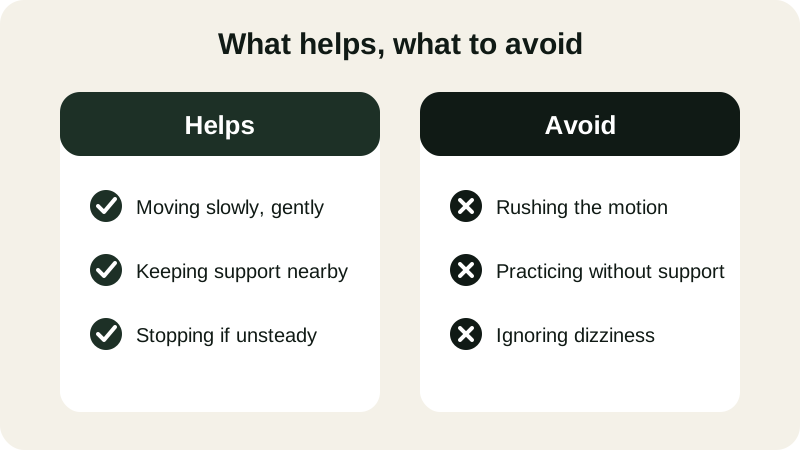
Many people find it helpful to practice at the time of day when movement feels easiest for them, rather than forcing a fixed schedule. If you normally use a cane or walker, keep it within arm's reach even during a seated session — familiar support rarely gets in the way of gentle movement.
Which movements help most with Parkinson's symptoms?
No single movement is a fix for anything, but certain Tai Chi basics are especially good starting points because they're slow enough to really notice what your body is doing as you move.
- Gentle weight shifts — moving slowly side to side, which builds a quiet sense of where your feet are.
- Ankle circles — small, seated or standing circles that loosen tight ankles without any strain.
- Heel-to-toe stand — a slow, supported stance that works on steadiness one foot at a time.
- Slow sit-to-stand — rising from a chair at an unhurried pace, which doubles as gentle strength practice.
- Wave hands — a flowing arm motion that keeps shoulders loose and the breath calm.
You don't need to do all five every day. Choosing two or three, and repeating them slowly with full attention, often feels more useful than rushing through a longer list. For more on how weight shifts and stances like these support steadiness over time, see how Tai Chi improves balance.
What if tremor or stiffness makes a movement hard?
This is where Tai Chi's slowness becomes genuinely useful rather than just pleasant. Because there's no set speed to match and no sequence you must get "right," you can simply shrink a movement — a smaller weight shift, a shorter arm arc, a single-leg stand held for only a breath or two instead of several — and still be practicing fully.
On days when tremor is more pronounced, many people find that seated practice, with both feet flat and a hand resting on the chair arm, feels calmer than standing. There's no wrong way to adapt a movement here. The goal is simply steady, unhurried motion, not a particular shape.
How do you get started safely?
Starting small is really the whole point. A few slow minutes, done regularly, matter more than one long session attempted and then abandoned.
A simple way to begin: stand tall, feet hip-width apart (or sit tall if that's more comfortable), and spend a minute just breathing slowly before you move anything at all. From there, try a handful of gentle weight shifts, followed by a few rounds of wave hands with your arms. Five to ten minutes is plenty for a first session, and there's no need to add more until it feels natural to.
How often should you practice tai chi with Parkinson's?
Short, frequent practice tends to work better than occasional long sessions, especially when energy or stiffness varies from one day to the next. Many people settle into five to ten minutes most days, lengthening or shortening the session based on how they feel that particular morning.
The app offers a 28-day path of short, guided sessions built for complete beginners aged 55+, with the first 4 days free and no card or account needed to try them. It works on iPhone and Android, so you can prop a phone or tablet nearby and follow along slowly, with a chair always within easy reach. For more on pacing a routine over time, our guide to how often seniors should practice Tai Chi goes deeper into finding a rhythm that suits you.
Tai Chi won't replace your usual care for Parkinson's, and it isn't a treatment for the condition itself. But as a gentle, adaptable form of movement — one that meets you exactly where your body is on any given day — many people find it a calming, steady companion to lean on alongside everything else they're already doing.
Can someone with Parkinson's safely try tai chi?
Many people with Parkinson's find tai chi's slow pace and low-impact style comfortable to try, often practicing seated on harder days. Because symptoms vary so much from person to person, it's wise to check with a doctor first and keep a stable chair, wall, or counter nearby while you explore.
Does tai chi for Parkinson's need to be done standing?
No. Every movement in a gentle tai chi practice, including weight shifts and wave hands, can be done fully seated. Many people switch between standing and seated versions depending on how their balance and energy feel that particular day.
How long should a tai chi session be for Parkinson's?
Five to ten minutes is a sensible length for most sessions, especially when starting out. Short, frequent practice tends to feel more sustainable than long, occasional sessions, particularly when stiffness or fatigue changes from morning to evening.
Which tai chi movements are good first choices for Parkinson's?
Gentle weight shifts, ankle circles, slow sit-to-stand, and wave hands are all simple, forgiving places to begin. They're slow enough to really notice what your body is doing, and each one adapts easily to a seated version if needed.
Is tai chi a treatment for Parkinson's disease?
No. Tai chi is a gentle movement practice, not a medical treatment, and it should never replace your usual care or medication. Many people use it simply as a calm, adaptable way to move alongside everything else their doctor has recommended.