 DAILY TAI CHI
Tai Chi for Everyday Stiffness: 5 Moves to Loosen Up
A short, slow tai chi practice with five simple moves can ease everyday stiffness in the hips, knees, shoulders and neck in just 5 to 10 minutes a day.
Published
Quick answer
Tai chi eases everyday stiffness through slow, continuous movement — wave hands, gentle weight shifts, ankle circles — that warms joints and loosens tight muscles in 5 to 10 minutes. Practiced daily, it helps the body feel less stuck as you move through your day.
Key takeaways
- Slow, continuous movement eases everyday stiffness better than sitting still
- Five moves to try: wave hands, weight shifts, heel-to-toe stand, ankle circles, single-leg stand
- Just 5 to 10 minutes a day can help joints feel looser
- Keep a stable chair or wall nearby and move within a comfortable range
- Morning stiffness often eases fastest with a short routine right after waking
A short, slow tai chi practice is one of the simplest ways to work on everyday stiffness relief — the tightness that collects in your neck, shoulders, hips, and knees from sitting, bending, and the ordinary wear of a day. A few minutes of continuous, gentle movement can leave your body feeling noticeably looser by the end of the session.
Why stiffness creeps in during an ordinary day
Stiffness usually isn't caused by one big thing. It builds from small, repeated patterns — sitting for long stretches, favoring one side while standing, or simply not moving your joints through their full range very often. Over time, muscles shorten slightly and joints feel less willing to cooperate when you finally do ask them to move.
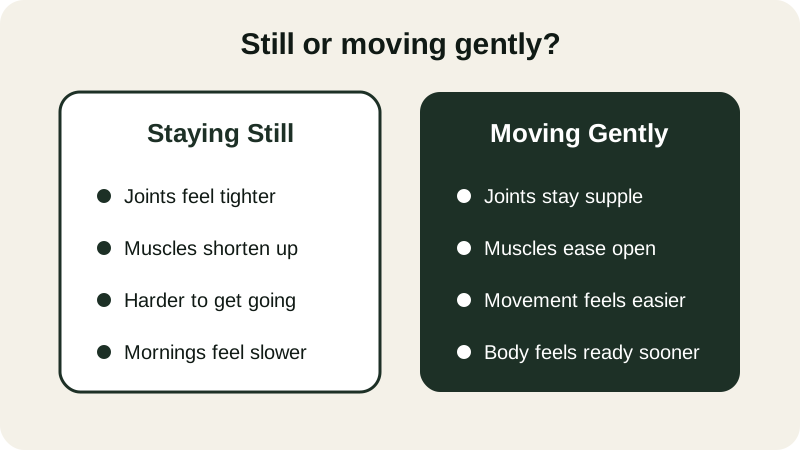
- Staying Still: joints feel tighter, muscles shorten up, harder to get going, mornings feel slower.
- Moving Gently: joints stay supple, muscles ease open, movement feels easier, body feels ready sooner.
This is why a daily stiffness routine matters more than any single long workout. Tai chi fits this need well because it asks your joints to move slowly through their comfortable range — nothing fast, nothing forced — which is exactly what a stiff body responds to.
Different parts of the body stiffen for different reasons. Shoulders tighten from hunching over a phone, a steering wheel, or a desk. Hips tighten from long sitting. Knees often feel stiffest right after they've been bent in one position for too long, like during a car ride or a movie. Tai chi touches all of these areas in a single short practice because the movement is continuous rather than isolated to one joint at a time — for a closer look at any one of these spots, our guides to shoulder mobility and knee pain dig in further.
Can tai chi actually loosen a stiff body?
Yes. The slow, continuous nature of tai chi moves each joint through a full, easy range while your muscles stay relaxed rather than braced, which is often what helps a stiff body feel looser.
Unlike a quick stretch that targets one spot and then stops, tai chi keeps you in motion for several minutes at a time. Your weight shifts from foot to foot, your arms rise and fall, your spine turns gently side to side. That ongoing movement, paired with slow breathing, is part of why the practice is often described as meditation in motion — calm for the mind, and quietly effective for a tight body.
You don't need flexibility or prior fitness to start. The movements adapt to wherever your body is today, and a seated version works just as well if standing isn't comfortable yet — our chair tai chi guide covers the same ideas from a chair.
Five slow moves to try when you feel stiff
These five movements are easy entry points for everyday stiffness, and you can work through all of them in just a few minutes, standing or seated.
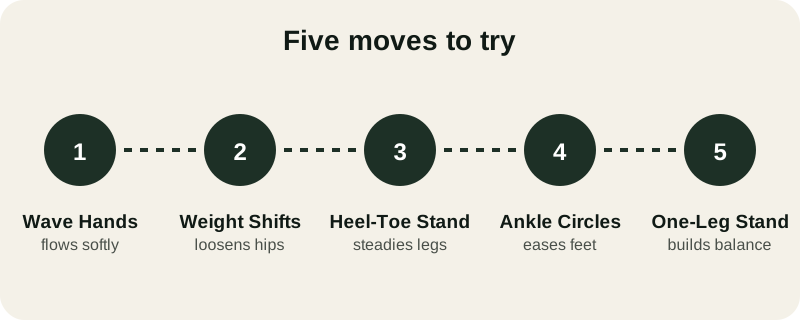
- Wave Hands — arms flow softly, loosening the shoulders and upper back as they drift side to side.
- Weight Shifts — loosen hips by slowly rocking your weight from one foot to the other.
- Heel-Toe Stand — steadies the legs and wakes up the ankles and calves.
- Ankle Circles — eases stiff feet, especially helpful first thing after sitting.
- One-Leg Stand — builds steadiness in the hips and knees, holding a chair for support.
Move through each one slowly and breathe evenly rather than holding your breath. If a particular move feels sharp or uncomfortable anywhere, shrink the range of motion rather than pushing through it — stiffness eases with repetition, not force. Most people find their shoulders and hips loosen first, with ankles and knees following a little later as circulation builds through the practice.
Stand tall, feet hip-width apart, with a stable chair, wall, or counter within reach the whole time.
How often should you practice to feel looser?
Most people notice their body moving more easily with 5 to 10 minutes of tai chi most days; consistency matters far more than how long any single session runs.
Morning is often when stiffness is at its worst, since joints have had hours to settle into one position overnight. A short routine right after waking can make the rest of the day feel easier to move through — our morning tai chi routine for stiff joints is built around exactly this moment, with five moves sized for the first minutes of the day.
If you'd rather follow along than guess your way through a routine, the Daily Tai Chi app builds a personalized 28-day path of short guided sessions done standing, with spoken cues and a short video clip for each move, so you can simply watch and repeat rather than try to remember a sequence. The first 4 days are free, with no card and no account needed, and you can choose 5, 10, 15, or 20+ minutes a day depending on how much time you have. It's available on iPhone and Android.
Whatever routine you settle on, the goal isn't to stretch harder — it's to move often enough that your body stops expecting to feel stuck. For more ways to build flexibility over time, see our guide to tai chi moves for flexibility, or start from the basics with our beginner's guide to tai chi.
Sources
Can tai chi help stiffness from sitting at a desk all day?
Yes. Slow weight shifts and arm movements like wave hands counter the tightness that builds from long sitting by moving hips, shoulders, and ankles through their full, easy range. A few minutes after a desk-heavy day can help your body feel less stuck.
Do you need any equipment for a tai chi stiffness routine?
No special gear is required — just flat, comfortable shoes and a stable chair, wall, or counter nearby for balance. Loose clothing that lets you move freely helps too. Everything else is simply slow, guided movement at your own pace.
Is tai chi safe if you already have stiff, achy joints?
For most people, yes, since the movements are slow and low-impact. Move within a comfortable range, keep a stable chair or wall nearby, stop if you feel dizzy or unsteady, and check with a doctor first if you have ongoing joint concerns.
How soon might you feel less stiff after starting tai chi?
Many people notice looser, easier movement within the first few sessions, though this varies from person to person. Aim for 5 to 10 minutes most days for a couple of weeks and simply notice how your body feels before and after.