 DAILY TAI CHI
5-Move Tai Chi Morning Routine for Stiff Joints
A simple five-move morning tai chi sequence — ankle circles, weight shifts, wave hands, heel-to-toe stand, and sit-to-stand — helps ease stiff joints in five to ten minutes.
Published
Quick answer
A tai chi morning routine for stiff joints moves through ankle circles, weight shifts, wave hands, a heel-to-toe stand, and a slow sit-to-stand — about five to ten minutes to loosen knees, hips, and shoulders before your day starts.
Key takeaways
- Five to ten minutes of slow movement can ease morning joint stiffness before the day starts.
- Start with ankle circles and gentle weight shifts, then wave hands to loosen shoulders and spine.
- A heel-to-toe stand and a slow sit-to-stand round out a simple five-move sequence.
- Move slowly and stop if anything feels sharp rather than simply stiff.
- Keep a stable chair, wall, or counter nearby for support.
A morning tai chi routine for stiff joints works best when it moves slowly through each joint before asking it to do anything else. Five to ten minutes of ankle circles, easy weight shifts, and wave hands is often enough to feel looser by the time you've had your coffee.
If you wake up feeling tight in your knees, hips, shoulders, or hands, you're far from alone. The good news is that you don't need a long workout to loosen up — just a short, unhurried sequence you can do standing in your kitchen or living room, with a stable chair nearby for support.
This kind of slow, flowing movement is sometimes called meditation in motion. It doesn't ask for flexibility you don't have yet; it simply meets each joint where it is this morning and gives it a gentle reason to wake up before you start your day in earnest.
Why are joints stiffer in the morning?
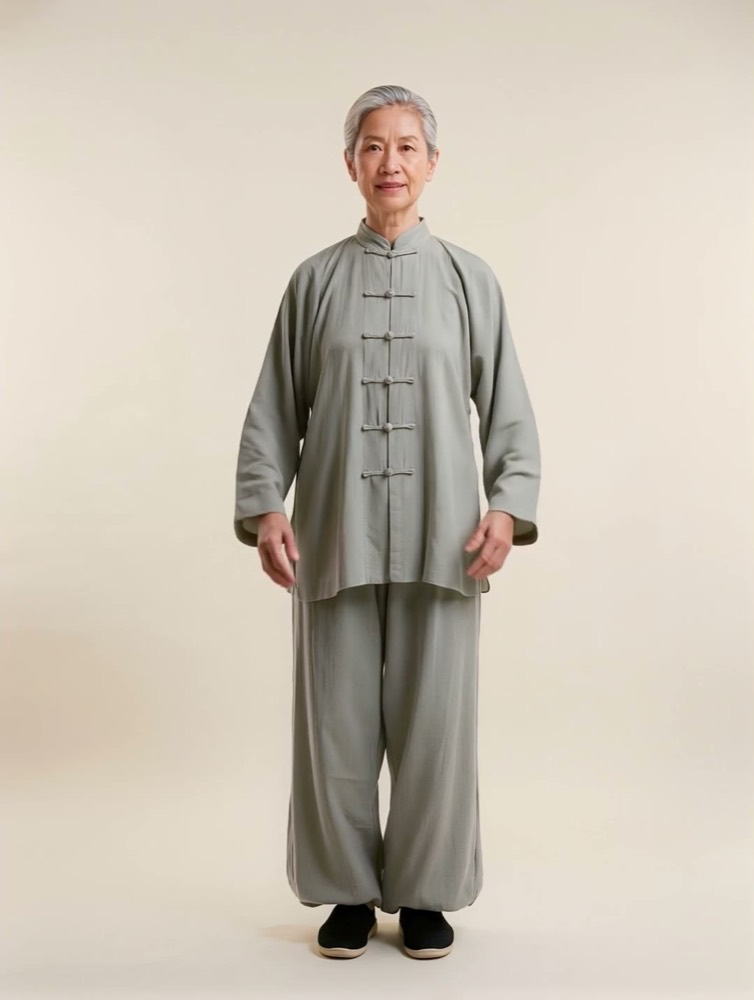
Joints often feel their stiffest first thing because they simply haven't moved in hours. Moving them slowly, through their full comfortable range, tends to ease that tightness within a few minutes.
This is one reason a short routine done right after waking can feel so different from exercise later in the day. You're not trying to push through stiffness — you're coaxing each joint awake with slow, circular, low-impact motion before you ask it to carry you through the day. Knees, hips, shoulders, and hands tend to feel it most, which is why a morning sequence usually moves through all of them in turn.
Some mornings will feel looser than others, and that's normal. Weather, how well you slept, and how much you moved the day before can all play a part. The routine isn't about forcing a particular result each time — it's about giving your joints the same gentle signal, consistently, so they know what to expect.
A 5-step morning tai chi flow for stiff joints
This sequence moves from the feet upward, warming the smaller joints first and finishing with the hips and knees, which often carry the most morning stiffness.
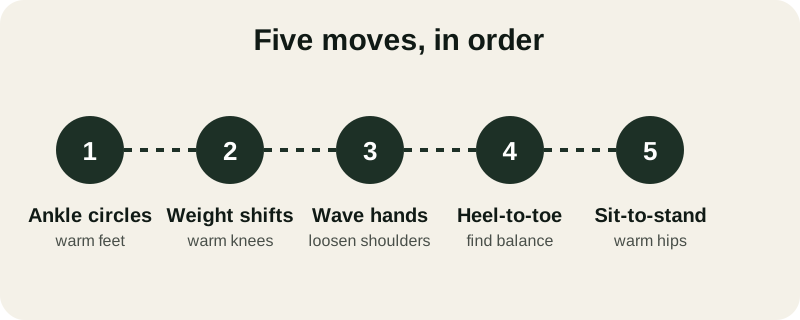
- Ankle circles. Seated or standing, lift one foot slightly and circle the ankle slowly in each direction, then switch feet.
- Weight shifts. Stand tall, feet hip-width apart, and shift your weight slowly from one foot to the other to wake up the knees and hips.
- Wave hands. Let your arms float side to side as your weight shifts, loosening the shoulders, spine, and neck.
- Heel-to-toe stand. Place one foot in front of the other, heel to toe, with a hand on a chair or wall if you need it.
- Sit-to-stand. Rise from a chair slowly, then lower back down with control, warming the hips and knees once more.
Move through each step slowly, resting between them if you need to. There's no need to rush — the point is ease, not speed. If a particular joint feels especially tight some mornings, simply linger there a little longer: a few extra ankle circles or a few extra weight shifts before moving on cost you nothing and often make the rest of the sequence feel smoother.
If standing for the full sequence doesn't suit you on a given morning, you can do most of this seated instead. Ankle circles and wave hands both adapt easily to a chair, and the heel-to-toe stand can simply be skipped or practiced lightly holding the back of the chair in front of you.
What helps joints loosen, and what makes them worse
Slow, steady movement helps joints loosen. Sudden stretching or skipping the warm-up tends to leave them feeling tighter, not looser.
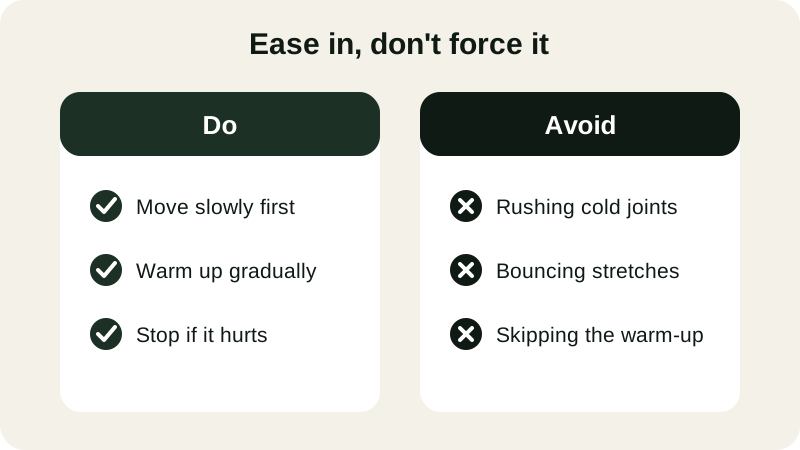
Keep these in mind as you build your own routine:
- Move slowly first. Let each joint ease into motion before asking for a bigger range.
- Warm up gradually. Start small — ankle circles and weight shifts — before anything more.
- Stop if it hurts. A little stiffness easing is normal; sharp pain is a sign to pause.
- Rushing cold joints by moving quickly before they've had a chance to warm up.
- Bouncing stretches that force a joint past where it wants to go.
- Skipping the warm-up and going straight into bigger movements.
Breathing matters here too. Slow, easy breaths help your muscles relax around a stiff joint, which in turn lets it move a little more freely. If you find yourself holding your breath during a move, that's usually a sign you're pushing a bit harder than you need to — ease back and let the breath lead instead.
How long should you practice each morning?
Five to ten minutes is plenty for a morning routine aimed at stiff joints. Consistency matters more than length — a short routine done daily does more for stiffness than an occasional long one.
It helps to think of this less as exercise and more as a daily check-in with your body. Some mornings you might linger a little longer on the sit-to-stand because your hips feel especially tight; other mornings the whole sequence might take just five unhurried minutes. Either way, showing up most days is what makes the difference over weeks, not how long any single session runs.
If mornings are when you're most likely to actually follow through, Daily Tai Chi lets you set a daily reminder at a time you choose, then guides you through a standing session — pick 5, 10, 15 or 20+ minutes — with spoken cues and a short video clip for each move. The first 4 days are free, with no card and no account needed to try it.
If getting up and standing right away feels like too much some mornings, start seated instead with the chair tai chi guide, which follows many of the same ideas sitting down. For a longer warm-up before you move into a fuller practice, our tai chi warm-up exercises are a good next step, and if stiff joints are a daily concern, tai chi for arthritis and stiff joints covers it in more depth. For more ways to build flexibility over time, see our guide to tai chi moves for flexibility, and if you'd like help turning any of this into a lasting habit, tai chi daily practice walks through how to start small and stay with it.
Sources
What's the best time in the morning to practice?
Right after you wake up, before you've been up and moving for long, is often best — joints are typically at their stiffest then, and a slow routine eases them before your day gets busy. If mornings are rushed, doing it a little later still helps.
Can you start this routine while still in bed?
You can begin with a few slow ankle circles and easy shoulder rolls while sitting on the edge of the bed. Once you feel ready, stand up slowly, holding something stable, and continue with weight shifts and wave hands standing.
Do you need any special equipment to begin?
No special equipment — just comfortable clothing and a little bare floor space. A stable chair, wall, or counter nearby gives you something to hold if you feel unsteady, especially during the heel-to-toe stand or sit-to-stand.
Is it normal to feel stiff again after sitting back down?
Some mild tightness returning after you sit for a while is common and doesn't mean the routine didn't help — joints simply settle again with stillness. A short second round of weight shifts or ankle circles later in the day can refresh them.