 DAILY TAI CHI
A Short Tai Chi Routine for Busy Mornings in 5 Minutes
A short, standing tai chi routine of three or four slow moves, done in about five minutes, fits even the busiest mornings and still counts as real practice.
Published
Quick answer
A short tai chi routine for busy mornings can take as little as five minutes: stand tall, shift your weight slowly side to side, wave your hands in front of you, then finish with one slow sit-to-stand before you head out the door.
Key takeaways
- Five minutes is enough: three or four slow standing moves wake up stiff joints before coffee.
- Keep a stable chair, wall or counter nearby in case you feel unsteady.
- Doing fewer moves slowly beats rushing through a longer sequence.
- Wave hands and gentle weight shifts need no equipment and fit in a hallway.
- A set time and spot each morning builds the habit faster than occasional long sessions.
Mornings don't have to slow down for a short tai chi routine to fit. Three or four slow moves, repeated gently for about five minutes, are enough to loosen stiff joints and settle your breathing before the rest of the day takes over.
You don't need a mat, special clothes, or a quiet half hour. A hallway, a kitchen floor, or the space beside your bed is room enough for a standing tai chi routine you can finish before the kettle boils.
This isn't about replacing a longer practice. It's about having something reliable for the mornings when a fuller session just isn't realistic, so the habit survives even when the day doesn't cooperate.
How short can a tai chi routine for mornings be?
Five minutes is genuinely enough. A short, standing routine of three or four slow moves — done right when you wake, before coffee or the school run — loosens the body and quiets the mind without eating into a busy schedule.
This fits the same slow, meditation-in-motion style used throughout tai chi, just trimmed to a size that suits a busy household, whether you're 55+ or picking up movement again after years away from exercise.
Mornings are also when many people feel stiffest, since joints and muscles haven't moved much in hours. A few slow minutes before breakfast can feel like turning a key — nothing dramatic, just enough to loosen hips, shoulders, and ankles before you start moving faster for the rest of the day.
The trick isn't finding more time. It's choosing fewer moves and doing them slowly, instead of rushing through a longer sequence you half-remember. A quick morning tai chi routine works because it respects how little time you actually have, not because it tries to compress a full practice into a smaller box.
A four-move flow for rushed mornings
This flow borrows four familiar moves and trims them to fit a tight morning: standing tall, a few gentle weight shifts, a round of wave hands, and one slow sit-to-stand to finish. Together they take about five minutes, start to end.
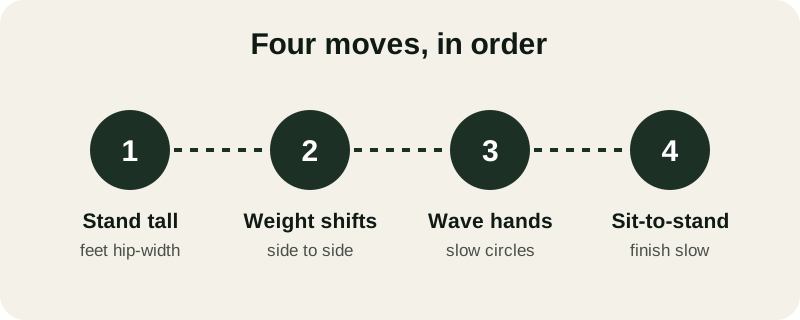
Here's the same flow as a simple list you can follow step by step:
- Stand tall, feet hip-width apart, arms relaxed at your sides, and take three slow breaths.
- Shift your weight gently from one foot to the other for about a minute, letting your knees soften.
- Let your arms float through a few slow rounds of wave hands, turning gently at the waist.
- Finish with one slow sit-to-stand from a stable chair, then stand tall for a final breath.
Each move earns its place in a short routine. The weight shifts wake up your legs and sense of balance without any impact. Wave hands loosens your shoulders and spine through one slow, turning motion. The sit-to-stand links the standing moves to something you already do several times each morning, so it feels useful rather than extra.
If your knees or hips feel especially stiff first thing, our morning routine for stiff joints walks through a similar flow in more depth. And if standing right out of bed feels like too much some mornings, the chair tai chi guide offers a comparable set of slow moves from a seated position instead.
What should you skip when time is tight?
Skip anything that adds friction: a long warm-up you have to remember, a sequence you need to look up, or extra moves included only because a longer routine has them. On a rushed morning, four slow moves done well beat eight done quickly.
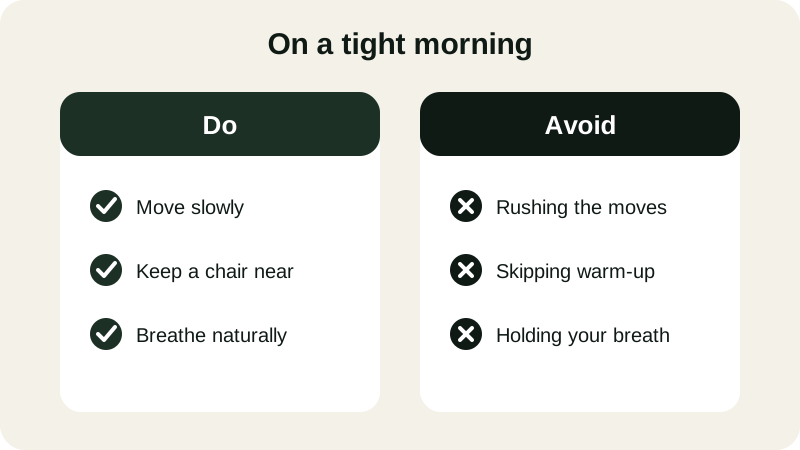
- Do move slowly, even if that means doing fewer moves.
- Do keep a chair nearby.
- Do breathe naturally through your nose.
- Avoid rushing the moves to fit more in.
- Avoid skipping the warm-up breaths entirely.
- Avoid holding your breath during weight shifts.
Trimming a routine isn't the same as skipping tai chi altogether. A shorter version done calmly still counts as practice; a longer version done in a hurry barely counts at all, since the slow, attentive quality of the movement is most of the point.
Fitting a quick practice into a hectic morning
Attach it to something you already do every morning — right after you turn off the alarm, or while the kettle heats. Pairing a new routine with an existing habit tends to work far better than hoping you'll remember on your own, and it suits a standing tai chi routine just as well as anything else. A daily reminder set at a time you choose can help on mornings when the routine slips your mind entirely.
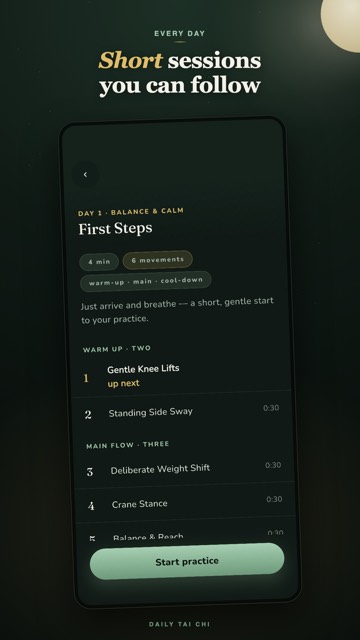
If you'd like some guidance while you move, Daily Tai Chi offers sessions from 5, 10, 15 or 20+ minutes a day, shown one slow move at a time with spoken cues and a short video clip, so you can pick a length that fits even the busiest morning and let the app set the pace for you.
Once a short routine feels easy, you might stretch it on slower mornings or weekends. Our 5-minute morning routine and tai chi for morning energy both build on these same few moves, for days when you have a little more room to breathe.
Even on mornings you skip the routine entirely, come back the next day rather than trying to make up for lost time with a longer session. A quick, steady few minutes most mornings will do more for how you feel than an occasional hour squeezed in on a weekend. Let the short routine be enough, and let that be the whole point.
Can you do this routine in your pajamas before showering?
Yes. A short tai chi routine needs no special clothing. Loose pajamas or sleepwear work fine for gentle weight shifts and wave hands. Just check your feet have good grip on the floor, and switch to bare feet or flat shoes if your socks slide on a smooth floor.
Is five minutes of movement actually worth doing?
Yes. Five minutes done slowly and attentively is a complete practice, not a placeholder for something longer. The benefit comes from showing up most mornings, not from the length of any one session — a short, consistent routine beats an occasional long one.
What if you only have two or three minutes some mornings?
On those mornings, pick just one move — gentle weight shifts or a round of wave hands — and do it slowly for the time you have. A single unhurried move still counts as practice and keeps the habit going until a fuller morning returns.
Should you practice before or after breakfast?
Either works well. Many people prefer moving before eating, while the body still feels a little stiff from sleep. If mornings are too rushed for that, doing the routine after breakfast or mid-morning still brings the same slow, grounding effect.
Can a short morning routine replace a longer tai chi practice?
A short routine is complete on its own, not a lesser version of a longer one. If you want more variety on a slower day, a 10-minute routine or a fuller beginner's sequence is a natural next step, not a requirement.