 DAILY TAI CHI
Tai Chi for Osteoporosis: A Gentle Guide
This guide explains how gentle, slow tai chi movements can support balance and bone health for people managing osteoporosis, along with safety tips and simple moves to start with.
Published
Quick answer
Tai chi for osteoporosis is a gentle, low-impact way to practice weight-bearing movement and steadier balance, though it isn't a treatment on its own. Short, slow sessions can fit alongside your doctor's care plan — check with a doctor first.
Key takeaways
- Tai chi offers slow, weight-bearing movement that's gentle on bones and joints.
- It isn't a treatment for osteoporosis, so check with your doctor first.
- Moves like gentle weight shifts and single-leg stands can be done seated or standing.
- Sessions can be just 5 to 10 minutes, built into a 28-day path.
- Keep a stable chair, wall, or counter nearby and stop if you feel dizzy.
Tai chi for osteoporosis is often suggested as a gentle, low-impact way to bring weight-bearing movement and steadier balance into your day. It isn't a treatment or a cure, but its slow pace makes it easy to fit alongside whatever care plan your doctor has recommended.
If you've been told you have low bone density, or you're simply being cautious as the years go by, you may wonder whether a slow-moving practice like tai chi is worth your time. This guide walks through what to know, which moves tend to feel comfortable, and how to begin without any pressure to get things perfect.
What is osteoporosis, and why does it come up with tai chi?

Osteoporosis is a condition where bones gradually become thinner and more fragile over time. Because it's connected to bone strength and to the risk of falling, many people start looking for gentle, weight-bearing movement and balance practice — which is exactly where tai chi for bone health conversations usually begin.
Resources like the National Institute on Aging and MedlinePlus describe osteoporosis as something best managed with your doctor's guidance, alongside everyday habits like gentle movement. Tai chi fits into that second category: it's not a medical treatment, but a way of moving slowly, standing tall, and shifting your weight in a controlled, supported way. Organizations such as the NCCIH have also looked at slow, mind-body movement practices as part of a broader picture of healthy aging, though the details of your own care should always come from your own doctor.
Is tai chi safe if you have osteoporosis?
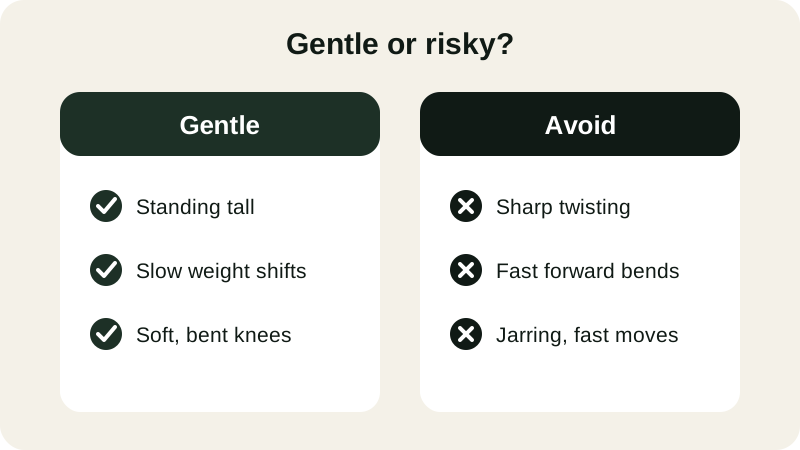
For most people, yes — tai chi is widely considered one of the gentler forms of movement available, since there's no jumping, quick twisting, or sudden impact involved. Every motion is slow, and most movements can be adapted to standing with support or done fully seated.
Some people with osteoporosis are advised by their doctor to avoid deep forward bends or sharp twisting through the spine. Tai chi's upright posture and smooth, rounded movements tend to work well within that kind of guidance, but it's still worth mentioning your bone health to whoever guides your practice, and checking with a doctor before you begin anything new.
What tai chi moves are gentle for bone health concerns?
A handful of simple, well-known tai chi movements show up again and again in gentle practice, and each one can be done standing with support or seated comfortably in a chair.
- Gentle weight shifts. Standing tall with feet hip-width apart, you slowly move your weight from one foot to the other, waking up the small muscles that help you feel steady.
- Wave hands. A soft, flowing arm movement that keeps the upper body relaxed and gently moving, without any strain on the shoulders.
- Heel-to-toe stand. One foot placed in front of the other, which gently challenges your balance while you hold onto a chair, wall, or counter.
- Single-leg stand. A light lift of one foot, held near a chair, to build steadiness gradually over time.
- Slow sit-to-stand. Rising from a chair slowly and with control, which is a simple way to add weight-bearing movement to your day.
- Ankle circles. A small, seated warm-up that loosens the ankles before any standing work begins.
These are the same building blocks you'll find in our guide to gentle tai chi for arthritis and stiff joints, since both groups often look for the same slow, joint-friendly way of moving.
How should you start a tai chi practice with osteoporosis?
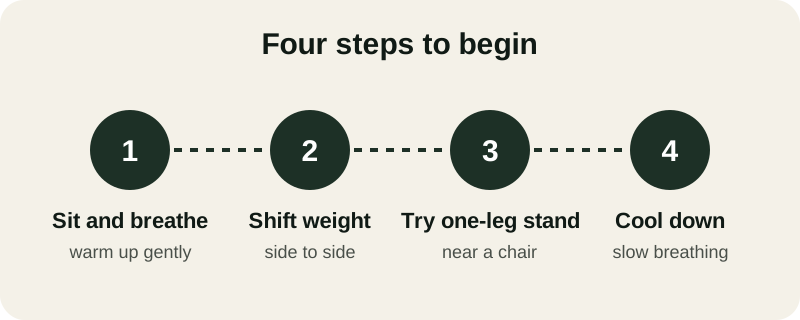
Start small, and stay seated or near support for your first few sessions. There's no need to learn a long sequence of moves right away — a few minutes of standing tall, breathing slowly, and shifting your weight is a complete practice all on its own.
The Daily Tai Chi app offers a 28-day path of short, guided sessions, with the first 4 days free — no card, no account needed. Each session runs 5 to 10 minutes, works on iPhone and Android, and is built for complete beginners aged 55+, so there's no pressure to arrive with any experience at all.
If falls are part of what's on your mind, our guide to tai chi for fall prevention covers the balance side of this in more depth, and the gentle balance exercises after 60 article offers a few more simple moves to try alongside your practice.
How often should you practice tai chi for bone health?
Consistency matters more than duration here. A short session most days of the week will likely serve you better than one long session every now and then, especially while you're still learning how your body responds to each movement.
Many people find that pairing tai chi with a qigong-style warm-up, slow breathing, and a seated cool-down turns it into a calm daily habit rather than another chore on the list. For more on building that rhythm, see our guide on how often seniors should practice tai chi.
However often you choose to practice, the goal isn't to push harder each week. It's simply to keep showing up gently, with your doctor's guidance in mind and a stable chair, wall, or counter always within easy reach.
Sources
Can tai chi help with osteoporosis?
Tai chi is a gentle, weight-bearing form of movement that many people with osteoporosis find comfortable, since it's slow and low-impact. It isn't a treatment for the condition, so it works best alongside your doctor's guidance rather than instead of it. Always check with a doctor before starting, especially with a bone health diagnosis.
Is tai chi safe for osteoporosis if I'm worried about falling?
Yes, most tai chi moves can be done standing near a stable chair, wall, or counter, or fully seated. The slow pace and gentle weight shifts are designed to feel steady rather than challenging, and you can always stop if you feel dizzy or unsteady.
Should I avoid forward bending moves in tai chi?
If your doctor has advised against deep forward bends, ask for a seated or upright version of any move that leans forward. Tai chi's upright posture and soft, rounded motions usually adapt easily, keeping your spine tall throughout the practice.
How long should a tai chi session be?
Many people start with just 5 to 10 minutes a day. Short, regular sessions tend to feel more sustainable than long, occasional ones, and the Daily Tai Chi app's 28-day path is built around that same gentle pace.
Do I need any equipment to start?
No. All you need is a little open space, comfortable clothing, and a stable chair, wall, or counter nearby for support. The Daily Tai Chi app works on iPhone and Android, with the first 4 days free and no card or account required.