 DAILY TAI CHI
Ti Chi for Seniors: A Gentle Way to Get Started
This article explains what ti chi (tai chi) for seniors involves, why it's gentle and low-impact, and how older adults can start safely with a few minutes of practice a day.
Ti chi for seniors — more commonly spelled tai chi — is a slow, low-impact practice built around gentle weight shifts, soft turns, and easy breathing. It's often called meditation in motion, and it can be practiced standing or seated, making it one of the most adaptable ways for older adults to stay active.
If you've wondered whether this gentle practice is right for you, this guide covers what it looks like, why it suits people 55 and older so naturally, and how to take your first steps.
What does this gentle practice actually involve?
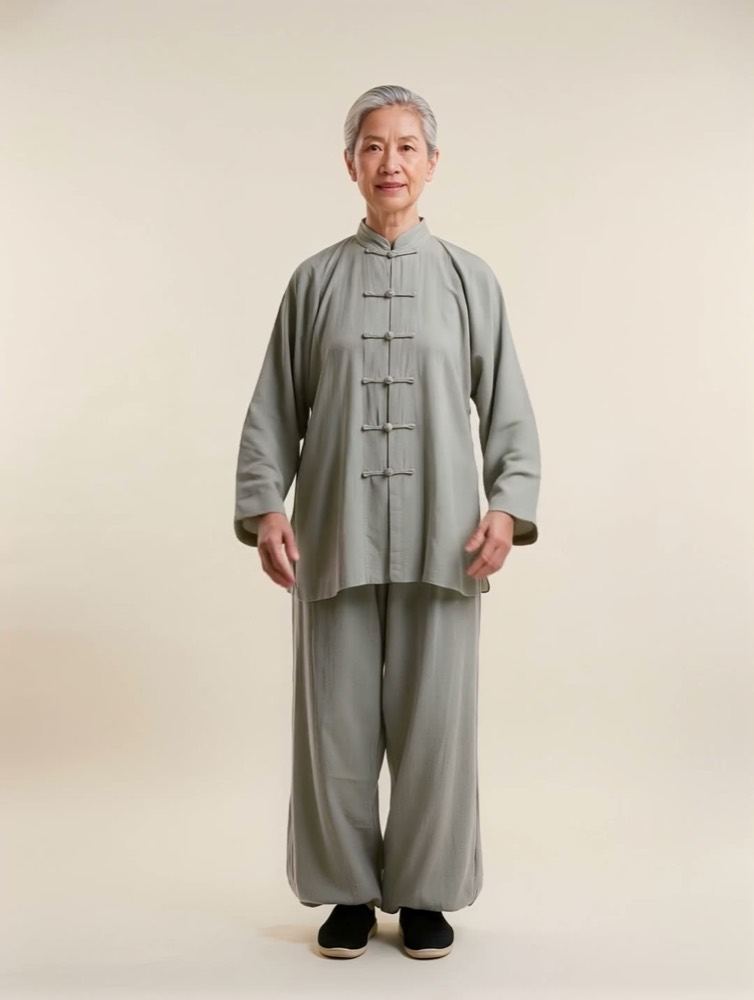
At its heart, tai chi is a series of slow, connected movements. You stand tall, feet hip-width apart, and shift your weight softly from one leg to the other while your arms float and turn. There's no rushing and no sharp motion — everything flows like water.
Common movements include gentle weight shifts, a heel-to-toe stand, ankle circles to warm up the feet, and a flowing motion called wave hands, where your arms drift gently side to side. Some sessions also include a slow sit-to-stand, which builds strength in the legs without any strain.
Many people pair tai chi with qigong, a related practice of slow breathing and simple movement. If you'd like to explore that connection, our guide to qigong for seniors and beginners is a gentle place to start.
Why does this suit older adults so naturally?
This kind of movement was never designed as a high-intensity workout, which is exactly why it fits so comfortably into later life. A few reasons it works so well:
- Low-impact by nature. There's no pounding or jarring motion, so it's kind to knees, hips, and ankles.
- Adaptable to your body. Every movement can be done standing or seated, so mobility limits don't have to hold you back.
- Builds steadiness gradually. The slow weight shifts and single-leg stand practice help you feel more grounded on your feet over time.
- Calming for the mind. Slow breathing paired with slow movement tends to leave people feeling settled rather than wound up.
To understand more about the balance side of things, see our article on how tai chi improves balance.
Is it safe if you have arthritis or stiff joints?
For many seniors, one of the biggest draws of this gentle practice is how kind it feels on sensitive joints. Because there's no sudden movement or impact, it's often more comfortable than higher-intensity forms of exercise. Our guide on tai chi for arthritis and stiff joints walks through slow moves that feel kind to the body.
That said, every body is different. Move gently and never push into pain. Keep a stable chair, wall, or counter nearby, and stop if you feel dizzy or unsteady. If you're new to exercise, recovering from an injury, or have any health concerns, check with a doctor first.
What should your first week look like?
Your first week isn't about mastering anything — it's about getting familiar with slow, deliberate movement. Expect to spend time simply learning to stand tall and relaxed, breathe slowly, and shift your weight from foot to foot without wobbling.
It's completely normal to feel a little unsteady at first. Keep a chair close by, go slowly, and don't worry about looking graceful. Grace tends to come naturally after a bit of practice — it's not something you need to force.
If standing for a full session feels like too much at first, that's fine too. A seated approach works just as well for building the habit. Our chair tai chi guide offers the same gentle movements from a seated position, and our article on seated tai chi for seniors covers a full chair-based practice in more detail.
How much practice does it take to notice a difference?
You don't need long sessions to benefit from this kind of movement. Just 5 to 10 minutes on most days is enough to build a steady rhythm — far more useful than one long session every so often. Consistency, not intensity, is what makes the practice work over time.
A short morning routine can be a lovely way to start the day calmly; see our 5-minute morning tai chi routine for an easy starting point. If mornings are busy, a slightly longer session later in the day works just as well — our 10-minute tai chi routine for seniors offers a gentle option.
Does breathing matter as much as the movement?
Breathing is just as central to tai chi as the movement itself. Slow, easy breaths help the whole practice feel calmer and more grounded, and they give your mind something gentle to rest on while your body moves. There's no need to control your breath tightly — just let it stay slow and natural as you shift your weight and turn.
If you'd like to focus specifically on this part of the practice, our guide to tai chi breathing exercises walks through a few simple patterns for calm and focus. Many people also find that pairing breath with movement in the evening helps them unwind before bed.
How can you get started today?
Getting started doesn't require special equipment, a gym membership, or any prior experience. All you need is a few feet of open space, comfortable clothing, and a willingness to move slowly.
The Daily Tai Chi app offers a 28-day path of short, guided sessions built specifically with beginners and adults 55+ in mind. The first 4 days are free, with no card and no account required, so you can try it without any pressure. It's available on both iPhone and Android, making it easy to practice from home at your own pace.
Whether you begin standing or seated, the most important step is simply the first one. Move slowly, breathe easily, and let the practice unfold gently over the coming weeks. For a fuller introduction to the basics, our tai chi for seniors beginner's guide is a comfortable next stop.
Is ti chi safe for seniors with joint pain?
Yes, tai chi is generally gentle on the joints because movements are slow, controlled, and low-impact. Many people with stiff knees or hips find it comfortable. Move gently, keep a stable chair, wall, or counter nearby, and check with a doctor first if you have concerns.
Do I need to be flexible or fit to start?
No. Tai chi meets you exactly where you are. There's no stretching goal or fitness requirement — you simply move slowly and breathe easily. Many beginners start with no prior exercise experience at all.
How much practice should seniors do each day?
Just 5 to 10 minutes on most days is enough to feel the benefit. Short, regular sessions matter far more than long, occasional ones. A gentle daily rhythm works better than pushing for a long workout.
Can this practice be done sitting down?
Yes. Many movements adapt easily to a seated version, including gentle weight shifts and wave hands. This makes it a good option for seniors with limited mobility or balance concerns.